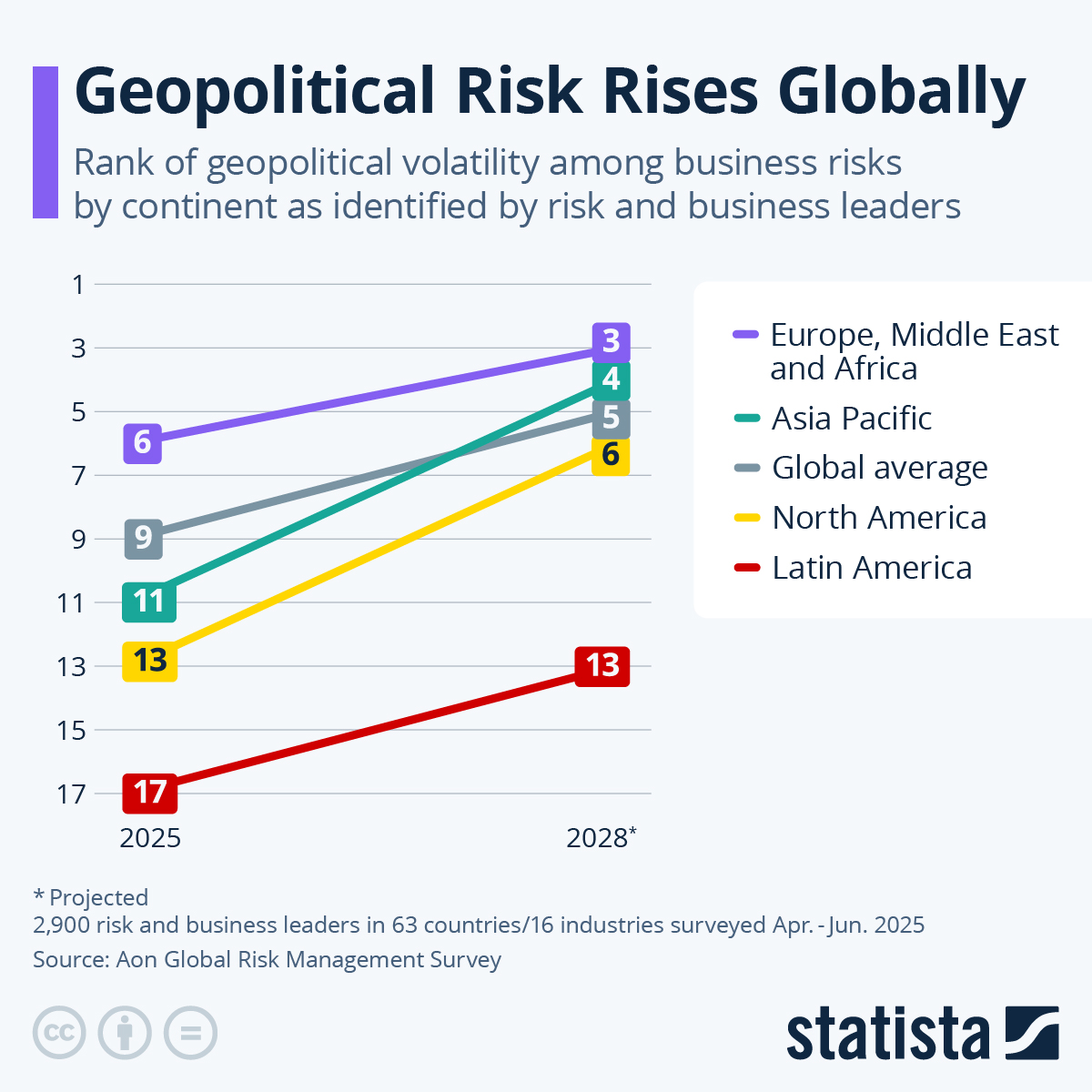
The convergence of American domestic inflation and Middle Eastern kinetic escalation creates a feedback loop that threatens the structural stability of the current administration. While conventional political analysis views the Republican push for intervention in Iran and the volatility of fuel prices as separate data points, they are functionally two variables in a single equation: the American Risk Premium. The current dilemma is not merely about voter sentiment; it is a breakdown of the historical correlation between hawkish foreign policy and energy security.
The Mechanics of the Escalation Premium
The global oil market functions as a predictive engine for regional stability. In the context of a potential Iran-Israel or Iran-U.S. conflict, the price of Brent Crude does not react solely to physical supply disruptions, but to the "possibility of total denial." This is best understood through the Chokepoint Vulnerability Index.
The Strait of Hormuz facilitates the transit of approximately 21 million barrels of oil per day, representing 21% of global petroleum liquid consumption. Unlike the Red Sea disruptions caused by Houthi rebels, which primarily impact transit costs and insurance premiums, a closure or severe mining of the Strait of Hormuz represents an absolute volume shock.
The Republican insistence on a more aggressive posture toward Tehran ignores the inelasticity of short-term energy demand. When supply is threatened at the source, the price response is non-linear. A 5% reduction in global supply can trigger a 50% increase in spot prices if inventories are low. Republicans are operating under a strategic contradiction: demanding the suppression of Iranian regional influence while simultaneously demanding "Biden-level" or lower gasoline prices at the pump. These two objectives are mathematically at odds within the current global energy infrastructure.
The Three Pillars of the Republican Strategic Dissonance
The current GOP platform regarding Iran is built on three pillars that fail to account for modern economic interdependencies.
1. The Fallacy of Decoupled Domestic Production
A frequent argument posits that increased U.S. "energy independence" (domestic production exceeding consumption) insulates the American consumer from Middle Eastern shocks. This ignores the reality of global commodity arbitrage. Even if the United States produces 13 million barrels per day, American producers will sell to the highest bidder on the global market. If Iranian output is removed or the Strait is blocked, the global price surges, and domestic prices follow suit instantly to maintain market equilibrium. Domestic production is a volume hedge, not a price hedge.
2. The Deterrence-Symmetry Gap
The push for military intervention assumes that a "maximum pressure" 2.0 or direct kinetic strikes would result in a swift Iranian capitulation. However, Iran’s military doctrine is built on Asymmetric Escalation Dominance. Iran does not need to win a conventional naval engagement; it only needs to make the cost of insurance for tankers prohibitive. By utilizing drone swarms, fast-attack craft, and proxy forces in Lebanon and Iraq, Tehran can ensure that the "Cost of Transit" exceeds the value of the cargo.
3. The Inflationary Feedback Loop
Voters currently prioritize "Cost of Living" above all other metrics. High fuel prices act as a regressive tax, impacting logistics, agriculture, and manufacturing. By advocating for actions that inevitably spike the price of oil, the GOP risks self-sabotage. If an intervention leads to $150-per-barrel oil, the resulting domestic inflation would likely erode any political capital gained from appearing "tough" on foreign adversaries.
Quantifying the Vulnerability: The Logistics of a Blockade
To understand the stakes, one must analyze the physical constraints of oil transit. The Strait of Hormuz is roughly 21 miles wide at its narrowest point, with shipping lanes only two miles wide in each direction.
- Detection vs. Neutralization: While the U.S. Fifth Fleet possesses superior sensor technology, the sheer volume of "gray zone" activity (fishing dhows, civilian-looking vessels) makes the identification of mine-layers or suicide drones a statistical nightmare.
- The Insurance Barrier: Commercial shipping is governed by Lloyd’s of London and other insurers. Even without a single ship being sunk, the mere declaration of the Persian Gulf as a "War Zone" can increase premiums by 500% to 1,000%, effectively halting traffic as shipowners refuse to risk their assets.
- The SPR Limitation: The Strategic Petroleum Reserve, intended to buffer against such shocks, has been significantly drawn down to manage post-pandemic price spikes. The buffer that existed in previous decades to offset Middle Eastern volatility has been thinned, leaving the U.S. economy more exposed to sudden supply-side shocks.
The Iranian Response Matrix
Iranian strategy is not irrational; it is a calculated response to economic strangulation. When sanctions are applied to their energy sector, their optimal move is to ensure that no one else’s energy sector remains stable. This is the Mutual Destruction of Market Access.
If the U.S. or its allies target Iranian refineries or the Kharg Island terminal, the retaliatory strike will not likely be a direct missile attack on a U.S. carrier. Instead, it will be directed at the desalination plants of the Gulf monarchies or the Abqaiq processing facility in Saudi Arabia. This creates a systemic risk where a localized conflict becomes a global energy depression.
The Political Risk Function
The Republican party is currently navigating a divergence between its donor class (often aligned with defense and energy sectors) and its populist base (which is highly sensitive to the price of a gallon of gas).
The "Biden-level" pain referenced by voters is a threshold. Once gasoline crosses the $4.50 or $5.00 mark, the incumbent’s approval ratings generally plummet, regardless of the cause. By backing a war, Republicans are betting that the public’s desire for "strong leadership" will outweigh their economic frustration. Historical data from the 2003 Iraq invasion suggests this holds true only in the short term. As the duration of the conflict extends and the economic costs compound, the "Rally 'Round the Flag" effect is replaced by "Wallet Fatigue."
Strategic Imperative: The Shift from Kinematics to Containment
The only path that avoids the catastrophic price-inflation spiral is a transition from direct kinetic threats to a sophisticated Multilateral Containment Framework.
The logic of "starting a war" to solve the "Iran problem" fails to account for the second-order effects on the global supply chain. A superior strategy involves:
- Hardened Energy Infrastructure: Investing in the redundancy of pipelines that bypass the Strait of Hormuz (such as the East-West Pipeline in Saudi Arabia).
- Strategic Inventory Management: Rebuilding the SPR during periods of low volatility to ensure a credible "supply bridge" during a 30-to-60-day conflict.
- Diplomatic Leverage over Proxies: Reducing Iran's "escalation ladder" by neutralizing the effectiveness of their proxy network through targeted financial intelligence rather than broad-spectrum sanctions that trigger desperate retaliations.
The Republican position remains a legacy strategy in a modernized global economy. In the 1990s, the U.S. could absorb a Middle Eastern conflict with minimal domestic impact. In 2026, with global supply chains stretched to their limits and inflation already at a generational high, the margin for error is non-existent.
The strategic play is to decouple the desire for Iranian regime change from the necessity of global energy stability. Any policy that seeks the former without guaranteeing the latter is not a strategy; it is a gamble with the American middle class as the collateral. The objective must be the creation of a Middle Eastern security architecture that makes Iranian disruption unprofitable, rather than a direct confrontation that makes Iranian disruption inevitable.