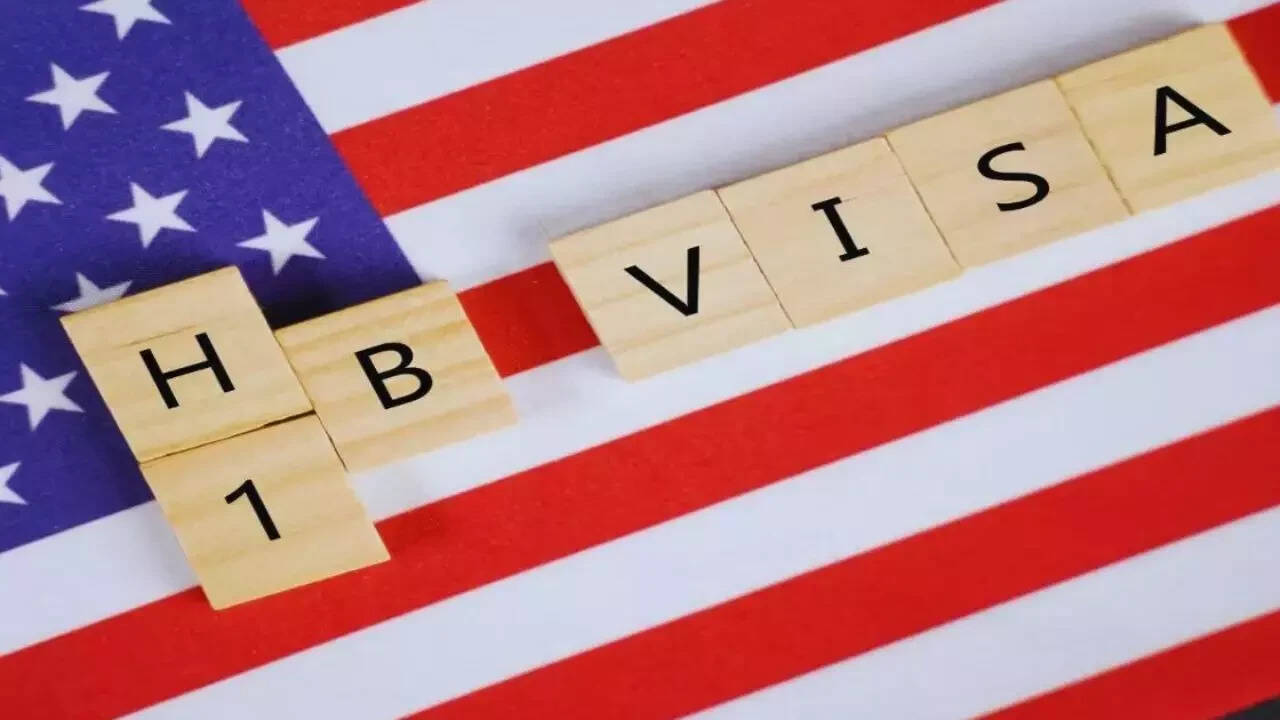
The internet is currently weeping over a Redditor who won the H-1B lottery and felt "weirdly sad and confused." The comment sections are a disaster zone of toxic positivity and outdated immigrant tropes. They tell this person to "count their blessings" or "think of the millions who would kill for this spot."
They are wrong. Dead wrong.
That feeling of dread isn't "confusion." It’s your survival instinct screaming that you’ve just been handed a set of golden handcuffs designed to keep you stagnant while the world moves on. Winning the H-1B lottery in 2026 isn't a victory; it's a trap. It’s a specialized form of indentured servitude wrapped in a patriotic blue folder, and if you’re smart, you’ll walk away before the ink dries.
The Myth of the American Dream 2.0
The competitor narrative suggests that the H-1B is a ticket to the big leagues. It assumes that the U.S. tech market is still the undisputed center of the universe.
That hasn't been true for a decade.
The H-1B visa was designed for a 1990s world where talent was scarce and geographic proximity to a server rack in Santa Clara mattered. Today, the visa is a tool for corporate leverage. When you enter the H-1B system, you aren't just an "employee." You are a line item with an expiration date. You lose your ability to pivot, your ability to demand market-rate raises without "friction," and your ability to quit a toxic boss without risking immediate deportation.
I’ve seen engineers with 150+ IQs spend seven years at the same mid-tier SaaS company because they were terrified that changing employers would restart their green card clock. They watched their peers—who stayed in Bangalore, Berlin, or Toronto—found companies, lead remote teams, and build equity. Meanwhile, the "lucky" lottery winner was grinding for a 3% annual merit increase, praying the Department of Labor doesn't change the prevailing wage rules.
The Green Card Backlog is a Career Killer
Let’s talk about the math that nobody at the visa seminars wants to mention. For an Indian national, the wait for an EB-2 or EB-3 green card is no longer a "wait." It is a life sentence.
Based on current USCIS data and the per-country caps, the backlog for Indian professionals is estimated to be over 100 years. Read that again. You will be dead before you get your permanent residency.
By accepting that H-1B, you are signing up for a "temporary" status that will likely last your entire professional life. You will live in a state of perpetual "non-immigrant intent" while trying to build a life, buy a house, and raise a family. You are a guest who can be asked to leave at any moment.
Compare this to the "High Potential Individual" visa in the UK or the "Startup Visa" in Canada. Those countries actually want you to own things. The U.S. just wants you to build things for people who own things.
The Opportunity Cost of the "Safe" Path
The Reddit user feeling "sad" is experiencing the realization that they’ve traded their agency for a brand name on a resume.
In India right now, the venture capital ecosystem is maturing. The "India Stack" has revolutionized fintech in ways the U.S. banking system can't even touch. If you are a high-tier developer, your upside in a growth-stage Indian startup—where you can actually earn meaningful equity—is orders of magnitude higher than being "Senior Software Engineer IV" at a Big Tech firm in a high-cost-of-living bubble.
When you stay in your home country or choose a more flexible jurisdiction, you retain the Optionality Premium.
- You can consult. (Illegal on H-1B).
- You can start a side hustle. (Illegal on H-1B).
- You can take a six-month sabbatical to learn a new stack. (Will get you deported on H-1B).
The H-1B forces you into a linear, risk-averse career path during the most productive years of your life. It turns lions into sheep.
The "Prestige" Tax
We need to stop treating the U.S. move as a status symbol. It’s a legacy mindset passed down from parents who grew up when the exchange rate was the only thing that mattered.
In 2026, the "Prestige Tax" is real. You pay it in the form of:
- State and Federal Taxes for services you may never be eligible to use (Social Security, etc.).
- Psychological Stress of every "Notice of Intent to Deny" or RFE (Request for Evidence).
- The Glass Ceiling. Very few H-1B holders make it to the C-suite because the risk profile of the visa makes "bold moves" impossible.
Stop Asking "How Do I Stay?" and Start Asking "Why Should I?"
People always ask: "How do I make sure my H-1B extension gets approved?"
That is the wrong question.
The right question is: "Is my employer providing enough value to justify the loss of my personal freedom?"
Usually, the answer is no.
If you won the lottery and you feel a sense of dread, listen to it. That isn't "imposter syndrome" or "relocation anxiety." It is the rational realization that you are about to outsource your destiny to a bureaucracy that doesn't care if you exist.
If you want to build wealth, build it where you can own the means of production. If you want to innovate, do it where you aren't tied to a specific desk by a federal filing.
The most "elite" move you can make in 2026 isn't moving to San Francisco on a work visa. It’s staying exactly where you are and making the U.S. companies compete for your talent on your terms, in your timezone, without the government holding a leash.
Decline the visa. Keep your soul.