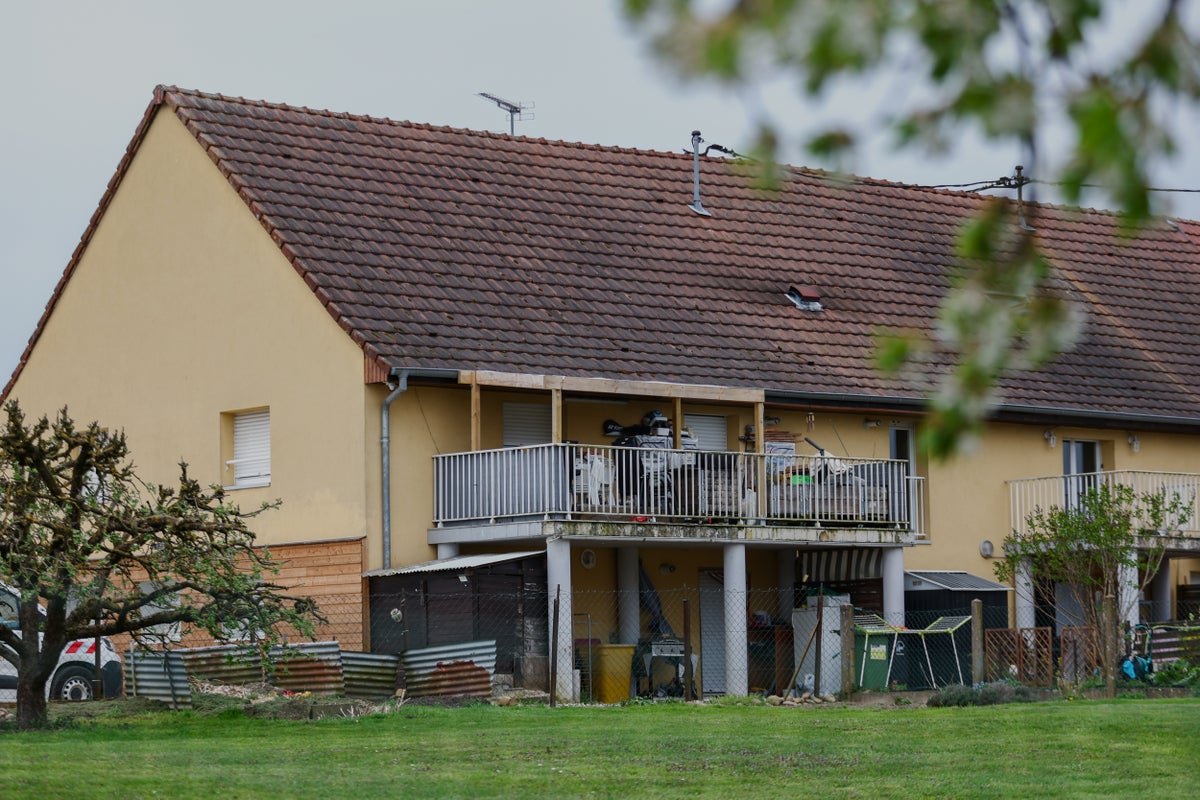
For over a year, a nine-year-old boy lived in the cramped, metal confines of a van parked in the French commune of Pierrefitte-sur-Seine. While the neighbors went about their daily commutes and local authorities processed paperwork in nearby offices, a child was effectively erased from the surface of society. This was not a sudden kidnapping or a high-profile disappearance. It was a slow, grinding descent into systemic invisibility. When police finally forced entry into the vehicle following a tip-off, they found a child who had forgotten the basic rhythms of a normal life. He was surviving on scraps, deprived of schooling, and hidden behind tinted glass and heavy silence.
The discovery pulls back the curtain on a terrifying reality in modern social services. We often assume that the safety nets of a developed nation like France are interconnected and durable. They are not. This case exposes the massive gaps between school enrollment tracking, neighborhood watchfulness, and the legal thresholds required for state intervention. The boy didn't just fall through a crack; he fell through a canyon that the state failed to bridge for twelve months.
The Mechanics of Disappearance
To understand how a child vanishes in plain sight, one must look at the transition from "unconventional living" to "criminal neglect." The father, who was immediately taken into custody, managed to maintain a facade of semi-normalcy. He wasn't a ghost. He was a man living on the margins, and in the dense urban sprawl of the Seine-Saint-Denis department, poverty is often used as a camouflage for abuse.
The van was parked in a residential area. People saw it. Some may have even seen the father coming and going. But the "not my business" culture of modern urban environments provides the perfect cover for such atrocities. In many European suburbs, the line between respecting a neighbor's privacy and ignoring a cry for help has become dangerously blurred. The boy was kept in a state of constant transit even while the vehicle remained stationary. He was instructed to remain silent, to stay low, and to avoid the windows.
The Education Gap and the Paper Trail
France has some of the strictest mandatory schooling laws in the world. Since 2019, instruction is compulsory for all children starting at age three. This raises a stinging question. How does a nine-year-old miss a year of school without a single red flag triggering a police visit?
The answer lies in the fragmentation of administrative data. When a family moves frequently or lacks a fixed address, they often bypass the local school board's radar. If a child was never enrolled in the local district to begin with, the district doesn't know to look for them. The "Mairie" (town hall) is supposed to keep a census of children of school age, but these lists are notoriously difficult to maintain in high-turnover areas.
We see here a failure of the digital state. While governments are faster than ever at collecting taxes or issuing traffic fines, they remain sluggish when it comes to cross-referencing residency data with educational attendance. The boy’s life was sacrificed to a bureaucracy that operates on the assumption that every citizen is actively seeking to be found.
The Psychological Toll of the Metal Box
Living in a van for a few weeks is a "lifestyle choice" for some; for a child, a year in a van is a psychological prison. Clinical experts in child development note that the lack of "vertical space" and the absence of a stable environment can lead to severe developmental delays.
At nine years old, a child is in a critical window for social integration and cognitive growth. Deprived of sunlight, a varied diet, and peer interaction, the brain enters a state of perpetual "freeze" or "survival mode." Reports from the scene indicated the boy was found in a state of physical filth, but the internal damage is likely far more significant. He was living in a sensory deprivation chamber. The constant fear of discovery, reinforced by the father’s instructions to stay hidden, creates a version of Stockholm Syndrome where the child views the outside world—and potential rescuers—as the primary threat.
Why the Neighbors Stayed Silent
We have to talk about the collapse of the "village." In previous decades, a van parked for months with signs of habitation would have drawn intense scrutiny from local shopkeepers and residents. Today, the rise of the "van life" aesthetic has ironically made it easier for abusers to hide. People see a modified van and assume it’s a nomadic worker or a budget traveler.
There is also a profound fear of the legal consequences of being wrong. In France, accusing a parent of child abuse is a serious matter. If the authorities arrive and find nothing, the whistleblower often fears social or legal retaliation. This "bystander effect" is amplified in neighborhoods where trust in the police is already low. The result is a lethal silence.
The Legal Threshold for Intervention
The police in Pierrefitte-sur-Seine could only act when they had "sufficient evidence" of a crime. This is the Catch-22 of child protection. To get the evidence, you need to enter the vehicle. To enter the vehicle, you need the evidence.
Judicial officers are often hesitant to grant search warrants for vehicles used as homes because of the high protections afforded to "domicile" status under French law. A van, in this context, is legally a house. The same rights that protect a citizen from illegal search and seizure also protected this father’s ability to hide his son. It took a specific, detailed report from someone who had seen enough to tip the scales of "probable cause."
Comparing the Global Context
This is not an isolated French problem. From the "house of horrors" cases in the United States to hidden children in the UK, the pattern is identical. The abuser isolates the victim, cuts off ties to institutional oversight (school and doctors), and exploits the general public's desire to avoid conflict.
The difference in France is the centralized nature of the state. Because the French state takes so much responsibility for the welfare of its citizens, there is a tendency for the public to assume "the government is handling it." When the government fails, there is no secondary community net to catch the falling child.
The Failure of the Health System
A child needs vaccinations. They need dental checkups. They need regular height and weight monitoring. For an entire year, this boy saw no medical professional. In a country with universal healthcare, this should be impossible.
The "Carte Vitale" system tracks every medical interaction in France. However, it does not track non-interactions. There is no automated system that flags a child who has not seen a doctor in twelve months. If the parent doesn't make the appointment, the child doesn't exist to the healthcare system. This is a massive oversight in a world where we use algorithms for everything from predicting the weather to selling shoes.
Rebuilding the Safety Net
This case must lead to a hard interrogation of how we monitor "mobile" populations. The current system relies on the assumption of a "fixed" life. If you don't have a mailbox, you are invisible.
We need a system where school enrollment is tied to universal benefits. If a child is not registered in a school, the parents’ social benefits should be flagged for an immediate home visit—not as a punitive measure, but as a welfare check. Furthermore, the legal definition of a "domicile" needs to be adjusted when that domicile is a vehicle housing a minor. The rights of the child to safety and education must outweigh the parent's right to privacy in a parked van.
The Immediate Aftermath
The boy is now in the care of social services. He is being fed, clothed, and evaluated. But the road to recovery is not just about physical health. He has to learn how to exist in an open space. He has to learn that a knock on the door is not a signal to hide under a blanket.
The father faces years in prison for "substraction to legal obligations" and "deprivation of care." But a prison sentence for one man does not fix the broken system that allowed this to happen. Every official who saw a missing name on a list and didn't follow up, every neighbor who felt something was wrong but didn't call, and every policymaker who thinks the current safety net is "good enough" shares a piece of this burden.
The Cost of Invisibility
The fiscal cost of rehabilitating a child who has suffered this level of trauma is immense. The social cost is even higher. We have a generation of children growing up in the shadows of our "smart cities," hidden by the very technology and urban design that was supposed to bring us closer together.
This boy was rescued, but he is the lucky one. Across Europe, there are thousands of children living in "temporary" situations that have become permanent traps. They are in squats, in tents, and in vans. They are the human price of a society that prioritizes the "right to be left alone" over the "duty to protect."
The investigation into the Pierrefitte-sur-Seine case continues, but the verdict on our social vigilance is already in. We failed. We failed to see a van for what it was—a cage. We failed to hear the silence for what it was—a scream. The next time you see a vehicle with fogged windows parked in the same spot for a week, don't look away. The life of a child depends on the death of our indifference.
The state must now move beyond the "paperwork" phase of this investigation. It must implement a mandatory, cross-departmental "child-check" system that triggers when a minor disappears from health and education databases for more than ninety days. Without this, we are simply waiting for the next van to be opened.
The boy is now starting a long process of reintegration. He is learning to play. He is learning to speak without fear. But he will always carry the memory of the year the world forgot he existed. We cannot allow that memory to be his only legacy. We must use this failure to build a system where no child can ever be truly invisible again. Immediate reform is the only acceptable response to this tragedy.