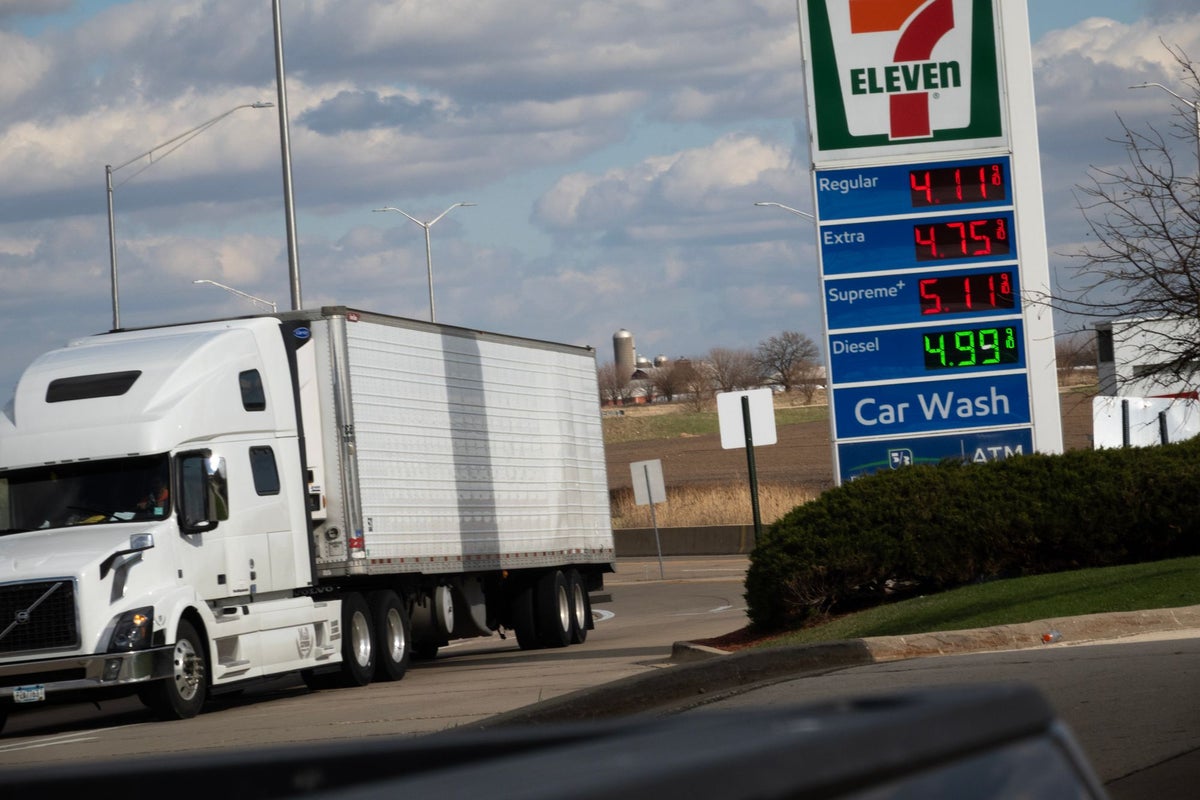
You’ve probably noticed the numbers at the pump ticking upward every single time you pull into a station. It’s not just your imagination or a local supply glitch. The national average for a gallon of gas has already cleared $4.02, the highest mark we’ve seen in years, and the reality is that we’re just getting started. If you think $4 is painful, wait until the full weight of the current standoff hits the global market.
The tension isn't some abstract foreign policy debate. It’s a direct tax on your commute. President Trump has set a hard deadline for Iran, and the rhetoric coming out of the White House is anything but subtle. He’s recently threatened to hit Iran "extremely hard," even suggesting a return to the "Stone Age" if they don't meet U.S. demands. This isn't just tough talk for the cameras; it’s a series of moves that have energy analysts sweating and oil traders scrambling.
The Strait of Hormuz is the world's biggest choke point
The math is simple but terrifying. About 20% of the world’s oil and gas flows through the Strait of Hormuz. It’s a narrow strip of water that Iran has threatened to shut down repeatedly. Since the conflict escalated on February 28, 2026, that flow hasn't just been threatened—it’s been crippled.
When Trump issues a deadline, he’s gambling with the world’s most sensitive energy artery. If the U.S. follows through with a massive strike on Iranian infrastructure, Iran’s most logical move is to block the Strait. We’re already seeing the effects. No LNG (liquefied natural gas) cargo has moved through that water in over a month. When you take that much supply off the table, prices don't just rise—they explode.
Experts from Goldman Sachs are already sounding the alarm, predicting that this energy crisis could push U.S. inflation over 3% by the end of the year. That doesn't just mean expensive gas; it means everything you buy gets pricier because shipping costs are through the roof.
Why OPEC plus can't save you this time
In the past, we’d look to Saudi Arabia or the UAE to pump more oil and stabilize the market. That’s not happening now. While OPEC+ recently agreed to a modest increase of 206,000 barrels per day, it’s basically a symbolic gesture. It’s "academic," as some analysts put it.
The problem is physical. Even if the Saudis want to send more oil, they can’t get it out if the Strait is closed. The key members of OPEC+ are geographically trapped. They’re sitting on millions of barrels that have no way to reach a refinery.
Your summer road trip just got a lot more expensive
We’re hitting this crisis at the worst possible time. It’s April, and refineries are currently switching over to "summer-blend" gasoline. This version of gas uses pricier additives to prevent evaporation in the heat. Typically, this adds about 10 to 15 cents per gallon on its own.
Combined with the Iran escalation, we’re looking at a perfect storm.
- Crude Oil Surges: Brent crude has already jumped past $108 a barrel.
- Refinery Risks: There’s a constant fear that Iranian retaliation could target energy assets in neighboring Gulf countries.
- Market Panic: Traders aren't waiting for the bombs to fall; they’re pricing in the risk right now.
If the "Stone Age" rhetoric turns into actual kinetic action, JPMorgan analysts suggest we could see oil spike to $150 a barrel. If that happens, you aren't looking at $4 gas anymore. You’re looking at $6 or $7. That’s the kind of price point that breaks household budgets and forces people to stay home.
What you should actually do about it
Don't wait for the next "breaking news" alert to change your habits. The volatility isn't going away by next week. Trump’s strategy is high-stakes—he’s betting that a short, sharp conflict will force Iran to the table and eventually lower prices. But the "short" part is a huge assumption.
If you’re planning a move, a long trip, or even a vehicle purchase, you have to bake these prices into your math today.
- Lock in what you can: If you use heating oil or have a business that relies on fuel, look into hedging or prepaying.
- Monitor the May 3 meeting: The next OPEC+ meeting is in early May. If they don't announce a massive, viable workaround for the Strait, expect another price jump.
- Watch the $120 mark: If crude oil closes above $120 for more than a few days, the "recession" talk will go from a whisper to a roar.
The bottom line is that the White House is using the energy market as a tool of war. Whether you agree with the politics or not, you’re the one paying the bill at the pump. Don't expect a "diplomatic breakthrough" to save your wallet anytime soon.