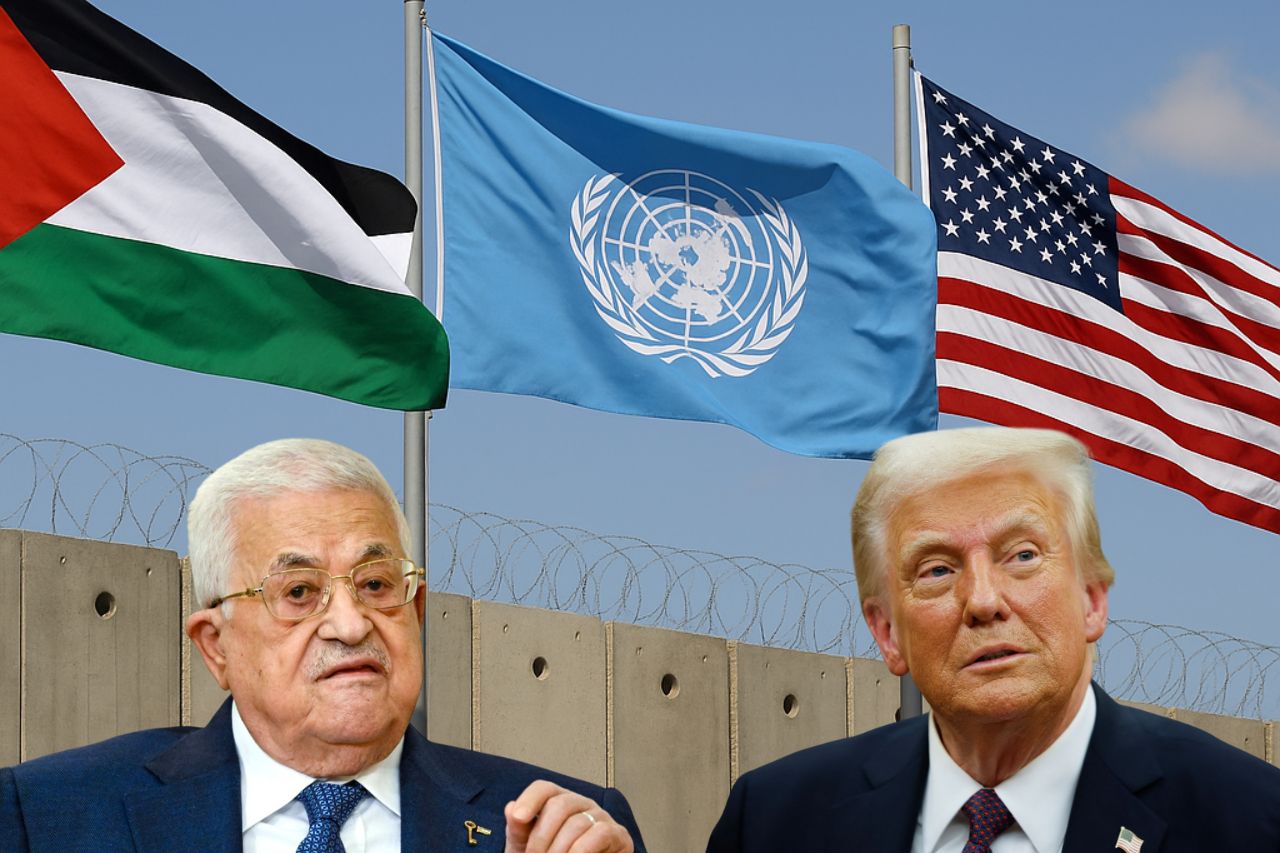
The headlines are screaming about another geopolitical showdown. Donald Trump is threatening Iran over "transit fees" in the Strait of Hormuz. The pundits are busy debating the legality of blockades or the morality of "negotiation through threat." They are all missing the point. This isn't a military standoff. It is a fundamental misunderstanding of how global energy logistics and maritime law actually function.
The "lazy consensus" suggests that Iran is a cornered animal trying to shake down the world for lunch money, and that the U.S. can simply "warn" its way into a free-flow scenario. Don't forget to check out our previous article on this related article.
Reality is more surgical. And much more expensive.
The Myth of the Sovereign Toll Booth
The Strait of Hormuz is not a driveway. It is a 21-mile-wide choke point governed by the United Nations Convention on the Law of the Sea (UNCLOS). Specifically, the doctrine of transit passage. This isn't a "nice-to-have" agreement; it’s the only reason global trade hasn't collapsed into a series of localized skirmishes. If you want more about the history here, TIME offers an informative summary.
When Trump claims Iran is only alive to negotiate, he’s treating a high-stakes maritime corridor like a distressed real estate asset in Queens. You don't negotiate a transit fee for an international strait because the moment you do, you invalidate the very concept of "High Seas."
If Iran successfully charges a nickel for a barrel of oil passing through the strait, every other nation with a choke point—Indonesia (Malacca), Egypt (Suez), even Denmark (Danish Straits)—will have a blueprint for their own payday. We aren't looking at a "war" in the traditional sense; we are looking at the death of the global supply chain as a frictionless entity.
Why Iran Wants You to Focus on the Fee
Iran knows they can't actually collect a "transit fee" via a formal invoice. That’s not the play. The play is risk-premium extraction.
Every time a headline hits about a "threat" or a "warning," the insurance premiums for tankers (Hull and Machinery, and P&I cover) spike. I’ve watched commodity traders lose entire quarterly margins in forty-eight hours because the "war risk" premium jumped from 0.01% to 0.5% of the vessel’s value.
Iran doesn't need to collect the money directly to win. They just need to make it so expensive for the West to operate that the "negotiation" becomes a desperate plea for stability. By reacting with bombastic threats, the U.S. administration is actually doing Tehran’s marketing for them. You are driving the price of oil up, which—ironically—funds the very regime you are trying to starve.
The Empty Threat of "Negotiation"
The competitor article treats the word "negotiate" as a position of strength. It’s actually a confession of weakness.
In the world of hard power, you don't negotiate over a sovereign right of passage. You enforce it. The moment you frame it as a negotiation, you have conceded that the other party has something to sell. In this case, Iran is selling "non-interference."
The Math of a Blockade
Let’s look at the actual physics. Roughly 20.5 million barrels of oil pass through Hormuz every day.
- Total Daily Value: At $80/barrel, that’s $1.64 billion.
- The Cost of "Warning": Every day of uncertainty adds roughly $1-3 to the price of a barrel due to the "fear index."
- The Winner: Any oil-producing nation with a pipeline that bypasses the strait.
While the U.S. and Iran play chicken, the real winners are the logistics providers building the East-West Pipeline in Saudi Arabia and the Habshan–Fujairah pipeline in the UAE. They are the only ones with a "buy" signal right now.
The Territorial Sea Trap
Here is the nuance the "experts" missed: The Strait of Hormuz is comprised entirely of the territorial seas of Iran and Oman. There is no "international water" in the strait.
Under UNCLOS, ships have the right of transit passage, which is much stronger than "innocent passage." Transit passage cannot be suspended by the coastal state. If Iran tries to charge a fee, they are technically claiming the strait is no longer an international waterway but an internal lake.
If the U.S. responds by saying "let's negotiate that fee," we are effectively recognizing Iran’s right to ignore UNCLOS. It is a catastrophic legal surrender dressed up as a "tough guy" tweet. You cannot protect the "Rules-Based International Order" by haggling over the price of breaking it.
Stop Asking if Iran Can Close the Strait
The "People Also Ask" section of your brain is likely stuck on: "Can Iran actually close the Strait of Hormuz?"
The answer is: Yes, for about 72 hours.
Between sea mines, anti-ship cruise missiles (ASCMs), and fast-attack craft, Iran could turn the strait into a graveyard overnight. But they won't. Because the first casualty of a closed strait is the Iranian economy. They need those waters open for their own (admittedly sanctioned) exports and for their imports of refined gasoline.
The "Transit Fee" narrative is a much smarter weapon. It’s "Gray Zone" warfare. It’s annoying enough to cause economic pain, but not "loud" enough to trigger a full-scale Tomahawk cruise missile response from the Fifth Fleet.
The Investor’s Reality Check
I’ve seen portfolios gutted by "geopolitical experts" who think a war is coming every time a politician gets loud.
- Ignore the "Negotiation" Rhetoric: It’s theater for a domestic audience that wants to feel like the U.S. is "running the show."
- Watch the Re-Insurance Market: That’s where the real truth is hidden. If Lloyd’s of London isn't panicking, you shouldn't be either.
- Follow the Pipelines: True sovereignty in the 21st century isn't about who has the biggest carrier; it’s about who has the most bypasses.
We are currently witnessing the "Real Estate-ification" of global security. Trump is trying to treat a global commons like a rent-controlled apartment in Manhattan. Iran is playing the role of the predatory landlord. Both sides are pretending the law doesn't exist to see who flinches first.
The danger isn't that they will fight. The danger is that they will both realize that "uncertainty" is more profitable than "peace."
Stop waiting for a "deal." The friction is the product.