Miguel Díaz-Canel is playing a high-stakes game of political survival by reviving the specter of American military intervention. While the Cuban President’s recent rhetoric about defending the island from a U.S. invasion sounds like a script from the 1960s, the motivation is rooted firmly in the economic desperation of 2026. This isn't just about sovereignty. It is a calculated redirection of public anger. By framing the current internal collapse as a direct result of foreign hostility rather than systemic failure, the Communist Party of Cuba (PCC) seeks to consolidate its base during the most volatile period since the Special Period.
The mechanism is simple. When a state cannot provide bread, fuel, or electricity, it must provide an enemy. The "threat from the North" serves as the ultimate justification for the suppression of dissent and the continued militarization of the Cuban economy.
The Architecture of Fear in a Failing State
The recent warnings of invasion do not exist in a vacuum. They follow a series of rolling blackouts that have left provinces in total darkness for days at a time. The Cuban power grid is a relic, relying on aging Soviet-era thermal plants and expensive floating generators leased from Turkey. When the lights go out, the frustration boils over. We saw this in July 2021, and the government remembers it vividly.
To prevent a repeat of those mass protests, the administration uses the language of war. If the population believes an invasion is imminent, any domestic protest can be branded as "treason" or "collaboration with the enemy." This creates a legal and moral shield for the security apparatus. By shifting the conversation from the lack of basic goods to the defense of the motherland, the PCC shifts the burden of failure onto the United States.
The strategy is effective because it plays on historical trauma. Every Cuban schoolchild grows up with the history of the Bay of Pigs and the Missile Crisis. The government is tapping into a deeply embedded national reflex. However, the youth of Havana and Santiago are increasingly skeptical. They are more concerned with the exchange rate of the Cuban Peso than with the ghost of a Marine landing on the Malecón.
Economic Asphyxiation and the Military Grip
The true story of Cuban defense isn't found in the trenches, but in the accounts of GAESA. This massive military-run conglomerate controls nearly every profitable sector of the Cuban economy, from tourism and foreign exchange stores to logistics. When Díaz-Canel speaks of "defending the nation," he is also speaking of defending the business interests of the Revolutionary Armed Forces.
The Cuban military is not just a fighting force. It is a corporate board.
The GAESA Monopoly
- Tourism: The military owns the most lucrative hotels and resorts through Gaviota.
- Remittances: Control over the pipelines through which foreign currency enters the country.
- Retail: Management of the stores where Cubans must buy imported goods at massive markups.
The sanctions remaining from the previous U.S. administrations have targeted these specific military entities. This has created a direct conflict between the survival of the ruling elite and the needs of the private sector. Small business owners in Cuba, known as mipymes, are caught in the middle. They need trade with the U.S. to survive, but the government’s aggressive stance makes any thaw in relations nearly impossible.
The aggressive rhetoric serves to keep the military leadership loyal. As long as they believe they are the vanguard against an existential threat, they remain the primary stakeholders in the status quo. If the threat of "invasion" vanished, the justification for military control over the civilian economy would crumble.
The Geopolitical Pawn Move
Cuba knows it cannot win a conventional war against the United States. The goal of the "invasion" narrative is to signal to Moscow and Beijing that Cuba remains a crucial, defiant outpost in the Western Hemisphere. It is an invitation for more Russian oil and Chinese infrastructure investment.
Recently, Russian warships have made port calls in Havana. This is theater, but it is high-budget theater. For Russia, it is a way to poke at Washington’s "near abroad" in response to U.S. support for Ukraine. For Cuba, it is a lifeline. By positioning itself as a frontline state in a global struggle, Cuba hopes to secure the subsidies it needs to keep the lights on for a few more months.
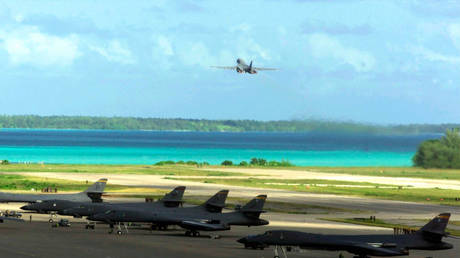
The danger of this strategy is the risk of a miscalculation. While Washington has shown zero appetite for a military conflict with Cuba, the constant talk of "defense" and the presence of foreign adversarial militaries 90 miles from Florida creates a volatile environment. One accidental encounter at sea or a misunderstanding in the Florida Straits could escalate far beyond what Havana’s PR team intended.
The Internal Dissconnect
Walk through the streets of Centro Habana and you will see the disconnect. The walls are painted with slogans about "Patria o Muerte," but the people are talking about the price of eggs. The inflation rate has decimated the purchasing power of the average worker. A doctor earns the equivalent of roughly 20 to 30 dollars a month on the black market exchange.
The government’s focus on military readiness feels like an insult to a population that can’t find aspirin or milk. The state media broadcasts images of citizens training with old rifles, while those same citizens spend six hours a day in line for bread. This gap between the state’s obsession with "defense" and the people’s obsession with "survival" is the greatest threat to the regime’s long-term stability.
It is a mistake to view Díaz-Canel’s statements as mere madness. They are the logical output of a system that has run out of ideas. When you cannot reform the economy without losing control, and you cannot provide for the people without reform, you resort to the only tool left in the box: nationalism.
The Real Invasion is Demographic
The irony of the "invasion" rhetoric is that Cuba is currently experiencing its largest exodus in history. The U.S. isn't sending troops in; the Cuban people are sending themselves out. Over 400,000 Cubans arrived at U.S. borders in the last two years alone. This is a "silent invasion" in reverse, draining the island of its most productive, educated, and ambitious citizens.
This mass migration acts as a pressure valve for the government. It removes the very people most likely to lead a revolution. However, it also destroys the long-term viability of the nation. The population is aging rapidly, and the tax base is vanishing. By focusing on a hypothetical military threat, the leadership is ignoring the very real demographic collapse that will eventually make the island ungovernable.
The defense of the nation should begin with the defense of the dinner table. Until the Cuban government realizes that its primary enemy is its own economic model, the cycle of blackouts, protests, and empty threats will continue. The rhetoric will get louder as the shelves get emptier.
The regime is betting that the fear of a foreign enemy is stronger than the pain of domestic hunger. It is a bet they have won before, but the margins are thinner than they have ever been. The next time the grid fails, no amount of talk about American warships will be able to hide the sound of a country breaking apart from the inside.