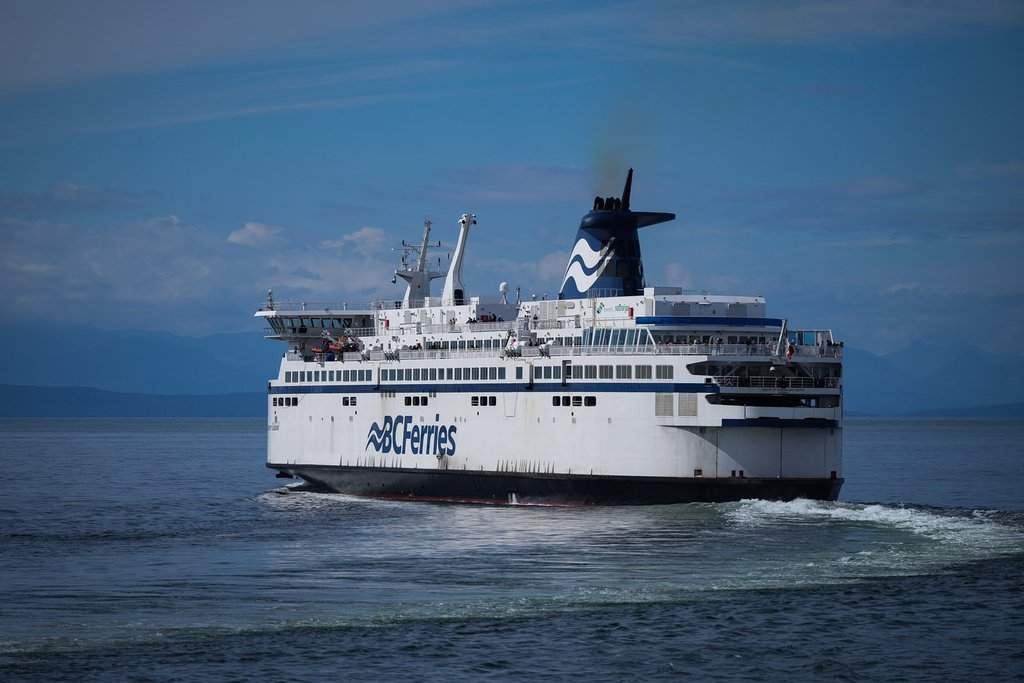
The recent escalation in BC Ferries fares represents more than a localized price adjustment; it is the mathematical inevitable of a system where operational costs have decoupled from revenue-generating capacity. When a monopolistic transit entity increases consumer costs while simultaneously facing internal leadership instability, the crisis is rarely about the price of a ticket. Instead, it is a failure of the Structural Equilibrium—the delicate balance between taxpayer subsidies, passenger tolls, and capital expenditure (CAPEX) requirements.
To understand the current upward trajectory of BC Ferries fares, one must isolate the three variables driving the deficit: labor volatility, aging fleet maintenance cycles, and the diminishing returns of current governance models.
The Tri-Node Failure of Operational Stability
The current friction within BC Ferries originates at the intersection of three specific operational nodes. These nodes dictate the long-term viability of any maritime transport system.
- Labor Retention and the Substitution Cost: High turnover in specialized maritime roles—engineers and masters—is not merely a recruitment issue. It is a cost multiplier. When a vessel is cancelled due to crew shortages, the loss is not limited to the foregone ticket revenue. The institution incurs "reputational debt" and triggers secondary costs in the form of overtime pay for remaining staff and the logistical expense of rescheduling commercial logistics.
- Asset Obsolescence and the Maintenance Trap: Maritime assets operate on a rigid decay curve. As a fleet ages, the cost of incremental maintenance rises non-linearly. BC Ferries is currently trapped in a cycle where the cost to keep 40-year-old vessels seaworthy exceeds the amortized cost of new vessel procurement, yet the capital to refresh the fleet is tied up in operational deficits.
- Governance Lag: Leadership transitions create a vacuum in long-term strategic hedging. Specifically, the inability to lock in fuel prices through futures contracts or to commit to multi-year infrastructure projects during a leadership churn results in "reactive management"—a state where the organization reacts to market shocks rather than insulating against them.
The Cost Function of Public-Private Transit
The public often views fare hikes as a tool for profit maximization. In the context of the BC Ferry Authority, fares function as a Cost-Recovery Mechanism. The gap between the total cost of service (TCS) and the government subsidy must be bridged by the user.
The formula for the Fare Requirement ($F_r$) can be simplified as:
$$F_r = (O_c + D_s + C_a) - G_s$$
Where:
- $O_c$ = Operating Costs (fuel, labor, insurance)
- $D_s$ = Debt Servicing on capital loans
- $C_a$ = Capital Allocations for fleet renewal
- $G_s$ = Government Subsidies
The current upward pressure on $F_r$ is a direct result of $O_c$ and $D_s$ rising faster than $G_s$. Because $O_c$ is highly sensitive to global energy markets and localized labor shortages, the organization has no lever left to pull other than increasing $F_r$. This creates a "death spiral" where higher prices potentially reduce discretionary ridership, leading to further revenue shortfalls and subsequent fare increases.
Leadership Instability as a Variable of Financial Risk
Questions regarding leadership at BC Ferries are not merely political theater; they are indicators of high Execution Risk. In a capital-intensive industry, the executive team acts as the primary risk-mitigation layer. When leadership is in flux, the following systemic breakdowns occur:
Strategic Hedging Paralysis
BC Ferries is one of the largest fuel consumers in the province. Effective leadership manages this volatility through sophisticated hedging. Without a stable executive vision, the organization becomes a "price taker" in the energy market, exposing the budget to the whims of Brent Crude fluctuations. This exposure is eventually passed down to the passenger in the form of fuel surcharges.
Credit Rating Erosion
Institutional lenders evaluate the stability of governance when determining interest rates for capital loans. Persistent leadership churn signals to credit markets that the organization lacks a cohesive long-term plan for debt repayment. Even a minor downgrade in creditworthiness can add millions in interest expenses to the $D_s$ variable, further bloating the fare requirement.
Labor Negotiation Breakdown
Maritime unions require a stable bargaining partner. Inconsistencies in leadership lead to protracted negotiations, which often result in "catch-up" wage increases that are higher than the inflation-indexed adjustments a stable board might have secured years prior. This creates an immediate spike in $O_c$.
The Technical Debt of the BC Ferries Fleet
The criticism of rising fares often ignores the physical reality of the vessels. Much of the current fleet is approaching the end of its design life. In engineering terms, this is known as the "bathtub curve" of reliability. During the final phase of a ship's life, failure rates increase sharply, requiring specialized, expensive, and frequent dry-docking.
The organization is currently paying a "legacy tax." By delaying fleet renewal in previous decades to keep fares artificially low, the current administration is forced to pay for both the maintenance of the old fleet and the financing of the new fleet simultaneously. This double-leverage is the primary driver of the "questions about leadership" mentioned in public discourse; the public perceives the cost but fails to see the decades of deferred capital investment that necessitated it.
The Logistics of the "Service Reliability" Metric
Public anger is rarely about the price alone; it is about the Value-to-Cost Ratio. When fares increase by 5% and service reliability (the percentage of scheduled sailings completed) drops by 10%, the perceived inflation rate for the consumer is effectively 15%.
Service reliability is currently hamstrung by a shortage of "unlicensed" crew members—the cooks, cleaners, and deckhands required by Transport Canada safety regulations to move the ship. If a single cook is missing, a ship carrying 400 cars cannot sail. This is a "bottleneck constraint" where a low-cost input (one crew member) prevents the utilization of a high-value asset (the ferry).
The failure of leadership to address this bottleneck through aggressive, localized recruitment and housing stipends for crew members in expensive port cities is a primary point of friction. It reveals a disconnect between the corporate office and the operational realities of the terminals.
Analyzing the Revenue-Subvention Divergence
There is a growing divergence between the revenue generated by the "Major Routes" (Tsawwassen-Swartz Bay) and the "Minor/Northern Routes." The Major Routes are effectively the profit centers that subsidize the social-service obligation of the Northern routes.
- Internal Cross-Subsidization: Passengers on high-volume routes are paying a premium not just for their own transit, but to maintain the viability of remote island communities.
- The Subsidy Cap: The provincial government’s contribution has historically been fixed or indexed to inflation, but the costs of maritime operation are tied to more volatile global indices (maritime steel, marine diesel, specialized labor).
This divergence means that as operational costs rise, the "profit" from major routes is increasingly diverted to cover the widening losses on small routes, leaving nothing for the capital reserve. The increase in fares is an attempt to recapitalize the reserve, but it is being done at the expense of the most loyal, daily commuters.
The Mechanical Bottleneck of Terminal Infrastructure
Focusing solely on the vessels ignores the land-based constraints. Terminals like Horseshoe Bay and Swartz Bay are at or near peak capacity during summer months. Even if BC Ferries were to acquire more vessels, the "dwell time" (the time it takes to unload and reload a ship) is limited by the physical layout of the terminals and the surrounding road infrastructure.
Investment in "smart terminals"—automated ticketing, pre-clearance lanes, and AI-driven staging—is required to increase throughput. However, these are high-CAPEX projects that are currently being sidelined to fund the immediate operational deficit. This is a classic "trap of the immediate," where short-term survival prevents long-term optimization.
Strategic Pivot: The Path to Systemic Stabilization
The current trajectory of BC Ferries is unsustainable without a fundamental shift in the fiscal and governance framework. The following actions represent the only viable path to decoupling fares from institutional instability:
- Transition to a Fixed-Asset Lifecycle Model: The board must move away from ad-hoc vessel procurement and toward a continuous renewal cycle. This reduces the "maintenance spikes" that trigger emergency fare increases and provides a predictable capital outlay for the provincial government.
- Labor Decoupling through Automation: To mitigate the crew-shortage bottleneck, BC Ferries must aggressively pursue semi-automated docking and passenger processing systems. Reducing the manning requirements for non-safety-critical roles allows the organization to reallocate budget toward the highly specialized maritime roles that are currently in deficit.
- Governance Modernization: The "Public-Private" hybrid model must be clarified. Currently, it suffers from the worst of both worlds: the bureaucracy of a government agency and the capital constraints of a private corporation. A shift toward a more autonomous "Port Authority" style of governance would allow for more nimble capital market engagement.
- Differential Pricing for Congestion Management: Rather than flat fare increases, the organization should implement aggressive peak-load pricing. By significantly lowering fares during off-peak hours and raising them during peak windows, the organization can smooth out the demand curve, reducing the need for costly "extra" sailings and maximizing the utility of existing crew rotations.
The fare increases are a symptom of a deeper structural rot—a system that has exhausted its operational buffers and is now consuming its own capital reserves. Without a reset of the governance and labor strategy, the next round of increases will not only be higher but will coincide with even more frequent service degradations. The window for proactive reform is closing; the organization is moving from a managed crisis to a systemic failure.