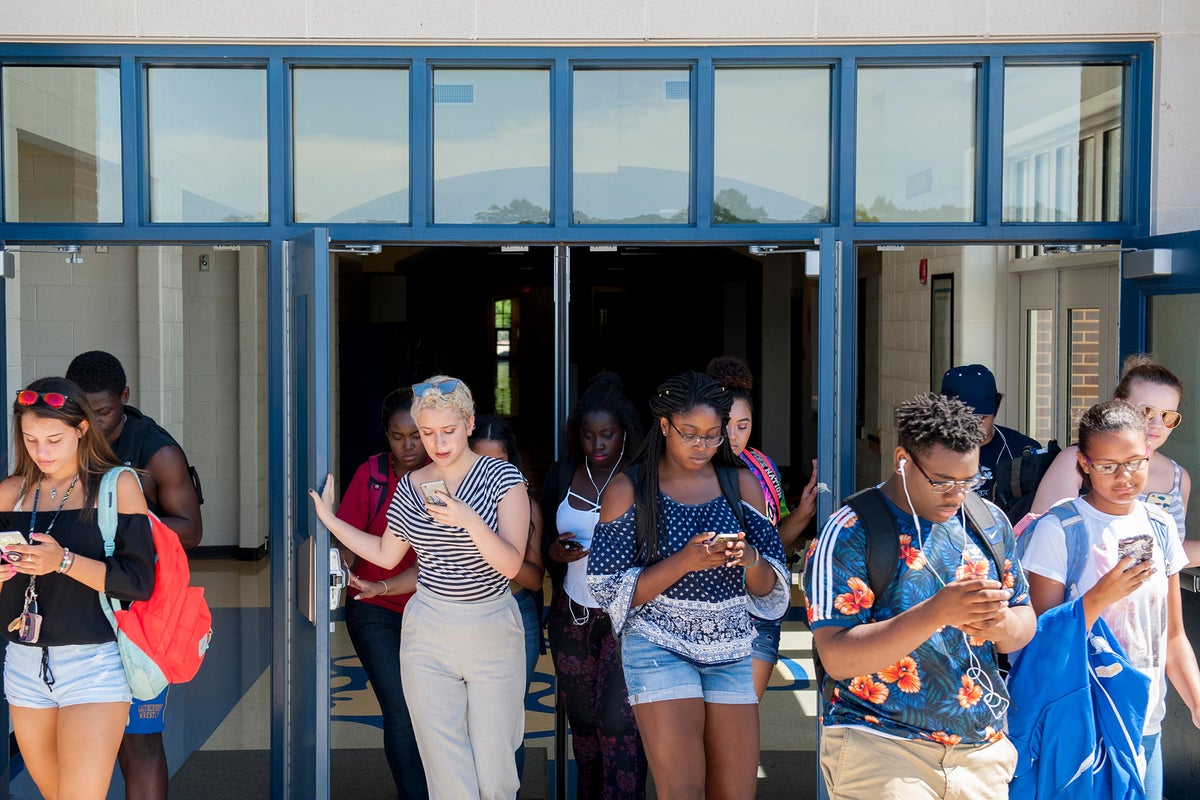
Massachusetts is about to make the rest of the country look like the Wild West when it comes to kids and the internet. If you think the current debates over TikTok are intense, wait until you see what just hit the House floor in Boston. Lawmakers aren't just talking about "safety tips" or "digital literacy" anymore. They're moving to pass a law that would effectively cut off social media for anyone under 14.
This isn't a suggestion. It's a hard line in the sand.
The bill, backed by House Speaker Ron Mariano and Ways and Means Chair Aaron Michlewitz, aims to be the most restrictive in the United States. It's a massive shift that treats Instagram and Snapchat less like digital playgrounds and more like regulated substances. If you've got a kid in middle school, your world is about to change.
The 14 Year Old Cutoff
Basically, the law creates a three-tier system for age and access. Here is how the math works out for families.
If a child is under 14, they're banned. Period. No "parental permission" workarounds and no "kid versions" of the apps if they fall under the social media umbrella. The platforms are required to block these users entirely. For the 14 and 15-year-old crowd, the gate opens slightly, but only with verified parental consent. Once a teen hits 16, they're viewed as old enough to navigate the algorithms on their own without state-mandated guardrails.
The logic here is pretty blunt. Lawmakers are betting that by the time a kid is 16, they've developed enough cognitive "armor" to handle the dopamine loops that these apps are built on. Whether that's true is a different conversation, but that's where the legal boundary is being drawn.
Age Verification and the End of the Honor System
We’ve all seen the "Are you 18?" pop-ups that a toddler could click past. This bill kills that era of the honor system. Under the new rules, social media companies have to implement "rigorous" age verification.
While the exact tech hasn't been dictated yet, it usually means things like:
- Uploading government IDs
- Using facial estimation AI
- Third-party credit checks
This is where the privacy advocates start getting nervous. To prove a child is not on the app, the companies might end up collecting even more sensitive data on everyone else. It's a classic catch-22. You want to protect the kids, but you might have to hand over your own biometric data or ID to the very companies the state says are untrustworthy.
Taking the Battle Into the Classroom
The social media ban is only half the story. The bill also takes a swing at "personal electronic devices" in schools. We’re talking a bell-to-bell ban.
The Senate already passed a version of a school phone ban, but the House is doubling down. They’re even proposing a pilot program for 10 districts to test out technology that makes phones "inoperable" on school grounds. Think signal jamming or specialized pouches like Yondr, but managed at a state level.
The goal is to stop the "constant buzz" that teachers say destroys any hope of a focused lesson. If your kid is in one of these pilot districts, their phone might as well be a brick from 8:00 AM to 3:00 PM.
Why This is More Than Just a "Boomer" Panic
It's easy to dismiss this as older lawmakers not "getting" technology. But honestly, the data they're looking at is grim. They’re citing addictive algorithms that exploit teenage insecurities for profit. Governor Maura Healey has been vocal about this, specifically pointing to features like infinite scroll that keep kids locked in a loop.
The bill also mandates that platforms give parents full access to their child's social media data. This turns parents into the primary auditors of their kids' digital lives. It’s a huge responsibility—and a potential nightmare for the parent-child relationship—but the state's stance is that the current hands-off approach has failed.
The Legal Wall Ahead
Don't expect Big Tech to take this sitting down. We’ve seen similar moves in Florida and Ohio get tied up in federal courts for years. The First Amendment is the biggest hurdle. Courts generally don't like it when the government tells people—even young people—what they can and can't read or where they can speak.
The Massachusetts AG's office will have until September 1, 2026, to figure out the regulations, with the whole thing supposedly going live on October 1, 2026. That gives the legal teams at Meta, ByteDance, and X about five minutes to file their first round of lawsuits.
What You Should Do Now
If you’re a parent in Massachusetts, don't wait for the law to catch up. The bill is a signal of where the culture is moving.
- Audit the apps. Check what your under-14 kids are actually using. If it has user-generated content and a feed, it’s probably on the hit list.
- Talk about the "Why." Explain to your kids that this isn't just about "being mean"—it’s about the state literally declaring these apps a mental health risk.
- Watch the school board. The cellphone ban part of the bill gives a lot of power to local districts. Attend the meetings to see if your town is volunteering for the "inoperable phone" pilot program.
The era of unrestricted digital access for kids is ending in Massachusetts. Whether the courts let it stand is another story, but the political will to shut it down has never been stronger.