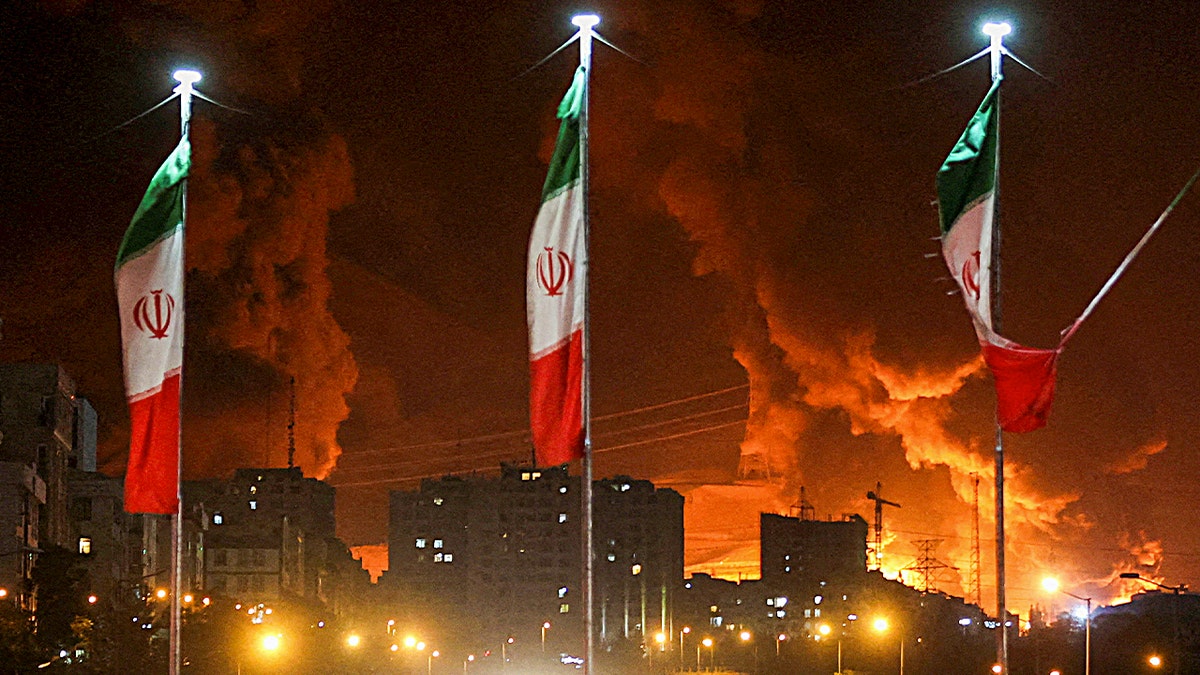
Western media loves a good bonfire. For the last thirty days, headlines have screamed about "guns in the streets" and the imminent dissolution of the Iranian state under the weight of U.S. and Israeli kinetic strikes. They paint a picture of a regime on its last legs, pinned between precision munitions from above and a populist uprising from below. It is a cinematic narrative. It is also a fundamental misunderstanding of how modern authoritarianism digests trauma.
If you think a month of tactical strikes and urban skirmishes equals the end of the Islamic Republic, you are misreading the physics of power. I have spent years tracking how these systems respond to external shocks, and the reality is far uglier than the "freedom is coming" tropes suggest. The violence we see isn't the sound of the door breaking down; it’s the sound of the locks being reinforced.
The Kinetic Delusion
The "lazy consensus" among defense analysts is that air superiority and the degradation of command-and-control (C2) nodes inevitably lead to systemic collapse. This is the 1990s playbook. It assumes that if you break the "brain," the body dies.
In a decentralized, ideologically driven state like Iran, that logic is flawed. The Islamic Revolutionary Guard Corps (IRGC) isn't a corporate hierarchy; it’s a franchise. When the U.S. and Israel strike central hubs, they aren't paralyzing the beast—they are triggering a pre-planned evolution into a "resistance" insurgency within its own borders.
The strikes aren't weakening the regime’s grip on the population; they are providing the regime with the ultimate "rally 'round the flag" catalyst. Every missile that hits a sovereign target in Tehran or Isfahan validates forty years of paranoid rhetoric. It turns a domestic protest movement into a suspected fifth column, giving the security apparatus a moral blank check to use lethal force that would have been politically expensive three months ago.
The Asymmetry of Street Violence
People ask: "How can the government survive when its citizens are taking up arms?"
This question assumes that parity exists in urban warfare. It doesn't. When we talk about "guns in the streets," we aren't talking about a disciplined rebel army. We are talking about chaotic, localized friction. To the Iranian state, this isn't a threat to its existence—it is a stress test.
I have seen how security forces in these regions operate. They don't need to control every block; they only need to control the flow of calories, data, and fuel. While the West watches grainy Telegram videos of burning police cars, the IRGC is quietly digitizing its suppression. They are using the chaos to field-test facial recognition and AI-driven behavior analysis to map out dissent networks in real-time.
They are losing the streets to win the database.
The False Promise of Precision Strikes
The U.S. and Israel brag about "minimal collateral damage." From a technical standpoint, the CEP (Circular Error Probable) of a GBU-39 Small Diameter Bomb is a marvel of engineering. But "precision" is a tactical term, not a political one.
In the eyes of a population under fire, there is no such thing as a "surgical" strike on their capital. Every "successful" hit on a missile silo or a nuclear enrichment facility is a psychological blow to the national psyche. It creates a vacuum of stability that the state is more than happy to fill with martial law.
If the goal of these attacks is to "encourage the Iranian people to reclaim their country," then the strategy is failing. History shows that external bombardment almost always causes a population to huddle closer to the only entity capable of offering a semblance of order—even if they hate that entity.
The Economic Paradox of Siege
The competitor's piece makes much of the economic devastation. Yes, the rial is in a tailspin. Yes, the strikes have crippled logistics. But here is the nuance: A desperate, impoverished population is easier to control than a rising middle class.
The middle class has something to lose; they demand rights, transparency, and global integration. A population fighting for bread and fuel is focused on survival. By intensifying the conflict, the U.S. and Israel are effectively wiping out the very demographic—the urban professionals and intellectuals—most likely to lead a meaningful democratic transition.
The "guns in the streets" are likely held by the fringes. The center is just trying to stay alive.
Why the "People Also Ask" Queries are Dead Wrong
1. Is the Iranian regime about to fall?
No. You are looking at the wrong metrics. Look at the loyalty of the mid-level military officers and the integrity of the internal communications network. Until the IRGC stops getting paid or starts defecting in mass numbers (which hasn't happened), the state remains intact.
2. Will US/Israeli strikes stop the nuclear program?
Temporarily, perhaps. But you cannot bomb knowledge. The more you strike, the more you convince the Iranian leadership that a nuclear deterrent is the only thing standing between them and the fate of Muammar Gaddafi. The strikes are the greatest recruitment tool for the hardline nuclear lobby.
3. Is this the start of World War III?
Stop the hyperbole. This is a controlled escalation. All three players—the U.S., Israel, and Iran—are terrified of a total war. They are engaged in a brutal dance of "competitive risk-taking."
The Hard Truth About Regime Change
Regime change from the outside is a fantasy sold by people who don't have to live with the consequences. If you want to actually "disrupt" the Iranian status quo, you don't do it with Hellfire missiles. You do it with high-speed, uncensored internet and a flood of capital that makes the regime's isolationist ideology look pathetic.
By choosing the path of "intensified attacks," the West has opted for the one scenario where the regime’s survival skills are most refined. The Islamic Republic was born in the fire of the Iran-Iraq war. It thrives in a state of siege.
The violence in the streets isn't a fever that will break the regime; it is the regime’s natural environment. We are not watching a collapse; we are watching a transformation into a more lean, more paranoid, and more dangerous military junta.
If you want to win, stop playing the game they were built to survive. Stop cheering for the "guns in the streets" and start looking at the quiet, tech-driven consolidation of power happening behind the smoke.
The fires will eventually go out. The surveillance state being built in the shadows of this conflict will not.
Stop waiting for the regime to fall and start realizing it is just changing its clothes.