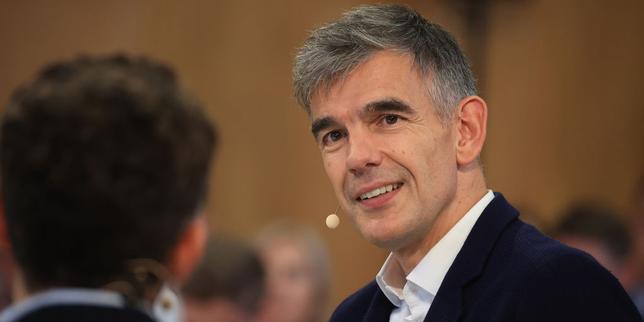
The BBC didn't just pick a new Director-General. They picked a fight with their own history. By hiring Matt Brittin, the man who spent nearly two decades as a top-tier Google executive, the broadcaster sent a signal that the old ways of doing things are officially dead. You might think bringing a Big Tech veteran into the world of public service broadcasting is like putting a shark in a koi pond. You aren't entirely wrong. It's a move that has traditionalists clutching their pearls and digital natives wondering why it took this long.
Matt Brittin isn't your typical suit. He’s the guy who managed Google’s sprawling operations across Europe, the Middle East, and Africa. He’s seen how the algorithmic sausage gets made. Now, he’s tasked with saving a British institution that often feels like it's stuck in 1995 while the rest of the world has moved on to TikTok and on-demand everything. This isn't just a job change. It’s a collision of two completely different philosophies of information.
The culture shock no one is talking about
Walking from the Google Plex into Broadcasting House is a massive leap. Google lives on data, speed, and failing fast. The BBC lives on consensus, heritage, and a terrifyingly high level of public scrutiny. Brittin’s first major hurdle isn't just the budget. It’s the DNA of the place. You don't just "disrupt" the BBC without breaking a few very expensive, very historic eggs.
Staff are worried. They should be. When a tech leader takes over, "efficiency" usually becomes the word of the year. That often means fewer middle managers and more engineers. For a creative powerhouse like the BBC, this shift feels threatening. Brittin has to prove he cares about the soul of the programming as much as he cares about the delivery mechanism. If he treats the BBC like a platform instead of a publisher, he’ll lose the newsroom within six months.
I’ve seen this play out in other industries. A tech savior arrives, talks about "agile workflows," and completely ignores the fact that making a high-quality documentary isn't the same as optimizing an ad unit. Brittin has to be careful. He needs to bridge the gap between the people who make the art and the people who build the apps.
Solving the license fee nightmare
Let’s be real. The license fee is on life support. You know it, I know it, and the government definitely knows it. Younger audiences aren't paying for a TV license because they don't own TVs. They own screens. They watch Netflix, Disney+, and YouTube. They don't see why they should fund a massive bureaucracy just to have the "option" of watching the news.
Brittin’s Google background gives him a unique perspective here. He understands the subscription economy better than anyone who has spent their life in public service. He knows how to track engagement. He knows how to make a service feel indispensable. But he’s also entering a political minefield. The BBC’s funding is tied to its charter, and the charter is a political football.
He can't just flip a switch and turn the BBC into a subscription model. That would destroy the "public service" part of the mission. Instead, he has to find a way to make the BBC so technologically superior that people feel they’re getting a steal for their money. Think about the iPlayer. It used to be the gold standard. Now? It feels clunky compared to the sleek interfaces of its American rivals. Brittin needs to fix that, and he needs to do it with a shrinking budget.
Data is the new editorial oversight
At Google, everything is a metric. If a button doesn't get clicked, the button goes away. At the BBC, things are often kept around because they’re "important" or "prestigious," even if only ten people watch them. This is where the real friction will happen.
Brittin will likely push for a data-driven approach to content. He’ll want to know exactly who is watching, for how long, and where they go next. This sounds logical. It’s how the modern world works. But there's a danger. If you follow the data too closely, you end up with "chasing the algorithm." You get clickbait news and reality shows because that’s what the numbers say people want.
The BBC’s job is often to give people what they need, not just what they want. It’s about education and high-brow culture as much as entertainment. If Brittin leans too hard into the Google playbook, the BBC risks losing its identity. It just becomes another streaming service. He has to balance the cold, hard numbers with the "gut feeling" of experienced editors. That’s a tightrope walk over a very deep canyon.
Fighting the giants on their own turf
The BBC isn't just competing with ITV or Channel 4 anymore. It's competing with Netflix’s $17 billion content budget and YouTube’s infinite library. It’s an unfair fight. Brittin knows this because he was on the other side.
His appointment is a bit like hiring a retired general from the opposing army. He knows their tactics. He knows how they keep users hooked. The BBC needs that insider knowledge to survive. They need to figure out how to be "local" in a globalized market.
One of the biggest missed opportunities for the BBC has been its failure to dominate the global conversation despite having the best brand in news. Brittin could change that. He understands global scale. He knows how to navigate different markets. If he can turn the BBC into a global digital powerhouse, the funding issues might become secondary. Imagine a world where the BBC’s digital subscriptions from the US and Asia subsidize the public service mission in the UK. It’s a bold vision, but it’s probably the only one that keeps the lights on.
The trust deficit in the age of AI
We’re living in a world of deepfakes and AI-generated slop. Trust is the only currency that still has value. The BBC still has plenty of it, but it’s a depleting resource. Brittin comes from a company that has faced its own share of "fake news" and "misinformation" scandals. He knows how tech can be used to erode truth.
He has a chance to position the BBC as the "source of truth" in an AI-saturated world. But to do that, he has to modernize the newsroom without making it feel like a factory. He needs to use AI to help journalists, not replace them. People don't want AI-written news summaries. They want human reporting from people on the ground.
Brittin’s challenge is to use technology to amplify that human reporting. He needs to make sure the BBC’s 24-hour news cycle is faster, more accurate, and more accessible than a random guy on X with a blue checkmark. That’s not a tech problem. It’s a credibility problem.
What happens if he fails
If Matt Brittin can’t turn the ship around, the BBC as we know it is likely done. We’ll see it broken up, sold off, or turned into a shell of its former self. The stakes are that high. This isn't just about a change in leadership. It’s about whether the concept of public service media can survive the 21st century.
Brittin’s success won't be measured by his first year. It’ll be measured by whether the BBC is still relevant in ten years. Does it still set the national agenda? Do people still turn to it when the world is on fire?
He’s got the tech chops. He’s got the business sense. Now he needs the heart. He has to fall in love with the BBC’s mission, not just its potential for digital optimization.
If you’re watching this from the outside, pay attention to the small things. Watch for changes in the iPlayer interface. Look for how the BBC handles its social media presence. Notice if the news starts feeling a bit more "snackable." These will be the fingerprints of the Matt Brittin era.
Keep an eye on the BBC’s annual reports over the next two years. Look specifically for "digital reach" metrics and "cost per user" figures. These will tell you exactly how much of the Google playbook is being implemented. If the "reach" numbers for under-25s don't start climbing by 2027, the Brittin experiment might be labeled a failure before his contract is even up. Check the headlines for any major departures in senior editorial staff—that's your early warning sign of a culture clash that's gone toxic.