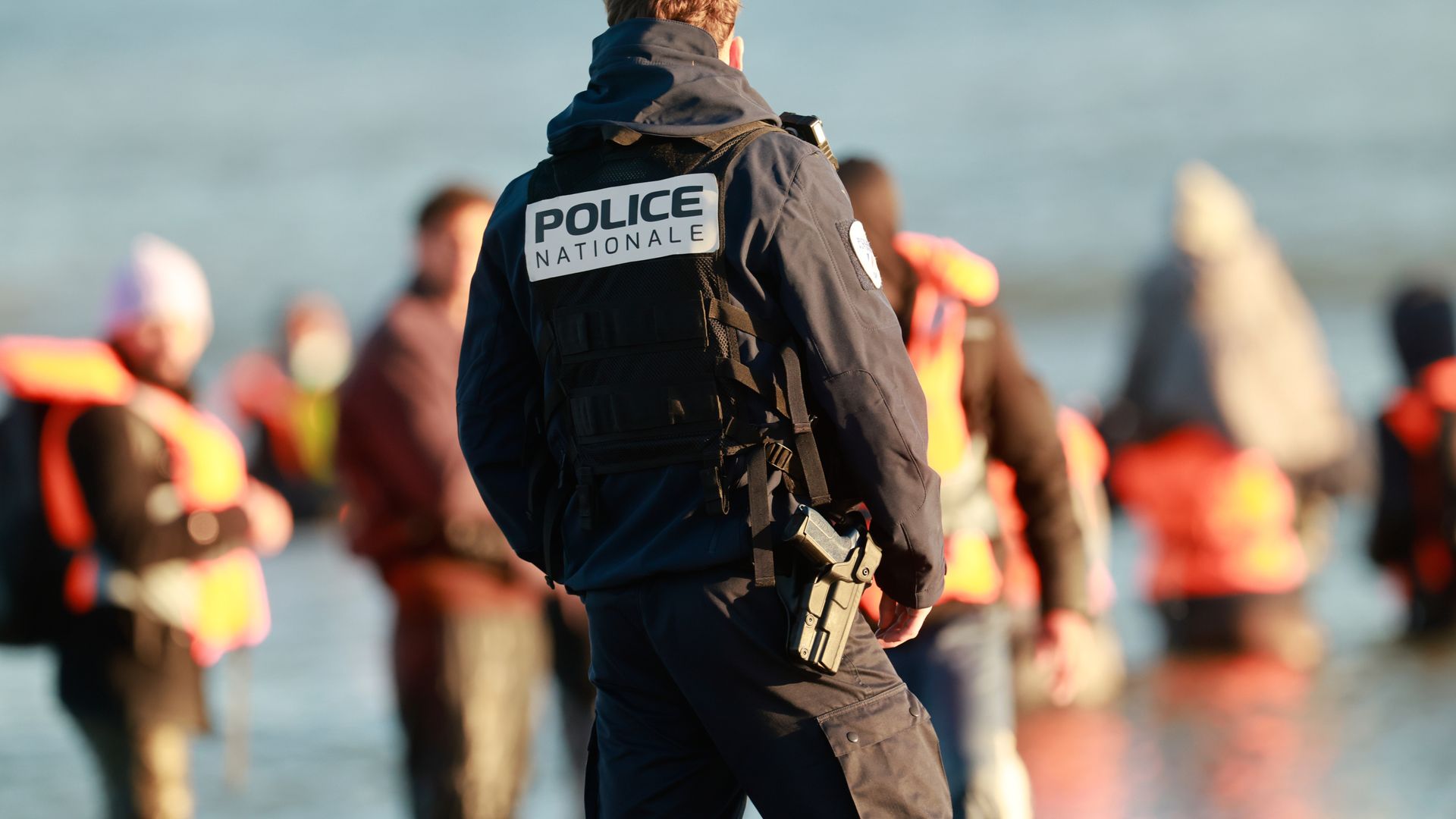
The death of four individuals in the English Channel and the subsequent arrest of a suspect marks a predictable failure of current maritime border enforcement and migrant smuggling supply chains. To analyze this event beyond the surface-level reporting of a "tragedy," one must examine the intersection of small-boat engineering limitations, the economics of illicit transit, and the legal frameworks governing extraterritorial arrests. The loss of life is not a statistical anomaly but the terminal output of a high-risk logistical model that optimizes for volume over passenger safety.
The Triad of Maritime Risk Factors
The English Channel is one of the most complex maritime environments globally, characterized by high-density commercial traffic, volatile weather patterns, and strong tidal currents. When irregular migration attempts intersect with these conditions, three specific variables determine the probability of a mass casualty event.
1. Structural Integrity and Overloading
Smuggling syndicates typically utilize Rigid-Hulled Inflatable Boats (RHIBs) or makeshift inflatable crafts. These vessels possess a theoretical maximum capacity based on buoyancy and engine displacement. However, the economic model of the crossing—where "profit per launch" is the primary metric—dictates that these boats are loaded at 300% to 500% of their safe capacity. This creates a precarious center of gravity. When a vessel enters the open sea, the internal air pressure of the tubes often fluctuates due to temperature changes, leading to structural buckling or "taco-ing," where the boat folds in the middle, pitching occupants into the water.
2. The Hypothermia Window
Channel water temperatures, even in summer, rarely exceed 18°C. In the event of a capsize or "man overboard" situation, the physiological timeline is rigid. Cold shock response occurs in the first 1-3 minutes, followed by short-term therapeutic failure (muscle incapacitation) within 10-30 minutes. Without high-specification personal flotation devices—which are rarely provided by smugglers—the survival rate for individuals in an overloaded vessel drops to near zero if the event occurs outside the immediate proximity of a Search and Rescue (SAR) asset.
3. Traffic Congestion and Wake Turbulence
The Dover Strait is a bottleneck for global shipping. Small, low-profile inflatables are often invisible to the radar systems of 300-meter container ships. The wake turbulence generated by large commercial vessels can easily swamp a low-freeboard migrant boat. The incident in question occurred within these high-risk zones, where the margin for navigational error is non-existent.
The Economic Engine of Illicit Transit
The arrest of a 40-year-old man in connection with these deaths points to the decentralized nature of modern smuggling operations. Understanding the hierarchy of these organizations is vital to assessing why enforcement often fails to deter future crossings.
The "Travel Agency" model has replaced the traditional "Coyote" model. Smuggling rings now operate as fragmented service providers:
- Logistics Leads: Based often in mainland Europe or the UK, they coordinate the acquisition of engines and boats, often sourced from Eastern Europe or China.
- Facilitators: Local operators in Northern France who manage the "beach launches."
- Transporters: Low-level recruits or sometimes the migrants themselves, who are given a discount to pilot the craft.
The arrest of a single individual often targets the facilitator or a mid-level coordinator. While these arrests are necessary for legal accountability, they rarely disrupt the broader supply chain because the capital requirements for entry—a PVC boat and a 40hp outboard motor—are extremely low compared to the potential revenue, which can exceed £100,000 per successful crossing.
Legal Jurisdictions and the Friction of Prosecution
The legal aftermath of Channel deaths operates in a complex grey zone of international maritime law and national criminal codes. The suspect arrested faces potential charges ranging from manslaughter to facilitating illegal immigration.
Extraterritoriality and Evidence Gathering
Prosecuting "death at sea" cases requires proving a direct causal link between the actions of the facilitator and the mechanical failure of the boat. This involves:
- Forensic Reconstruction: Analyzing the remnants of the vessel to determine if it was seaworthy at the time of launch.
- Digital Footprints: Tracking encrypted messaging apps (Signal, WhatsApp) to link the suspect to the specific coordinates of the launch.
- Witness Reliability: Using testimonies from survivors who may have conflicting accounts or may be hesitant to cooperate due to their own tenuous legal status.
The friction in this process is high. Under the UK's Nationality and Borders Act and subsequent updates, the threshold for "facilitation" has been lowered, but the burden of proof for "reckless endangerment resulting in death" remains high.
The Deterrence Paradox
Governments often rely on "hostile environment" policies to reduce the "pull factors" of migration. However, data-driven analysis suggests that as enforcement on the French coastline increases, the risk profile of the crossings also increases.
When easy-to-access launch points are blocked, smugglers move to more dangerous, remote coastal areas. This necessitates longer journeys through rougher waters. Furthermore, as boats are seized by authorities, smugglers pivot to even cheaper, less reliable materials to maintain their margins. This creates a "Deterrence Paradox": the more difficult the crossing becomes, the more lethal the methods used by smugglers to circumvent those difficulties.
Operational Limitations of Search and Rescue (SAR)
The intervention by the RNLI, Border Force, and the French Coastguard (SNSM) is often the only barrier between a crossing and a mass casualty event. However, SAR operations are hampered by "Saturation Events."
A Saturation Event occurs when 10 to 20 boats launch simultaneously. Even with advanced drone surveillance and thermal imaging, the sheer volume of targets makes it impossible to maintain a 1:1 escort ratio. Smugglers intentionally utilize "clumped launches" during favorable weather windows to overwhelm the sensory and physical capacity of border patrols. This tactical choice directly contributes to delays in reaching sinking vessels, as assets may be tied up with another craft five miles away.
The Failure of Current Policy Frameworks
Current strategies focus on the "Small Boats" phenomenon as a standalone enforcement issue. This is a category error. The crossings are a symptom of a broader disruption in global migration patterns and the hardening of traditional land routes.
The mechanism of "Incentive Alignment" is missing. Currently:
- The Smuggler is incentivized to maximize volume and minimize cost (Safety = Cost).
- The Migrant is incentivized by the "Sunk Cost Fallacy" (having already paid thousands of pounds and traveled thousands of miles).
- The State is incentivized to prioritize optics and border integrity over maritime safety protocols.
Until the economic incentive—the ability to reach the UK and enter the informal economy or the asylum system—is decoupled from the physical act of the crossing, the logistics of these lethal transits will continue to adapt to whatever enforcement is placed in their path.
Strategic Realignment for Maritime Border Management
To reduce the frequency of fatalities, the focus must shift from reactive arrests to proactive supply chain disruption and the establishment of "Safe Passage" alternatives that render the smuggling model economically unviable.
The immediate tactical priority for enforcement should be the seizure of maritime assets (outboard motors and specialized PVC fabric) at the point of manufacture or distribution within the EU. Disrupting the hardware supply chain is more effective than attempting to arrest individual facilitators after a tragedy has occurred.
Furthermore, the legal definition of "seaworthiness" in a migration context must be standardized across the IMO (International Maritime Organization) to allow for the preemptive interception of vessels that clearly do not meet the minimum safety requirements for the Dover Strait, regardless of whether they are in international or territorial waters.
The current cycle of launch, failure, and arrest is a closed loop that provides no long-term solution to the fundamental instability of the English Channel as a transit route. The arrest of the 40-year-old suspect, while a necessary step in the judicial process, serves only as a temporary punctuation mark in a continuing logistical crisis.
The strategic play is to move toward a "Friction-Frontier" model: increasing the cost and complexity of the smuggling hardware while simultaneously providing high-scrutiny, legal processing centers in mainland Europe to drain the customer base from the illegal market. Without this dual-track approach, the Channel will remain a high-consequence failure point in European border policy.