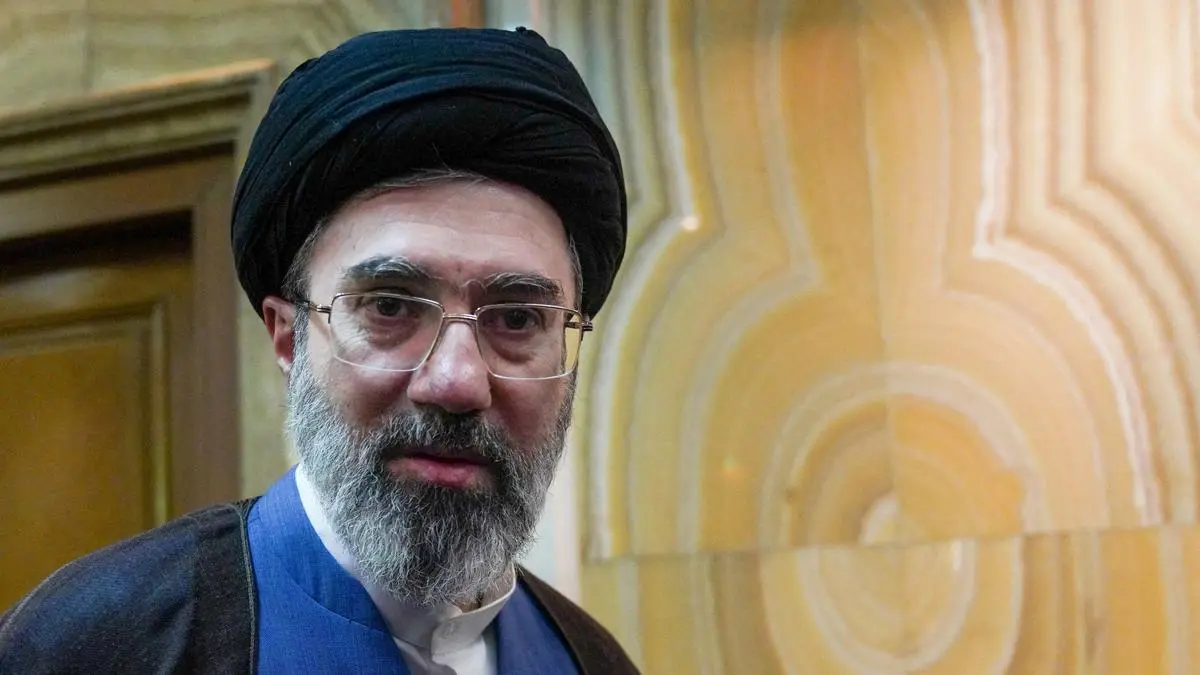
The rumors about Iran's new Supreme Leader, Mojtaba Khamenei, aren't just whispers in the halls of power anymore. They're backed by accounts of a leader struggling with physical trauma that would break most people. While the world watches the shaky ceasefire between Iran, Israel, and the U.S., the man holding the ultimate religious and political authority in Tehran is reportedly nursing "severe and disfiguring" injuries.
You won't see him on state TV. You won't find recent photos of him leading Friday prayers. Since his father, Ayatollah Ali Khamenei, was killed in a massive airstrike on February 28, 2026, Mojtaba has been a ghost. He took the mantle of Supreme Leader on March 8, yet his presence is felt only through audio feeds and written decrees.
The Strike That Changed Everything
On the very first day of the 2026 war, a targeted strike hit the Supreme Leader’s compound in central Tehran. It wasn't just a political decapitation; it was a family tragedy. Mojtaba’s wife, brother-in-law, and sister-in-law were killed in that same blast. Mojtaba himself survived, but at a massive cost.
Reliable reports from sources close to the inner circle suggest his face was badly disfigured in the attack. More critically, there’s strong evidence he lost at least one leg. U.S. Defense Secretary Pete Hegseth hinted at this back in March, and intelligence assessments since then have only solidified the picture.
Imagine trying to consolidate power in a country built on the image of the "strong man" while you're literally learning how to walk again—or realizing you never will. It’s a brutal start to a reign that many already viewed as an illegitimate jump to dynastic rule.
Governance by Audio Feed
How do you run a country in the middle of a war when you can't stand in front of a camera? Right now, Mojtaba is doing it through audio conferencing. He’s supposedly "mentally sharp" and deeply involved in the peace talks currently happening in Islamabad.
But there’s a massive gap between being "mentally sharp" and being the undisputed voice of the Islamic Republic. For decades, his father ruled with an iron grip and a very specific public persona. Mojtaba doesn't have that luxury. He's inheriting a system under fire, both from foreign missiles and internal dissent.
- The "Janbaz" Label: Interestingly, Iranian state media has started using the term janbaz to describe him. This is the word used for veterans who were severely wounded in war. It’s a deliberate attempt to frame his disfigurement as a badge of honor rather than a sign of weakness.
- The Power Vacuum: While Mojtaba calls the shots on paper, figures like Gholam-Hossein Mohseni-Eje'i are the ones actually appearing in public, demanding more executions and harsher crackdowns on dissidents.
The "Where is Mojtaba" Crisis
The absence of a physical leader is creating a vacuum that memes and conspiracy theories are filling. On Iranian social media, the phrase "Where is Mojtaba?" is everywhere. People are posting images of empty chairs. In a culture where the Supreme Leader’s face is plastered on every wall, his invisibility is a loud, ringing bell of uncertainty.
If he truly is as disfigured as sources claim, the regime has a massive PR problem. They can't hide him forever. A senior official recently suggested that images might be released in a month or two, but that feels like a stalling tactic. They’re waiting for the swelling to go down or for the prosthetic specialists to finish their work.
What Happens Next
The peace talks in Islamabad are the immediate priority, but the internal stability of Iran is the real story. Mojtaba has the backing of the Revolutionary Guards (IRGC)—they're the ones who basically forced the Assembly of Experts to vote him in—but the IRGC's loyalty is often tied to a leader's ability to project strength.
If you're watching this situation, don't look at the official statements from Tehran. They’ll keep using the janbaz narrative to buy time. Instead, watch the streets and the messaging apps.
- Monitor the "Proof of Life" releases: If the regime releases a heavily edited video or a distant photo, it confirms the severity of the wounds.
- Track the IRGC's public tone: If they start shifting their rhetoric to emphasize "collective leadership" or a "council," it means Mojtaba isn't recovering as well as they hoped.
- Watch the Islamabad talks: A leader who can't appear in person is a leader who can't easily sign a definitive peace treaty without looking like he's acting under duress.
The reality is that Iran is being led by a man in a high-security medical wing. Whether he can actually transition from a "ghost leader" to a functioning head of state will determine if the Islamic Republic survives this decade.
Don't expect a public appearance any time soon. The regime is betting that they can keep the mystery alive long enough to stabilize the front lines. But in the age of instant information and relentless satire, an empty chair is a hard thing to defend.