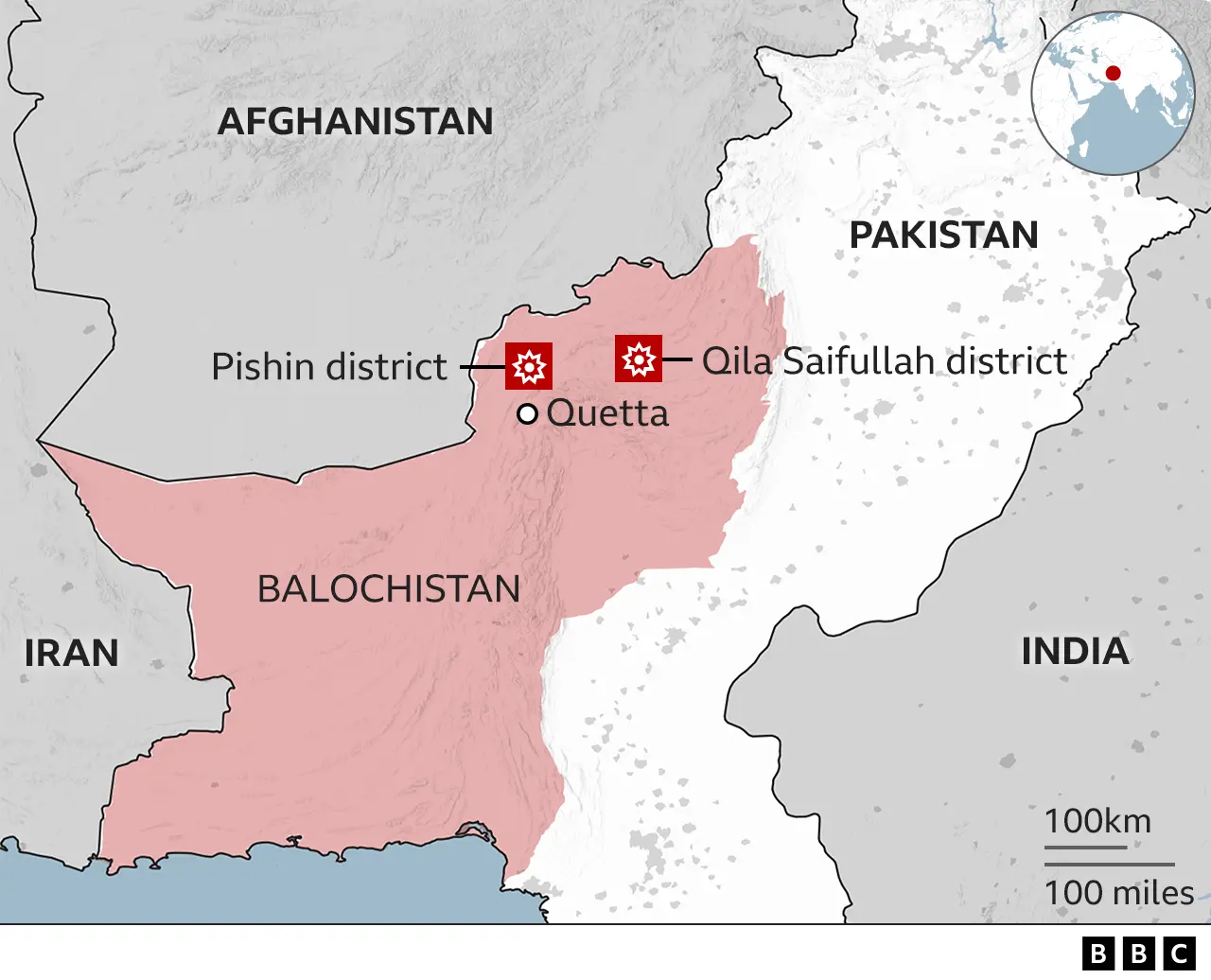
The protest by the Baloch National Movement (BNM) outside 10 Downing Street represents more than a localized demonstration; it is a calculated attempt to activate the British parliamentary oversight mechanism and shift the cost-benefit analysis of the Pakistani state's internal security operations. To understand the viability of these demands, one must look past the emotional resonance of human rights advocacy and examine the structural friction between state sovereignty, international law, and the strategic interests of the United Kingdom in the South Asian corridor.
The crisis in Balochistan is characterized by a three-dimensional failure of the social contract: the suspension of habeas corpus, the extraction of resource wealth without local equity, and the suppression of political dissent through kinetic force. When organizations like the BNM petition the British Prime Minister, they are attempting to exploit a specific geopolitical bottleneck where Pakistan’s need for Western diplomatic legitimacy clashes with its domestic military objectives.
The Triad of Systematic Erasure
The core grievances presented by the BNM can be categorized into three distinct operational pillars that define the current state of Balochistan. These pillars are not isolated incidents but integrated components of a broader security doctrine.
1. The Forced Disappearance Framework
Enforced disappearances function as a tool of psychological warfare designed to decapitate the leadership of secular nationalist movements without the legal friction of a trial. By removing individuals from the judicial system, the state creates an information vacuum. This "missing person" status serves a dual purpose: it eliminates a perceived threat and paralyzes the victim's social circle through a cycle of hope and terror. The BNM asserts that thousands have entered this vacuum, a claim that aligns with reports from human rights watchdogs regarding "kill-and-dump" operations.
2. Demographic and Resource Displacement
The economic friction in the region stems from the CPEC (China-Pakistan Economic Corridor) framework. From a strategic perspective, Balochistan is treated as a transit corridor rather than a stakeholder. The development of Gwadar Port represents a hard-asset investment that necessitates a high-security environment, often resulting in the displacement of local populations. This creates a feedback loop where local resistance to economic marginalization is met with increased militarization, which in turn fuels more resistance.
3. The Collapse of Judicial Oversight
A state’s legitimacy rests on its monopoly on the legal use of force. When paramilitary groups or intelligence agencies operate outside the purview of the High Courts, the legal architecture of the state collapses. The BNM’s appeal to the UK government is an acknowledgment that domestic Pakistani legal remedies have reached a point of total exhaustion.
Mechanisms of British Diplomatic Intervention
The demand for "global intervention" is often dismissed as a rhetorical flourish, but in the context of UK-Pakistan relations, it involves specific levers of statecraft. The UK holds significant influence through three primary channels:
- The Commonwealth Human Rights Charter: As a fellow member, Pakistan is theoretically bound by standards that the UK can use as a basis for formal inquiries or suspension of certain bilateral privileges.
- DFID and Foreign Aid Contingency: While direct aid has shifted, the UK remains a major developmental partner. Integrating human rights compliance into the "Trade and Investment" dialogue creates a tangible cost for the Pakistani military's domestic policy.
- UN Security Council Influence: As a permanent member, the UK possesses the power to initiate or support resolutions that mandate independent fact-finding missions.
The barrier to these interventions is the "Stability vs. Rights" paradox. The British Foreign, Commonwealth & Development Office (FCDO) frequently prioritizes Pakistan’s cooperation on counter-terrorism and Afghan regional stability over the internal human rights conditions of the Baloch people. This creates a moral hazard where the Pakistani state believes it can trade regional cooperation for domestic impunity.
The Cost Function of Global Silence
The failure of the international community to address the Balochistan crisis creates a long-term regional instability that outweighs short-term security gains. The logic of "stability through suppression" is flawed because it ignores the radicalization curve. When secular political movements like the BNM are ignored by the West, the vacuum is often filled by more radical elements, potentially escalating a regional rights issue into a broader, uncontrollable conflict.
The economic cost is equally high. An unstable Balochistan renders the multi-billion dollar CPEC investments high-risk. Without a political settlement that includes the Baloch people, the infrastructure projects remain targets for insurgent activity, requiring an ever-increasing percentage of Pakistan’s GDP to be diverted toward military protection rather than social development.
Strategic Constraints of the BNM Position
While the BNM’s advocacy is grounded in documented human rights violations, their strategy faces significant bottlenecks.
- Information Asymmetry: The Pakistani state maintains a tight grip on media access within Balochistan. This makes it difficult for protesters in London to provide the real-time, verified data sets required to trigger high-level diplomatic sanctions.
- Geopolitical Realignment: Pakistan’s pivot toward China as its primary security and economic benefactor reduces the traditional leverage held by Western powers. If the UK applies pressure, Pakistan can threaten to further align its strategic assets with Beijing, a prospect the West views with extreme caution.
- Fragmentation of the Diaspora: The effectiveness of the London protest is often diluted by the lack of a unified Baloch political front. When different factions present varying end-goals—ranging from provincial autonomy to total independence—international actors find it easier to remain neutral to avoid being seen as supporting a secessionist movement.
Quantifying the Human Rights Deficit
The lack of precise data is not an accident; it is an outcome of the security environment. However, the frequency and scale of the protests provide a proxy measure for the intensity of the crisis. When protests move from Quetta to London, it indicates that the internal pressure within the province has exceeded the state's capacity to suppress it locally.
The demand for the UN to send a fact-finding mission is the most strategically sound request the BNM can make. A fact-finding mission provides the "verified data" that Western governments require to change their stance without appearing to be meddling in internal affairs. It shifts the burden of proof from the protesters to the state.
The Strategic Path Forward for International Actors
For the UK government and the international community, the Balochistan issue cannot remain a secondary concern. The current trajectory suggests a deepening of the insurgency and a total breakdown of the rule of law in a nuclear-armed state. To mitigate this, a shift in diplomatic engagement is required:
- De-linking Counter-terrorism from Human Rights: The UK must stop viewing Pakistan's assistance in regional security as a "credit" that can be used to offset human rights violations in Balochistan. These must be treated as separate silos of the bilateral relationship.
- Mandatory Reporting on Disappearances: Future trade agreements and security cooperation should be contingent on the establishment of a transparent, third-party verified database of missing persons.
- Support for Secular Political Entities: By engaging with secular nationalist groups like the BNM, Western powers can ensure that the political space in Balochistan is not entirely ceded to radicalism.
The demonstration at 1 Downing Street is a signal of a failing containment strategy. As the human rights deficit in Balochistan grows, the volatility of the South Asian region increases proportionally. The international community must choose between the discomfort of diplomatic friction with Pakistan today or the catastrophe of a collapsed provincial social order tomorrow.


