The current disruption to the Irish fuel supply chain is not a localized logistics failure but a systemic breakdown caused by a convergence of inelastic demand, tax-driven price volatility, and a "just-in-time" inventory model that lacks the buffer to absorb targeted civil disobedience. As protests enter their fourth day, the Irish government faces a trilemma: capitulate to fiscal demands and risk long-term carbon tax objectives, deploy state security forces to clear distribution hubs at the risk of escalating social unrest, or allow supply depletion to force a market-driven (and potentially chaotic) resolution.
Understanding the mechanics of this crisis requires a breakdown of the three primary vectors driving the escalation: the Cost-Push Inflation Loop, the Bottleneck Vulnerability of National Infrastructure, and the Political Credibility Gap.
The Mechanics of the Cost-Push Inflation Loop
Fuel prices serve as a foundational variable in the national consumer price index (CPI) because they dictate the "last mile" cost of almost every physical good. In Ireland, the current price at the pump is governed by a rigid cost structure where over 50% of the retail price is comprised of fixed and variable taxes, including Excise Duty, Carbon Tax, and VAT.
When global Brent Crude prices rise, the tax component acts as a multiplier. Because demand for transport fuel is highly inelastic—meaning commuters and hauliers cannot easily switch to alternatives in the short term—the price increase functions as an immediate drain on disposable income and corporate margins. The protestors’ demand for a "price cap" or tax suspension is a direct response to this mathematical reality. However, from a fiscal perspective, removing these taxes creates a structural deficit in the national budget and signals a retreat from the Climate Action Plan, which relies on high carbon pricing to disincentivize fossil fuel use.
The Three Pillars of Supply Chain Paralysis
The protestors have identified and exploited three specific vulnerabilities in the Irish energy network. By focusing on these nodes, a relatively small number of individuals can exert disproportionate leverage over the national economy.
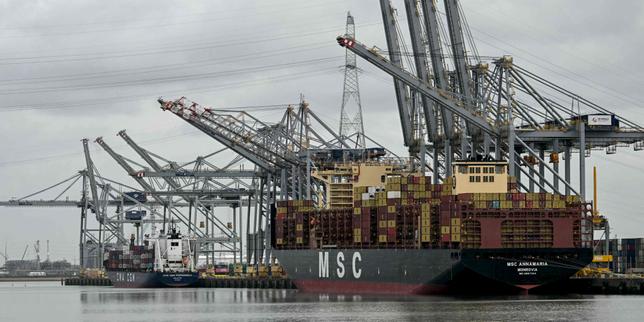
- Storage Hub Concentration: Ireland relies on a limited number of high-capacity storage facilities, primarily located at Dublin Port and Whitegate. By establishing picket lines at the egress points of these facilities, protestors prevent the physical movement of "bonded" fuel to retail stations.
- The Secondary Distribution Gap: Most retail stations operate on a lead time of 24 to 48 hours for replenishment. Without constant tanker flow, the "safety stock" maintained at the station level evaporates within two days of high-volume panic buying.
- The Labor Multiplier: Even where blockades are porous, the psychological impact on tanker drivers—many of whom are third-party contractors—creates a secondary delay. Drivers hesitant to cross picket lines for safety or solidarity reasons effectively extend the reach of the physical protest without requiring a physical presence at every terminal.
Quantifying the Impact of "Panic Buying" Psychology
The government’s primary challenge is managing the feedback loop of public perception. When news cycles report "potential shortages," the population shifts from a "fill-as-needed" model to a "maximum capacity" model.
If 2 million motorists simultaneously decide to top off their tanks from half-full to full, the sudden demand surge represents a massive spike that the distribution system is not built to handle. This is an artificial shortage created by consumer behavior, yet the result—empty pumps—is identical to a real supply failure. This creates a "Run on the Bank" scenario for energy. The state's messaging currently struggles to counteract this because the visible presence of protestors at Dublin Port validates the consumer's fear, making the government's reassurances appear decoupled from the physical reality.
Government Intervention Frameworks and Their Limitations
The Irish state has three primary levers to resolve the blockade, each carrying a high cost of failure.
Lever 1: Fiscal Concession (The Tax Pivot)
The government could announce an emergency reduction in the National Oil Reserves Agency (NORA) levy or a temporary VAT holiday. While this would likely disperse the protests, it sets a dangerous precedent for "policy by protest." It also erodes the revenue needed to fund the very infrastructure projects designed to reduce fuel dependency in the long term.
Lever 2: Legal Enforcement (The High Court Injunction)
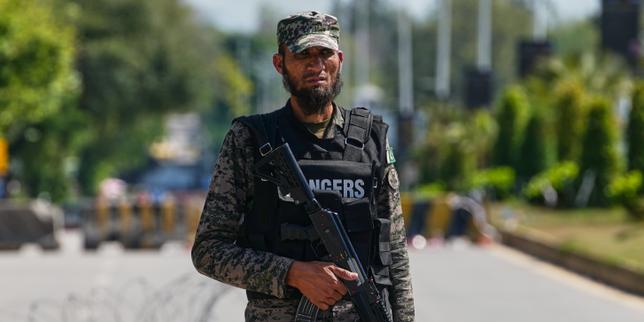
Securing High Court injunctions against named individuals or "persons unknown" allows the Gardaí (police) to move from a monitoring role to an enforcement role. The limitation here is the "Martyrdom Effect." Forceful removal of hauliers or farmers from terminal gates often generates sympathetic strikes in other sectors, turning a fuel protest into a broader anti-government movement.
Lever 3: Strategic Reserve Release
The state holds emergency oil stocks sufficient for approximately 90 days of normal consumption. However, releasing these reserves is a measure intended for global supply shocks (e.g., a total embargo), not for domestic logistical blockades. Releasing reserves into a blocked distribution network is a category error; the problem is not a lack of fuel, but the inability to move existing fuel from terminal to pump.
The Role of the Haulage Sector as a Political Proxy
The haulage industry in Ireland operates on razor-thin margins. A 10% increase in fuel costs can represent the difference between a profitable quarter and insolvency for a mid-sized fleet. This makes the sector uniquely sensitive to price fluctuations and uniquely capable of disrupting the economy.
Unlike other protestors, hauliers possess the heavy machinery required to create "hard" blockades. A single tractor-trailer unit parked across a terminal entrance requires specialized equipment and significant time to move. This technical capability gives the Irish Road Haulage Association (IRHA) and breakaway splinter groups a "Veto Power" over national logistics that the state is currently unprepared to bypass.
Strategic Divergence: The Failure of the Just-in-Time Model
The Irish energy crisis highlights the fragility of the "Just-in-Time" (JIT) delivery model in a period of social volatility. JIT is optimized for cost efficiency during periods of stability, but it possesses zero resiliency during civil unrest.
The current bottleneck exists because the system assumes a constant, frictionless flow of tankers. To mitigate future risks, the state and private retailers must reconsider the "Cost of Resilience." This involves:
- Distributed Storage: Increasing the storage capacity at the regional level to ensure that a blockade at Dublin Port does not paralyze the entire country within 72 hours.
- Automated Egress: Investing in terminal technology that allows for more flexible loading and routing, reducing the impact of a single-point-of-failure at main gates.
- Contractual Resilience: Ensuring that essential service fuel contracts (for emergency services and food logistics) include priority access and alternative delivery mechanisms.
Projected Resolution Path
The most likely outcome involves a two-stage de-escalation. First, the government will likely offer a "targeted relief package" for the commercial transport sector—such as a refined fuel rebate scheme—rather than a general tax cut for all consumers. This aims to split the protest's leadership by satisfying the most economically vulnerable and organized group (the hauliers) while ignoring the broader, less organized civilian protestors.
Second, the Gardaí will likely wait for the "fatigue point" of the protest, typically occurring between days five and seven, to execute surgical removals of remaining blockades under the cover of public frustration. As fuel run-outs begin to impact the general population's ability to work and attend school, public sympathy for the protestors usually shifts toward a demand for law and order.
The immediate strategic priority for the state is the protection of the "Essential Flow" (medical, food, and emergency services). Expect the implementation of "Blue Corridors"—guarded routes from terminals to specific high-priority depots—to maintain the core functions of the state while the political negotiation over tax rates continues. The crisis will end when the cost of continuing the protest (legal fees, lost income, and dwindling public support) exceeds the perceived benefit of the demanded tax concessions.
The long-term takeaway for the Irish energy strategy is clear: the transition away from fossil fuels is not just an environmental imperative but a national security one. Every megawatt of energy produced by domestic wind or solar is a megawatt that cannot be held hostage at a port terminal entrance.
Identify the primary leaders of the transport splinter groups and offer a closed-door "Industry Stabilization Fund" that provides direct subsidies to Euro VI compliant fleets. This allows the government to maintain the headline Carbon Tax rate for the public while effectively lowering the operating cost for the most disruptive segment of the protestors. Once the heavy vehicles are withdrawn, the remaining civilian protestors lose their "physical mass" and can be cleared through standard public order policing without significant risk of supply chain damage.