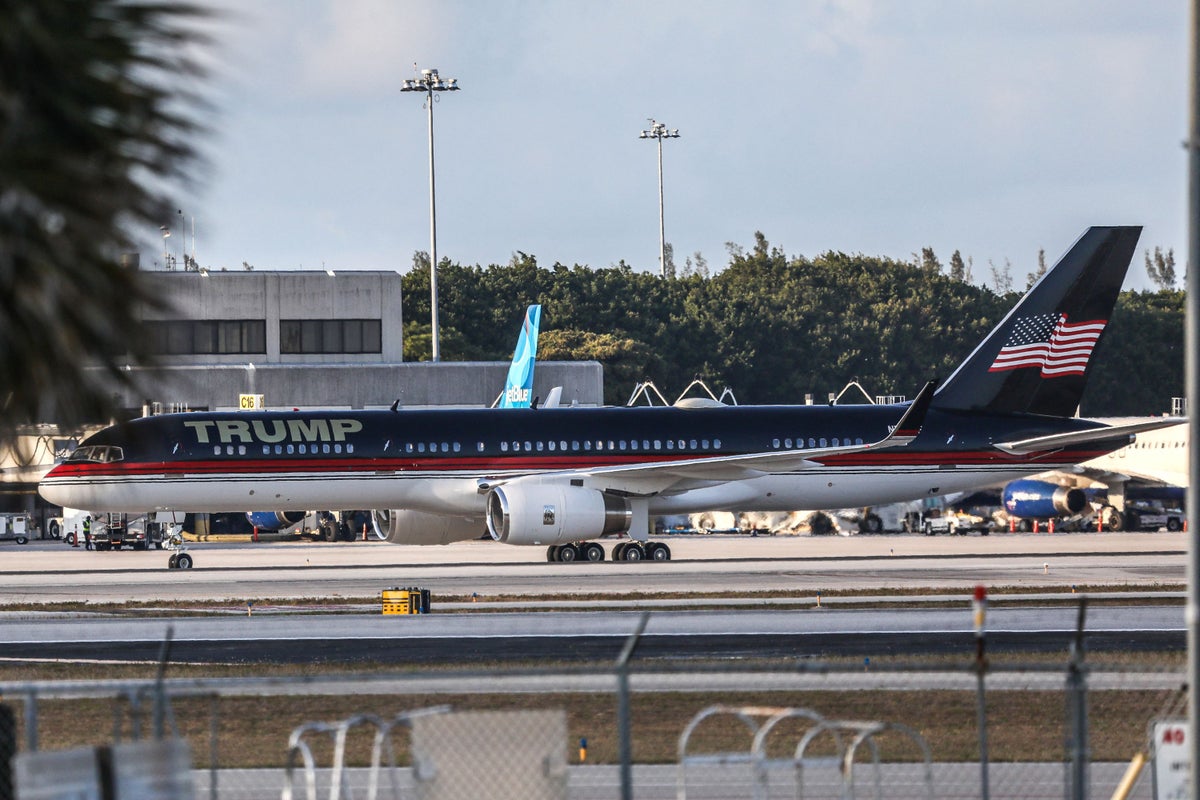
Florida will spend at least $5.5 million to rename Palm Beach International Airport (PBI) after Donald Trump, a move that replaces local control with a state-mandated branding overhaul. Governor Ron DeSantis signed the legislation on March 30, 2026, officially designating the facility as President Donald J. Trump International Airport. While the name change is primarily a political victory for the state’s Republican leadership, the logistics involve a massive, multi-year undertaking that touches everything from highway signage to global aviation databases.
The price tag is not a random estimate. It is the result of a complex calculation involving the physical replacement of hundreds of signs and the digital re-mapping of a major travel hub.
The High Cost of Physical Signage
The most visible portion of the $5.5 million budget is dedicated to the physical infrastructure surrounding the airport. Changing an airport's name is not as simple as swapping out a single "Welcome To" sign at the terminal entrance.
In Palm Beach County, the branding for PBI extends miles beyond the airport perimeter. Florida Department of Transportation (FDOT) standards require specific overhead highway gantry signs that can cost upwards of $100,000 to $150,000 per installation when factoring in labor, lane closures, and structural reinforcement.
The Infrastructure Breakdown
- Highway Markers: Dozens of signs on I-95 and the Florida Turnpike must be stripped and replaced.
- On-Site Wayfinding: Every directional sign within the airport loop, parking garages, and rental car centers requires an update.
- Terminal Branding: The "signature" signs on the exterior of the main terminal are custom-built, high-visibility installations that often require heavy machinery to install.
Historical precedents in the aviation industry suggest these estimates are often conservative. When San Francisco considered adding Harvey Milk’s name to its international terminal, analysts found that replacing just 36 highway signs would cost approximately $3.2 million. The Florida estimate of $5.5 million suggests a phased approach, but even a minimal rollout involves significant taxpayer-funded labor.
The Invisible Digital Migration
While the physical signs are expensive, the digital transition is more technically demanding. An airport’s identity is hard-coded into thousands of third-party systems. This is where the rebranding moves from a construction project to a data migration challenge.
Aviation authorities emphasize that the three-letter location identifier (PBI) will remain unchanged. This is a critical distinction. Changing a location code is a logistical nightmare that would affect global flight planning, ticketing systems (GDS), and baggage handling software. However, the "Long Name" field in these databases must be updated.
Every airline serving the airport—from Delta to JetBlue—must update its internal booking engines. Global distribution systems like Amadeus and Sabre need to reflect the new name so that travel agents and consumers see the correct branding during the search process. This "back-end" work doesn't always carry a direct invoice from a contractor, but it consumes thousands of man-hours across the private and public sectors.
Preemption and the Loss of Local Control
The "why" behind this change is as significant as the cost. The legislation, specifically Senate Bill 706, represents a "preemption" of power. Historically, naming rights for airports were the purview of the local government or the airport authority that owns and operates the facility.
By passing this law, the Florida Legislature stripped Palm Beach County of its authority to name its own asset. The state now holds the power to designate the "brand name" of all seven major commercial airports in Florida. This shift ensures that local political opposition cannot block the renaming, as the state has effectively overwritten the county’s home-rule powers.
The Trademark and Royalty Question
One of the most scrutinized aspects of renaming a public facility after a private individual—especially one with an extensive portfolio of branded real estate—is the issue of intellectual property.
The Trump Organization filed a trademark application for "President Donald J. Trump International Airport" in early 2026. However, the legislation includes a specific safeguard: the name change is contingent on an agreement with the rights holder to use the name at no cost.
"There will be no royalty, licensing fee, or financial consideration whatsoever," stated a representative for the Trump Organization.
This prevents the former president from profiting directly from the use of his name on the airport. However, the indirect value of such a branding move is immense. It cements the Trump brand into the permanent infrastructure of South Florida, turning a public utility into a landmark of his political legacy.
Federal Hurdles and FAA Approval
The Federal Aviation Administration (FAA) does not technically "approve" names in the sense of judging their appropriateness. Their role is purely administrative and safety-focused. The FAA’s primary concern is that the name change does not create pilot confusion or lead to errors in air traffic control communication.
The transition, set to begin on July 1, 2026, will involve the FAA updating sectional charts and the Airport/Facility Directory (A/FD). These updates occur on a strict 56-day cycle. If the state misses a filing deadline, the official name in the cockpit may lag months behind the name on the terminal building.
The $5.5 million investment is a high-stakes gamble on the power of political branding. While proponents argue it honors the first Florida resident to serve as president, critics view it as an expensive, top-down mandate that ignores the financial priorities of local taxpayers. As the July 1 deadline approaches, the focus moves from the halls of Tallahassee to the maintenance crews who will begin the literal work of rewriting the map of South Florida.