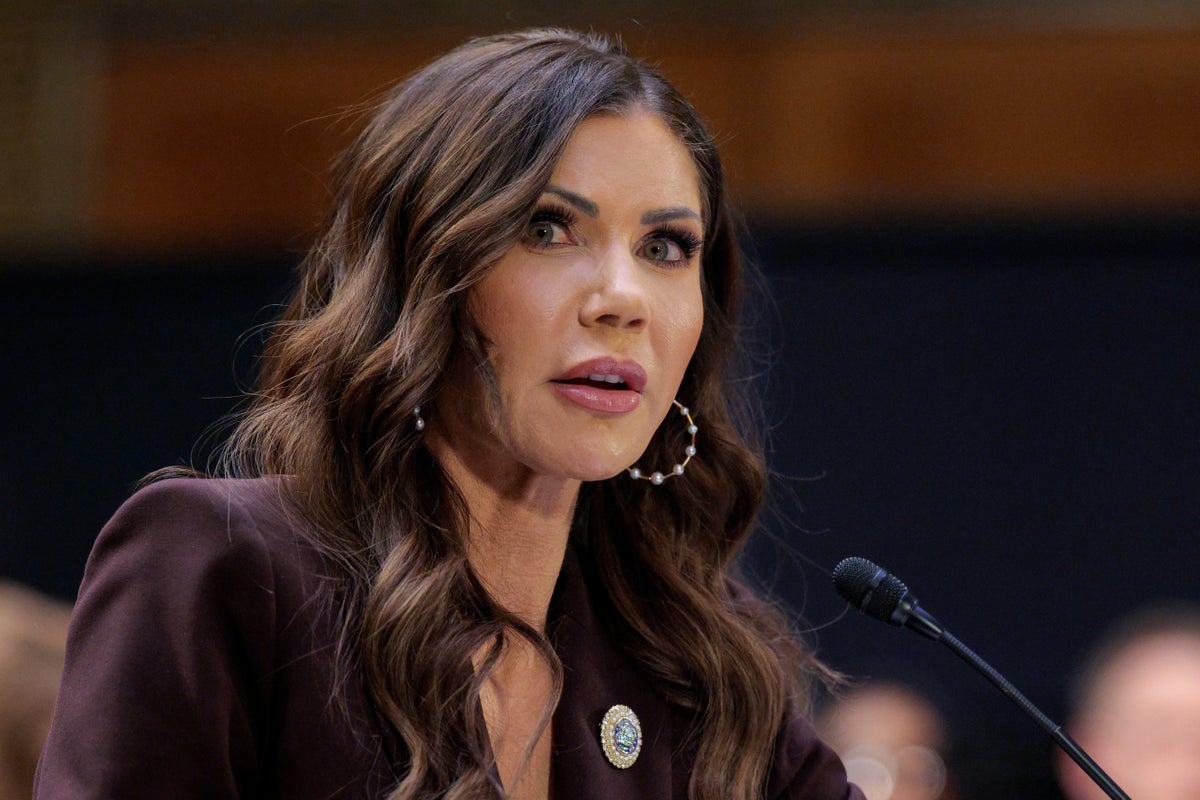
Disaster relief is supposed to be the one part of the federal government that stays above the fray. When a fire rips through a canyon or a flood swallows a town, nobody asks who you voted for before they hand you a bottle of water or a tarp. Or at least, that's how it's supposed to work. Under the brief but chaotic tenure of Kristi Noem at the Department of Homeland Security, FEMA was turned into a bottlenecked political tool where funding for Muslims, Californians, and climate resilience projects hit a brick wall.
The fallout from this isn't just a matter of bureaucratic red tape. It's about a systematic attempt to redirect taxpayer money toward vanity projects and ideologically "safe" bets while leaving vulnerable communities in the lurch.
The 100,000 Dollar Bottleneck
For decades, FEMA operated with a high degree of autonomy. Experts reviewed grants, and money moved based on need. Noem changed the game by instituting a rule that required her personal sign-off on every single contract or grant over $100,000.
Think about that for a second. In the world of federal disaster relief, $100,000 is pocket change. It's the cost of a few school repairs or a small debris removal project. By centralizing this power, Noem created a massive backlog. While she was busy starring in a $220 million taxpayer-funded ad campaign—essentially a series of high-production commercials for herself—over $500 million in recovery funding for Los Angeles sat on her desk gathering dust.
It wasn't just incompetence; it was a choice. By requiring a manual "okay" from the top, the administration could pick and choose which disasters were worth fixing and which ones could wait.
Targeting Muslim Nonprofits and Security Grants
One of the most disturbing aspects of this era was the quiet war on the Nonprofit Security Grant Program. This program is designed to help houses of worship and community centers harden their facilities against hate crimes. It's vital for synagogues, mosques, and churches that face real threats of violence.
However, reports surfaced that DHS leadership specifically inquired about blocking grants for Muslim organizations. They used baseless claims of "terrorist ties" to justify the freeze. Internal FEMA whistleblowers were reportedly horrified, telling DHS officials that such actions were likely illegal and definitely discriminatory.
By the end of the summer in 2025, dozens of Muslim groups that met all the criteria for security funding found their applications denied. It felt like a manufactured narrative designed to justify exclusion. When you've got hate crimes on the rise, playing politics with the safety of religious minorities isn't just bad policy—it's dangerous.
The War on California and Climate Reality
If you live in California, you already know the state has a target on its back when it comes to federal funding. Noem’s DHS took this to a new level. Beyond the $500 million in stalled fire recovery funds for places like Altadena and the San Gabriel foothills, there was a broader effort to gut climate mitigation.
FEMA’s Hazard Mitigation Program is what pays to clear brush before a fire starts or to harden power lines so they don't spark in a windstorm. It’s the "ounce of prevention" that saves billions in "pounds of cure."
Noem’s team viewed "climate change" as a dirty word. They stalled $94 million in hazard mitigation awards for the LA region alone. This isn't just about politics; it’s about ignoring the physical reality of the planet. When you stop funding fire prevention because you don't like the state's politics or the "climate" label, you’re basically rooting for the next disaster to be worse.
Who was actually running the show?
While Noem was the face of the department, much of the heavy lifting was done by a circle of contractors and "enforcers." Kara Voorhies, a contractor who worked closely with top aides like Corey Lewandowski, held a bizarrely influential role. These weren't career emergency managers. They were political operatives placed at the top echelons of DHS to ensure the "Noem Rule" was enforced.
They weren't looking at spreadsheets to see where the most lives could be saved. They were looking at who was "loyal" and which projects fit the administration's brand.
How to Protect Your Community from Funding Freezes
Waiting for the federal government to get its act together is a losing strategy. Even though Markwayne Mullin has taken over and scrapped the $100,000 sign-off rule, the damage to the pipeline is done. If you’re part of a local government or a nonprofit, you need to change your approach to federal grants.
- Diversify your funding sources immediately. Don't rely solely on FEMA. Look at state-level programs like the California State Nonprofit Security Grant Program, which has tried to fill the gaps left by federal failures.
- Document the "Political Delay." If your grant is stalled, get your local representatives involved early. Make it a public issue. Transparency is the only thing that moves the needle when a bottleneck is intentional.
- Focus on "Hardened" Applications. Ensure your security or mitigation grant applications are so airtight and data-heavy that denying them looks like an obvious act of bias.
The politicization of disaster relief is a genie that’s hard to put back in the bottle. We’ve seen how easy it is for one person to ground a multibillion-dollar agency to a halt. Don't assume the "experts" are in charge anymore. Assume every dollar is a battle and prepare accordingly.