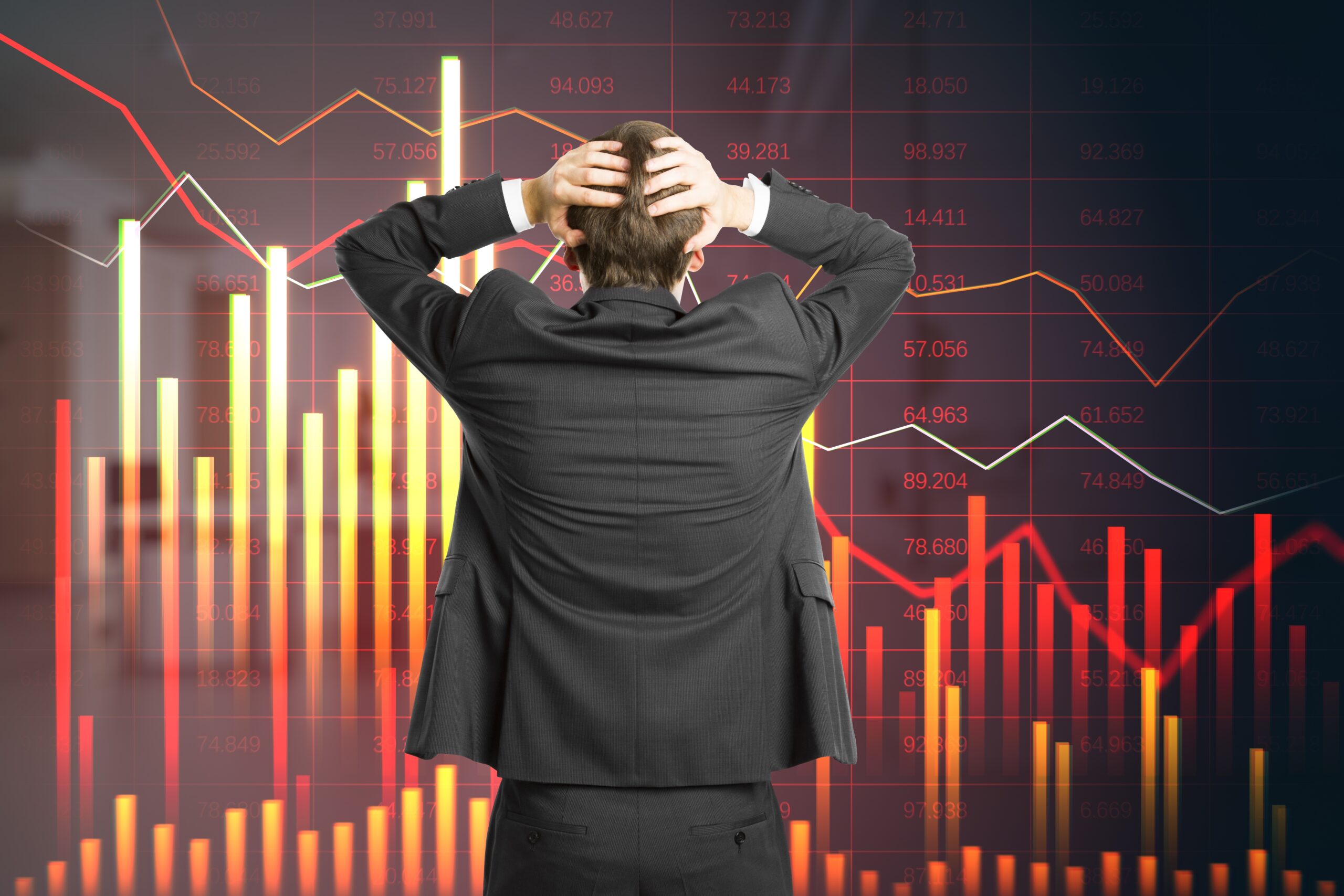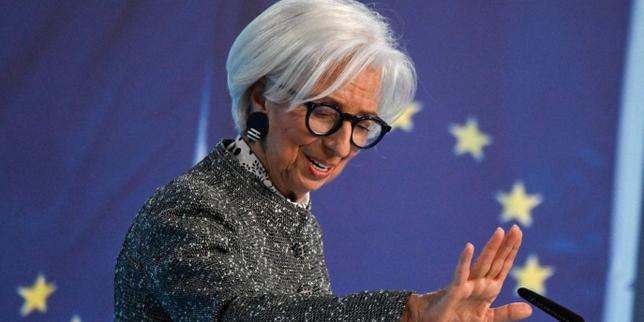
The financial press is currently obsessed with a horse race that doesn’t exist. They are busy profiling the "frontrunners" to replace Christine Lagarde at the European Central Bank as if they are picking the next CEO of a high-growth tech firm. It’s a collective delusion. The media treats the ECB presidency like a throne of absolute power when, in reality, it is a gilded cage of institutional inertia.
If you think swapping Lagarde for a "hawk" like Joachim Nagel or a "dove" like Fabio Panetta will radically shift the trajectory of the Eurozone, you haven't been paying attention to how the plumbing actually works.
The Great Governance Illusion
The standard narrative suggests that the President of the ECB dictates the fate of the Euro. This is fundamentally wrong. The ECB is not the Federal Reserve, and even the Fed isn't the monolith people imagine. The ECB is a sprawling committee of 26 people. The Governing Council consists of the six members of the Executive Board and the governors of the national central banks of the 20 euro area countries.
When you look at the voting mechanics, the President is merely a consensus-builder—a glorified cat-herder with a fancy office in Frankfurt. The "personality" of the President is a distraction from the structural constraints of the Stability and Growth Pact and the TPI (Transmission Protection Instrument).
I have watched markets freak out over a single syllable in a press conference, only to realize three months later that the policy path hadn't shifted an inch. Why? Because the ECB is an institution governed by a mandate of price stability defined as 2% inflation. They aren't artists; they are spreadsheet-bound bureaucrats. Whether the person at the top prefers silk scarves or power ties is irrelevant to the math of Harmonised Indices of Consumer Prices (HICP).
The False Dichotomy of Hawks and Doves
The obsession with labeling candidates as "Hawks" (inflation fighters) or "Doves" (growth supporters) is a relic of 1990s economic theory that no longer applies to a world of fragmented fiscal policy.
In the current Eurozone, the "Hawk vs. Dove" debate is a shadow play. The real tension isn't about interest rates; it’s about debt mutualization and the North-South divide. A "Hawkish" German president cannot simply hike rates to 10% to satisfy the Bundesbank’s soul if it means the immediate collapse of the Italian bond market. Conversely, a "Dovish" Mediterranean president cannot print money indefinitely without triggering a constitutional crisis in Karlsruhe.
The ECB President doesn't lead; they react. They react to energy shocks, they react to Fed pivots, and they react to the fiscal insanity of national governments. To suggest that the individual identity of the successor changes the outcome is to ignore the fact that the ECB’s hands are tied by the very treaty that created it.
The Succession Names You Should Ignore
The shortlist being circulated by major outlets is a "who's who" of safe, predictable, and ultimately powerless choices.
- The German Heavyweights: They talk about Joachim Nagel as if he’s the second coming of the Deutsche Mark. He isn't. He is a pragmatic central banker who knows that the German economy is currently the "sick man of Europe." If he took the job, he would be forced to act exactly like Lagarde to prevent a systemic meltdown.
- The French Technocrats: Names like François Villeroy de Galhau are floated to maintain the "balance." It’s bureaucratic musical chairs.
- The Outsider "Wildcards": There are no wildcards in Frankfurt. The vetting process is designed to strip away any shred of unpredictability before a candidate even gets to the interview stage.
The "People Also Ask" sections on search engines are filled with queries like "Who will replace Lagarde?" or "Will the next ECB president lower rates?" These questions are fundamentally flawed. The right question is: "Does the ECB have any tools left regardless of who is in charge?"
The Reality of the "Liquidity Trap" and Institutional Paralysis
We are moving into an era where the ECB is increasingly irrelevant to the actual prosperity of Europe. Decades of low productivity growth, demographic collapse, and energy insecurity cannot be fixed by a 25-basis-point move in the deposit facility rate.
Investors spend millions on "ECB watchers" to parse every word of a speech. It’s a waste of capital. The ECB’s policy path for the next five years is already written in the stars of European debt levels and demographics.
$$r^* < g$$
The relationship between the natural rate of interest ($r^*$) and the growth rate ($g$) is the only thing that matters. If the Eurozone cannot generate growth, the ECB President—whoever they are—is forced into a permanent state of crisis management and unconventional monetary policy.
The Danger of the "Great Man" Theory in Finance
The media loves the "Great Man" (or Great Woman) theory of history because it’s easy to write about. It’s much harder to explain the complexities of the Target2 settlement system or the nuances of the Capital Markets Union.
I’ve seen traders lose fortunes betting on a "Hawkish tilt" following a leadership change, only to realize that the institutional gravity of the ECB pulls everyone toward the center. The ECB is a machine. The President is just the person who presses the "Start" button on a pre-programmed cycle.
If you want to understand the future of the Euro, stop looking at the biographies of the candidates. Look at the balance sheets of the Italian banks. Look at the industrial electricity prices in Germany. Look at the defense spending requirements of Eastern Europe.
The Brutal Truth for Investors
Stop trading the headline. The "race to succeed Lagarde" is a vanity project for political commentators. For anyone actually managing risk, the identity of the next President is a rounding error.
The status quo isn't just winning; it’s baked into the walls of the building in Frankfurt. The next President will inherit the same impossible mandate, the same fractured political landscape, and the same lack of fiscal tools. They will say the same things in slightly different accents.
Don't buy the hype of a "new era." It’s the same old era, just with a different signature on the banknotes.
Stop looking at the pilot and start looking at the engine. The engine is smoking, the fuel is low, and the flight path is locked into the autopilot. Changing the person in the cockpit won't stop the descent.