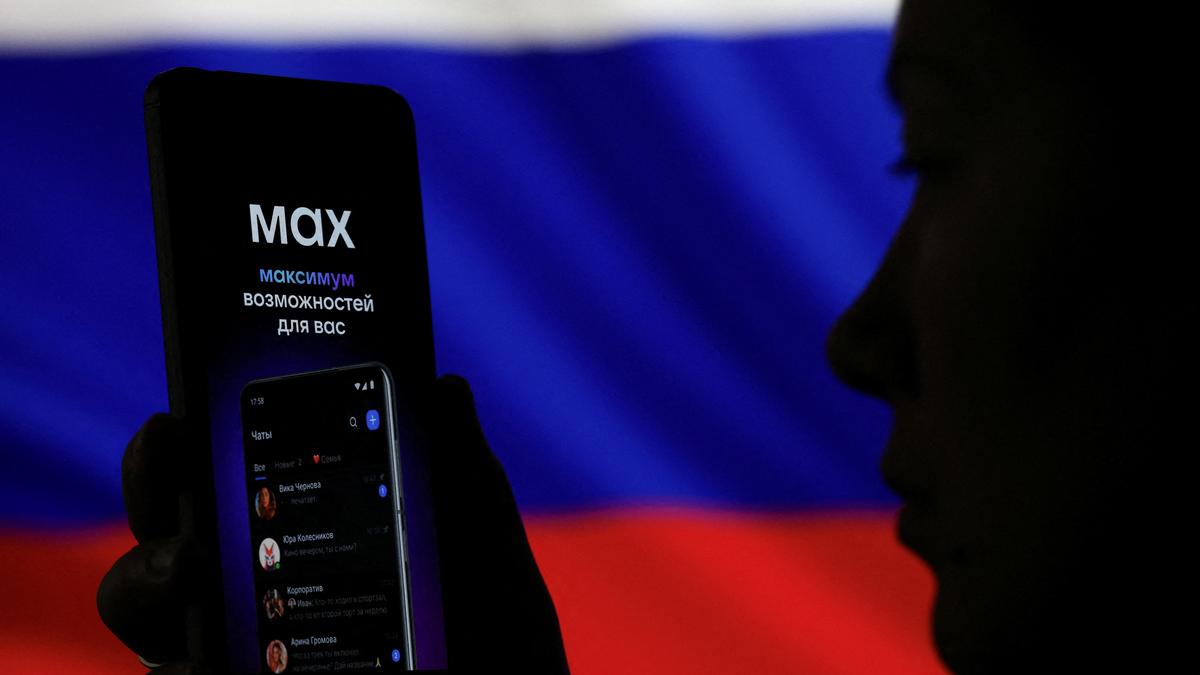
The air in the Moscow tech incubator smells like overpriced espresso and anxiety. A young developer—we’ll call him Alexei—stares at a whiteboard covered in architectural diagrams. He isn't building a simple chat app. He is building a digital ecosystem designed to replace the world outside. He is building Max.
For years, the Russian internet, or RuNet, was a chaotic, open frontier. You could wander from Telegram to YouTube to Instagram with the same digital freedom as someone in London or New York. But the walls are moving in. The Kremlin has watched China’s WeChat with an envy that borders on obsession. They don't just want a messenger; they want a cage that feels like a kingdom. For another look, read: this related article.
The vision for Max is simple and terrifying: one app to rule the citizen’s entire life.
The Ghost of Tencent in the Kremlin
To understand Max, you have to look East. In Beijing or Shanghai, WeChat isn't an app. It is the air. You use it to pay for groceries, book a doctor’s appointment, file your taxes, and message your mother. If you are kicked off WeChat, you become a digital ghost. You cannot buy a train ticket. You cannot enter certain buildings. You disappear from the economy. Related coverage on the subject has been published by ZDNet.
Russian authorities have realized that banning Western apps is a messy, reactive game of whack-a-mole. It’s far more efficient to build a "Super App" so convenient that people walk into the trap willingly. This is the blueprint for Max. It is being forged by VK (formerly VKontakte), the social media giant now firmly under the influence of state-aligned entities.
Alexei’s task is to integrate government services directly into the chat interface. Imagine getting a draft notice, a speeding fine, and a message from your boss in the same scrolling feed. There is no "logging out" of a life like that.
Survival of the Most Convenient
Why would anyone switch from a secure, encrypted platform like Telegram to a state-monitored Super App?
The answer is friction.
Human beings are hardwired to choose the path of least resistance. If Max allows you to pay your utility bills with a single thumbprint while Telegram requires you to jump through three different banking apps and a VPN, Max wins. Slowly, the convenience of the Super App erodes the desire for privacy.
Consider the hypothetical case of Maria, a small business owner in Kazan. She sells handmade ceramics. Today, she uses Instagram to find customers, WhatsApp to talk to them, and a separate bank app to track payments. Then Max arrives. It offers her a storefront, a built-in payment processor, and direct access to millions of local customers—all without needing a VPN to bypass state blocks.
She knows the state can see her messages. She knows her data is being fed into a central database. But her rent is due. Her kiln is expensive. She hits "Install."
This is how liberty dies—not with a bang, but with a "one-tap checkout."
The Engineering of a Digital Border
The technical backbone of Max isn't just about code; it's about control over the physical infrastructure of the internet. Russia has already tested its "Sovereign Internet" law, which allows the government to disconnect the RuNet from the global web.
Max is designed to be the primary portal for this closed loop. By mirroring the "Mini Program" model of Douyin (the Chinese version of TikTok) and WeChat, Max allows third-party developers to build apps inside the Max environment.
This creates a walled garden.
If a developer wants to reach the Russian market, they won't build a standalone website. They will build a Max Mini Program. This gives the state a single point of failure to exploit. If a specific "app within the app" becomes too radical or too independent, it can be deleted with a single keystroke at the VK headquarters. No need to block an entire IP range. No need for a public PR battle. Just a quiet disappearance from the menu.
The Invisible Stakes of Data Sovereignty
We often talk about data in the abstract, as if it’s just a collection of ones and zeros stored in a cold server farm in the Arctic. It isn't. Data is the digital DNA of a person’s habits, fears, and loyalties.
In a standard Western ecosystem, your data is fragmented. Google knows what you search for. Meta knows who your friends are. Your bank knows what you buy. While this is its own kind of corporate dystopia, the fragmentation provides a slim layer of protection. No single entity has the complete picture.
Max changes that math.
By consolidating social media, financial transactions, and government IDs into one platform, the state achieves what intelligence agencies call "Total Information Awareness." They don't need to bug your phone if they own the app you use to buy your morning coffee. They know you were at the protest because your Max-connected transit card was scanned at the nearby metro station. They know you’re unhappy because your Max-connected AI assistant flagged the sentiment in your private "disappearing" messages.
The stakes are nothing less than the end of the private self.
The Great Migration
The transition won't happen overnight. It will be a migration of necessity.
Russian officials have already begun the pressure campaign. They label YouTube as a den of "foreign influence" and slow its loading speeds to a crawl. They fine Google until the company’s local subsidiary goes bankrupt. They make it increasingly difficult for businesses to operate using "unfriendly" foreign tech.
Meanwhile, Max is promoted as the patriotic, "safe" alternative. It is marketed with high-production ads featuring popular influencers. It is sleek. It is fast. It is "ours."
But the "ours" in this sentence doesn't refer to the people. It refers to the power.
Alexei, our hypothetical developer, knows this. He sees the backdoors being written into the encryption protocols. He sees the data hooks that link a user’s chat history to their tax records. He is an architect of a prison, and he’s being paid in the very currency that the prison will eventually control.
The Algorithm of Silence
The most subtle weapon in the Max arsenal isn't surveillance—it’s the algorithm.
Douyin perfected the art of the "infinite scroll" that prioritizes "social harmony" over conflict. If Max follows the Douyin model, the feed will be meticulously curated to ensure that a citizen’s digital life is filled with entertainment, shopping, and state-sanctioned narratives.
Dissent doesn't have to be banned if it can simply be buried.
If you search for a controversial topic on a traditional search engine, you might find a variety of viewpoints. If you search within a Super App ecosystem, the algorithm can quietly nudge you toward "verified" (state-approved) sources. It’s a soft censorship that feels like personalized curation. You aren't being told what to think; you are being shown only one thing to think about.
The Cost of Entry
As Max prepares for its full-scale rollout, the world watches to see if the "China Model" can be exported. For decades, the tech industry believed that the internet was an inherently democratizing force—that the flow of information would eventually tear down authoritarian walls.
We were wrong.
Technology is a tool, and in the hands of a determined state, it can be the ultimate tool of enclosure. The Russian "Super App" represents a new era of digital statecraft where the user is no longer a customer, but a data point in a national ledger.
The coffee in the Moscow incubator has gone cold. Alexei submits his latest pull request. The code is clean. The interface is beautiful. The integration is seamless. He closes his laptop and heads for the metro, tapping his phone against the turnstile.
The screen flashes green. Max knows he’s going home. It knows he’s tired. It knows exactly what he’s going to buy for dinner. And as he descends into the tunnels of the Moscow underground, the signal stays strong, the walls stay high, and the app stays open, watching everything.