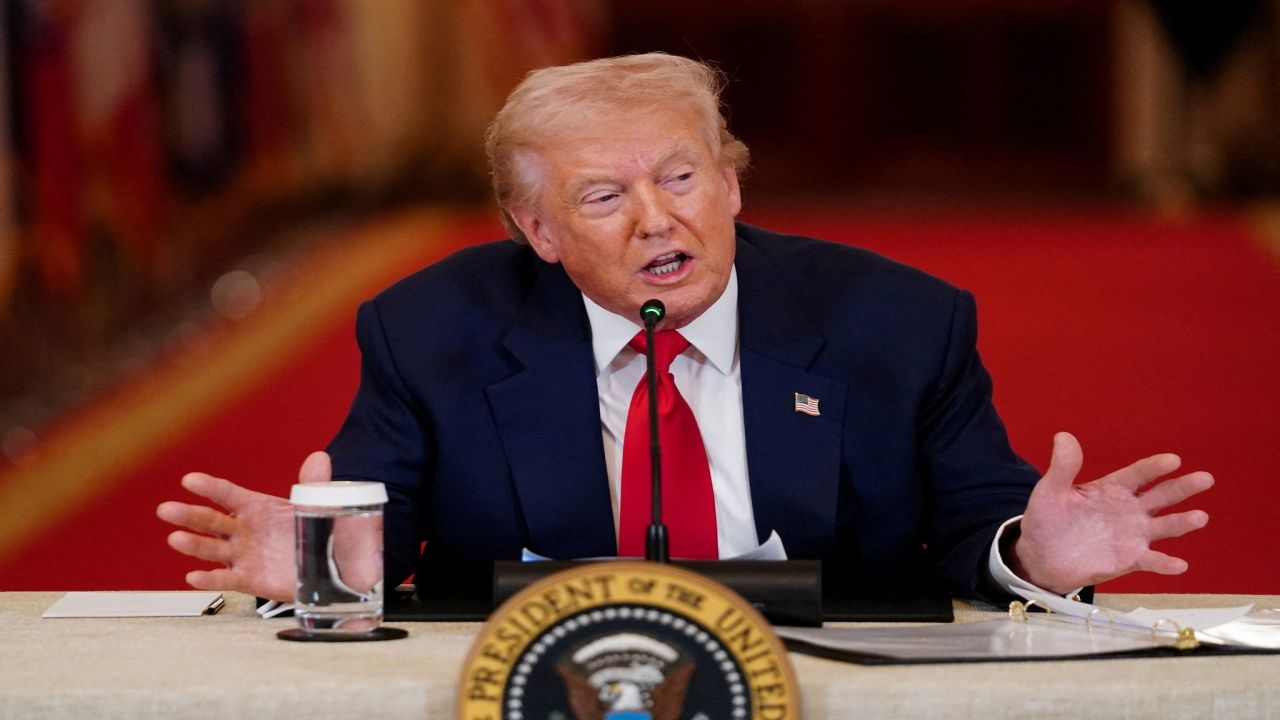
The United States Senate just hammered another nail into the coffin of legislative oversight, voting 53-47 to block a resolution that would have forced a halt to unauthorized military action against Iran. It is the third time in as many weeks that the Republican majority has shielded the White House from the War Powers Act, effectively handing the executive branch a blank check to manage Operation Epic Fury. While the headlines focus on the partisan tally, the reality is far more grim. This is not merely a political disagreement; it is the final surrender of the constitutional mandate that only Congress can declare war.
By rejecting the resolution introduced by Senator Chris Murphy, the Senate has signaled that Article I, Section 8 is now a historical curiosity rather than a functional law. The vote largely followed party lines, with a few notable defections that highlight the strange new alliances of this conflict. Senator Rand Paul was the lone Republican to break ranks, while Senator John Fetterman stood as the only Democrat to side with the administration. Outside the chamber, the gears of war continue to turn without a single formal debate on the floor of the House or Senate regarding the long-term objectives of this campaign.
The Mirage of Constitutional Control
The War Powers Resolution of 1973 was designed to prevent exactly what is happening now. It was a post-Vietnam attempt to ensure that no president could drag the country into a prolonged conflict without the explicit consent of the people’s representatives. It required the removal of troops within 60 days unless Congress authorized the mission. Yet, as the strikes on Iranian nuclear facilities and the subsequent killing of Ayatollah Ali Khamenei have shown, the executive branch has found the ultimate loophole: labeling every offensive move as "anticipatory self-defense."
The administration argues that the threat from Iran’s ballistic missile program and its recent regional counter-strikes justifies unilateral action under the President's role as Commander in Chief. This logic creates a closed loop. If the executive can define "defense" to include preemptive strikes on a sovereign nation’s leadership, the requirement for a congressional declaration of war becomes irrelevant. Congress is no longer a co-equal branch of government in matters of foreign policy; it has become a bystander, relegated to complaining about the cost of a war it refuses to stop.
The Fiscal Black Hole
While the constitutional debate rages in academic circles, the financial reality is hitting the American public with much more immediacy. Operation Epic Fury has already burned through an estimated $12 billion in its opening weeks. This figure does not account for the surge in global oil prices following the threats to close the Strait of Hormuz. When the Senate blocks these resolutions, they are not just protecting a military strategy; they are protecting an opaque spending spree that bypasses the standard appropriations process.
Senator Rand Paul pointed out that the leadership is essentially "resigned to their own irrelevance," choosing to hand over the power to initiate war in exchange for "plausible deniability." If the war goes well, they can claim a share of the glory. If it turns into a quagmire, they can claim their hands were tied by a defiant White House. It is a coward’s bargain that leaves the American taxpayer and the service members on the front lines to carry the weight of the uncertainty.
A Failure of Public Testimony
The most damaging aspect of these blocked resolutions is the suppression of information. By preventing the debate, the Senate majority has also prevented the public from hearing testimony from the Pentagon and the State Department. We are currently in a state of high-intensity conflict with a major regional power, yet there have been no public hearings to define what "victory" looks like.
The administration has issued contradictory signals. On one hand, there is talk of unconditional surrender; on the other, an openness to talks if Iran ends all nuclear enrichment and reopens the Strait of Hormuz by April 6. Without the pressure of a War Powers resolution, the White House has no obligation to clarify these goals to Congress or the public. The war is being managed via social media posts and sporadic press briefings, leaving the nation to guess whether the end goal is regime change, nuclear disarmament, or a permanent occupation.
The New Bipartisan Split
The voting patterns of Fetterman and Paul illustrate that the old hawks-versus-doves divide is dead. In its place is a more chaotic alignment based on personal philosophy and regional alliances. Fetterman’s support for the administration’s "punishing" effectiveness in Iran suggests a wing of the Democratic party that is willing to overlook procedural illegalities if the results align with their geopolitical views. Conversely, Paul’s isolationism makes him a pariah in a Republican party that has fully embraced the "15 out of 10" performance rating the President gave the military’s recent actions.
This shift means that future attempts to rein in executive power will face even steeper climbs. When the "check" in "checks and balances" depends on party loyalty rather than institutional integrity, the system fails. The Senate’s refusal to even debate the legality of the current strikes is a precedent that will haunt the United States long after this specific conflict ends.
The Sovereignty of the Executive
We are witnessing the birth of a new doctrine where the President can initiate and sustain a war indefinitely, provided they maintain a slim majority in the Senate. This effectively turns the War Powers Act into a dead letter. If 51 senators decide that political alignment is more important than constitutional procedure, the President becomes an emperor in all but name for the duration of any conflict they choose to start.
The House of Representatives attempted a similar move to end the attacks, only to be met with the same wall of party-line opposition. The message from the Capitol is clear: the legislature has no interest in its own power. They have traded their oversight for the comfort of the sidelines. As the April 6 deadline for the Strait of Hormuz approaches and more troops are funneled into the region, the window for a diplomatic off-ramp is closing.
The American public is being led into a widening regional war not by a vote of their representatives, but by the silence of a Congress that has forgotten how to lead. History is rarely kind to institutions that voluntarily surrender their most solemn responsibilities. By the time the true cost of this conflict is realized, the power to stop it will have long since evaporated.


