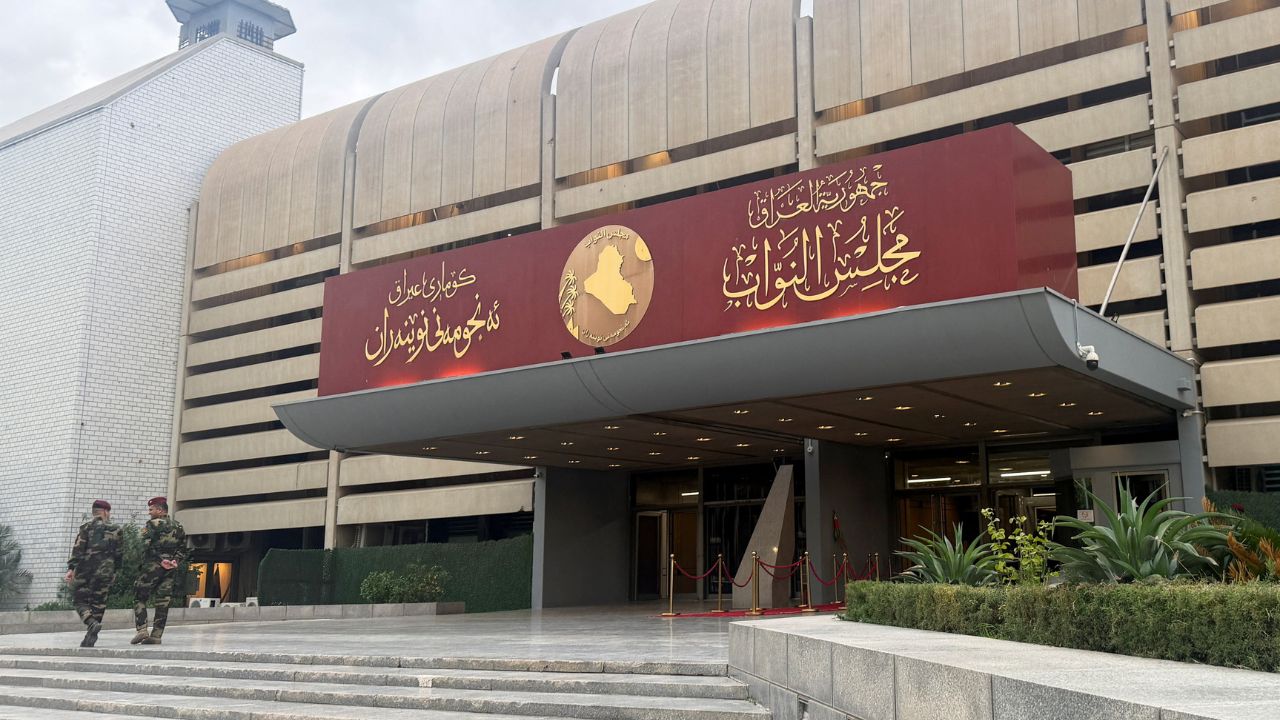
Iraq did not simply elect a president on October 13, 2022. It performed a frantic act of political survival. After a year of bloody street battles, legislative paralysis, and a vacuum of power that threatened to drag the nation back into civil war, the selection of Abdul Latif Rashid—not Nizar Amedi—marked the end of a dangerous stalemate. While many early reports scrambled to identify the shifting names within the Patriotic Union of Kurdistan (PUK), the reality was a brutal chess match between the nation’s most powerful Shia and Kurdish factions.
The presidency in Iraq is often dismissed as ceremonial, but that view is dangerously shallow. Under the Iraqi constitution, the president is the "protector of the constitution" and the individual who must formally task a prime minister with forming a government. For 364 days, the country sat in a constitutional graveyard. The eventual emergence of Abdul Latif Rashid was less about his personal platform and more about a desperate consensus reached in the smoke-filled rooms of the Green Zone to prevent a total collapse of the state.
The Myth of the Ceremonial Figurehead
To understand why this election mattered, you have to look at the wreckage of the year preceding it. Iraq’s political system, known as Muhasasa Ta'ifia, divides power along sectarian lines. The presidency is reserved for a Kurd, the premiership for a Shia, and the parliamentary speaker for a Sunni. This isn't just a gentleman’s agreement; it is a rigid, often suffocating framework that ensures no single group can govern alone, but also ensures that no one can be held truly accountable when things fall apart.
The 2022 deadlock was driven by a schism within the Shia house between Muqtada al-Sadr’s movement and the Iran-aligned Coordination Framework. When Sadr ordered his 73 MPs to resign in a fit of populist rage, he opened a door. The Coordination Framework walked through it, but they needed a president to legitimize their pick for Prime Minister, Mohammed Shia al-Sudani.
The Kurdish parties, the PUK and the KDP, were locked in their own bitter rivalry. The PUK insisted on a second term for Barham Salih. The KDP refused. Rashid emerged as the "third man"—a PUK member running as an independent, acceptable to the KDP, and crucially, backed by the Coordination Framework. He was the relief valve for a pressure cooker that was seconds away from exploding.
The Kurdish Fracture and the PUK Internal War
For decades, the Kurdish presidency was a lock for the PUK, the party founded by the late Jalal Talabani. However, the 2022 election revealed a deepening crack in Kurdish unity that has long-term implications for the stability of northern Iraq.
The KDP, led by the Barzani clan, sought to break the PUK’s monopoly on the Baghdad presidency. They didn't just want a seat at the table; they wanted to dictate the menu. By backing Rashid against the PUK’s official candidate, Salih, they effectively split the PUK’s influence. This wasn't a minor administrative disagreement. It was an ideological and territorial knife fight.
The internal mechanics of the PUK during this period were chaotic. Figures like Nizar Amedi, who would later take on ministerial roles, were caught in the crossfire of a party trying to maintain its relevance in Baghdad while its power base in Sulaymaniyah was being squeezed by both the KDP and internal family disputes. Rashid’s victory was a win for the Coordination Framework, but it was a nuanced defeat for the PUK leadership, who saw their handpicked candidate discarded in favor of a compromise figure they couldn't fully claim as their own.
Money Water and the Ghost of the Shatt al-Arab
The president's role becomes vital when you look at Iraq’s existential threats. Iraq is dying of thirst. The Tigris and Euphrates rivers are receding, strangled by dams in Turkey and Iran and exacerbated by decades of mismanagement.
Abdul Latif Rashid was not chosen for his charisma, but for his resume. He served as the Minister of Water Resources from 2003 to 2010. In a country where climate change is a national security threat, having a technical expert in the palace was a strategic calculation. The "why" behind his selection involves the hope that he could use the presidency’s international stature to negotiate water-sharing agreements that previous politicians had ignored.
But expertise is often a poor shield against corruption. The Iraqi state loses billions of dollars annually to "ghost employees" and siphoned oil revenues. The president signs the laws that are supposed to curb this. If the president is a product of the very system that thrives on this patronage, his ability to "protect the constitution" is fundamentally compromised from day one.
The Tehran Riyadh Pendulum
Foreign influence is the silent voter in every Iraqi election. No one becomes president in Baghdad without at least a nod of his head from Tehran and a shrug of the shoulders from Washington.
The Coordination Framework’s push for Rashid was a clear signal of Iranian interests solidifying their hold on the legislative process. Yet, Rashid himself is a British-educated engineer with long-standing ties to the West. He represents the delicate, often exhausting balancing act Iraq must perform.
- The Iranian Interest: Ensuring the Prime Minister comes from the Coordination Framework to maintain a "resistance axis" friendly to Tehran.
- The American Interest: Maintaining enough stability to ensure oil flows and preventing an ISIS resurgence.
- The Gulf Interest: Pulling Iraq back into the Arab fold and away from the Iranian orbit through investment and energy grids.
The presidency is the pivot point for these competing pressures. Rashid’s first months were spent not on domestic policy, but on ensuring neighbors that Iraq would not become a launchpad for regional proxy wars.
Why the Streets Remain Quiet but Angry
While the politicians celebrated the end of the vacuum in the high-walled palaces of the Green Zone, the Tishreen protesters—the youth movement that sparked the 2019 uprisings—watched with cynical detachment. To them, Rashid’s election was just another rotation of the same tired elite.
The "how" of this election involved bypasses of popular will. The 2021 election had the lowest turnout in Iraq's post-2003 history. People stayed home because they knew the outcome would be decided by backroom deals, not ballots. The selection of a president a year after the election only proved them right.
Iraq faces a demographic time bomb. Over 60% of the population is under 25. They don't care about the historical grievances between the PUK and KDP, or the intricacies of Shia jurisprudence. They want electricity, jobs, and a passport that actually allows them to travel.
The Institutional Failure of 364 Days
We must address the elephant in the room: the sheer illegality of the timeline. The Iraqi constitution mandates that a president be elected within 30 days of the first parliament session. The 2022 cycle took nearly a year.
This delay wasn't just a political quirk; it was a total breakdown of the rule of law. During that year, the "caretaker" government had no authority to pass a budget. Infrastructure projects stalled. Hospitals ran out of basic supplies. The fact that the system eventually spat out a president does not mean the system works. It means the system is a zombie, capable of moving but devoid of life.
The Specter of Sadr
Even with a president in place and a government formed, the shadow of Muqtada al-Sadr looms over the presidency. Sadr has the power to mobilize millions with a single tweet. He allowed the election of Rashid and the formation of Sudani’s government to proceed, but he did not endorse it.
The presidency now exists in a state of permanent anxiety. If Sadr decides to return to the streets, the "constitutional protection" offered by the president will be tested by fire. The President of Iraq doesn't lead the military, but he holds the moral authority of the state. In a crisis, that authority is the only thing standing between a peaceful transition and a militia-led coup.
Technical Governance vs. Political Reality
Rashid’s background as an engineer suggests a preference for data-driven solutions. However, Iraq is a country where data is often a state secret or a fabricated tool for political leverage.
The President’s office has attempted to modernize the legislative review process, but they are fighting against a tide of sectarian interests. When a law comes across the president's desk that benefits a specific militia-backed party but harms the national interest, the "veteran journalist" in me knows exactly what happens. The law gets signed. The alternative is a political crisis that the current administration cannot afford.
The election of the president was supposed to be the "game-changer"—to use a term the industry loves but the reality loathes—but it was actually a preservation of the status quo. It was the elite choosing to survive rather than the nation choosing to evolve.
The Oil Price Trap
Iraq’s stability is currently tied to the global price of Brent crude. As long as prices remain high, the government can pay the salaries of its massive bloated public sector, keeping the peace through patronage.
The president’s role in this is to provide the face of a "stable" Iraq to international investors. But the underlying mechanics are fragile. Iraq has failed to diversify its economy. The presidency, despite its oversight role, has been powerless to stop the expansion of the public payroll, which is essentially a legalized bribe to the population to prevent further uprisings.
The Unseen Conflict Over Article 140
One of the most contentious issues the presidency must navigate is Article 140 of the constitution, which deals with "disputed territories" like Kirkuk. The KDP backed Rashid with the expectation of concessions on these territories and a larger share of the national budget.
The PUK, on the other hand, fears that a president who is too close to the KDP will trade away their influence in these regions. This isn't just about maps; it’s about oil fields and historical identity. The presidency is the referee in a game where both sides are trying to bribe the official.
The Reality of the Modern Iraqi State
The Iraqi presidency is a mirror. If you look into it and see a stable, functioning democracy, you aren't looking hard enough. You are seeing a fragile architecture of compromises.
Abdul Latif Rashid is a man of significant education and experience, but he is operating within a machine designed to produce deadlock. The true story of his election is not that a new man took the throne, but that the throne itself is held together by duct tape and the shared fear of the ruling class that if one of them falls, they all fall.
The state remains a collection of fiefdoms. The President is the titular head of a country where the most powerful men don't hold elected office. They hold gun catalogs and bank accounts in Dubai. Until the presidency can assert authority over the paramilitary groups that operate outside of state control, the title "Protector of the Constitution" remains an aspirational label rather than a functional reality.
Success in Baghdad is measured by the absence of a massacre. By that low bar, the 2022 election was a success. But for the millions of Iraqis outside the Green Zone, the name on the presidential letterhead matters far less than the price of bread and the flow of water in the tap. The political elite have bought themselves more time. They have not, however, bought a solution.
The focus must now shift to whether the presidency can evolve from a tool of factional balance into a genuine institution of reform. History suggests otherwise. The patterns of the last two decades are hard to break, and the gravity of sectarianism is a powerful force. Iraq continues to teeter on the edge of its own contradictions, with a new face at the top of a very old and very broken ladder.
Go to the markets in Sadr City or the cafes in Erbil, and you will find the same sentiment. The people are waiting. They are waiting for a government that serves them, a president who speaks for them, and a future that belongs to them rather than the neighbors. The 2022 election provided a president, but it has yet to provide a nation.



