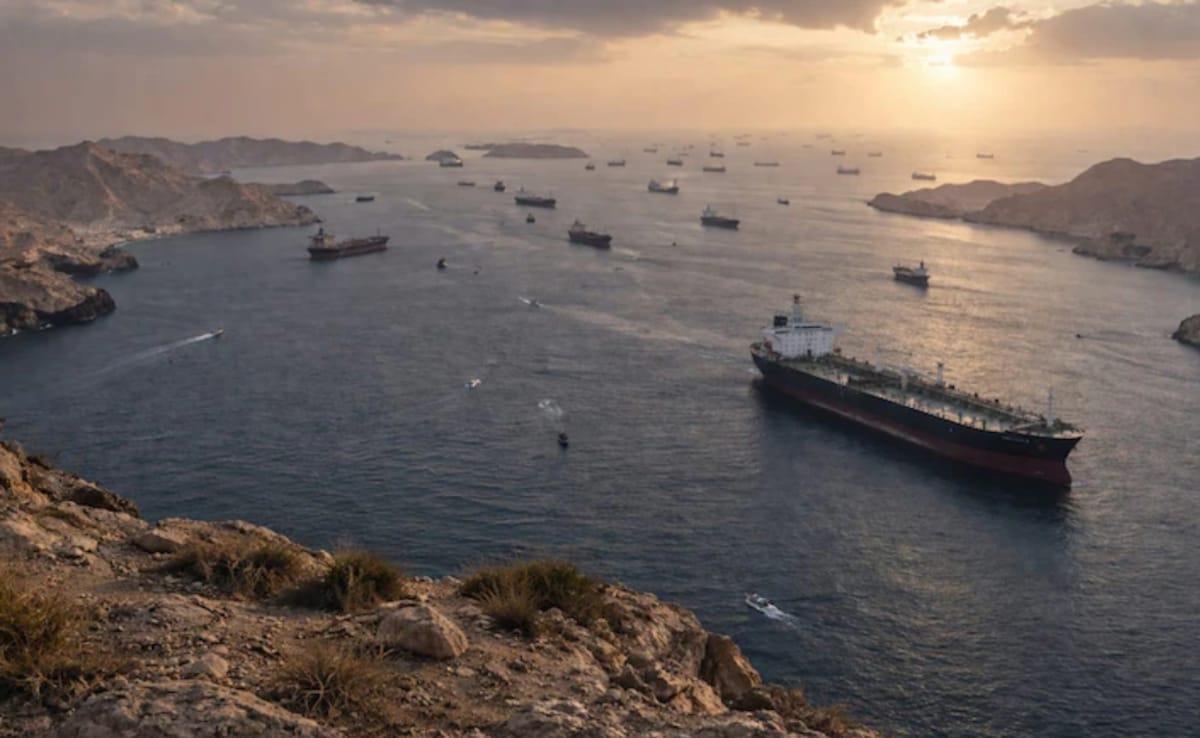
The prevailing narrative regarding the Strait of Hormuz is a tired ghost story told by analysts who still think it’s 1974. Every time a tanker gets harassed or a US carrier strike group maneuvers in the Persian Gulf, the headlines scream the same thing: China is on the brink of military intervention. They claim Beijing is being "forced" into the fray to secure its energy lifeline. They argue that a US blockade would trigger a Third World War.
They are wrong.
This obsession with a direct military clash ignores the cold, hard math of 21st-century power. China isn't entering the "Iran War" because China doesn't need to fight a war it has already won through balance sheets and infrastructure. Beijing views the Strait of Hormuz not as a military chokepoint to be defended with destroyers, but as a legacy vulnerability they are systematically coding out of existence.
The Myth of the Energy Stranglehold
Mainstream media loves the "blockade" scenario. The theory goes like this: The US shuts down Hormuz, China’s economy starves for oil, and Beijing launches a desperate naval assault to reopen the gates.
It’s a cinematic fantasy.
First, consider the Strategic Petroleum Reserve (SPR). China has spent the last decade aggressively filling massive underground storage facilities. Current estimates suggest they hold over 90 days of net imports. That isn't a "we're scared" buffer; that's a "we can outlast your political will" buffer.
Second, look at the Power of Siberia 2 and the expansion of overland pipelines from Central Asia. While the West fixates on the blue water of the Gulf, Beijing is building a terrestrial energy grid that no US carrier group can touch. Russia, Kazakhstan, and Turkmenistan are China’s real insurance policies. By the time a blockade of Hormuz could actually cripple the Chinese grid, the global economy—including the US—would have already collapsed from the $300-a-barrel price tag such a blockade would create.
Iran is a Distraction, Not a Proxy
The "China-Iran Alliance" is a marriage of convenience, not a blood oath. To suggest China will shed blood for Tehran is to fundamentally misunderstand the CCP’s risk-reward calculus.
China’s 25-year, $400 billion deal with Iran is often cited as proof of a budding military axis. In reality, it’s a predatory loan disguised as a partnership. China buys Iranian oil at a massive discount—often 10% to 15% below market rates—paying in RMB or bartered goods. They are extracting value from a desperate pariah state, not prepping to defend its borders.
If the US strikes Iran, China will do exactly what it did during the invasion of Iraq: issue stern statements at the UN, offer to "mediate," and then swoop in to buy the reconstruction contracts when the dust settles. Beijing doesn't want to be the world's policeman. It wants to be the world’s landlord.
The "String of Pearls" is a Paper Tiger
Amateur strategists point to China’s base in Djibouti or the port of Gwadar in Pakistan as evidence of a coming naval intervention. I’ve seen boards of directors lose sleep over these "bases."
Let’s be real. Gwadar is a logistical nightmare for a navy trying to fight a high-intensity conflict. It lacks the integrated air defense and repair facilities necessary to sustain a fleet against a Western coalition. These ports are "dual-use" facilities designed for trade and low-level presence. Using them to launch an attack on a US blockade would be tactical suicide.
Beijing knows its Navy (the PLAN) is a green-water force masquerading as a blue-water power. They can dominate the South China Sea because it's under their land-based missile umbrella. The Persian Gulf is 6,000 miles away. China is not going to send its precious carriers into a bathtub controlled by US Fifth Fleet land-based aviation just to save a few tankers they’ve already insured.
The Financial Blockade is the Real War
The "war" isn't happening in the Strait. It's happening in the clearing houses.
The US blockade of Hormuz is a physical threat, but the US weaponization of the dollar is the existential threat China actually cares about. Every time an analyst talks about "kinetic action," they miss the fact that China is pivoting to the CIPS (Cross-Border Interbank Payment System).
Why the Dollar Matters More than the Strait:
- Liquidity Control: If the US blocks the Strait, it disrupts oil flow. If the US blocks SWIFT access, it halts China's ability to pay for anything.
- Petroyuan Realities: China is already settling oil trades with the UAE and Iran in Yuan. This isn't about "beating" the dollar; it's about creating a parallel circuit that functions even if the Strait is glowing red with missile fire.
- Sanction Immunity: By moving oil trade overland and into non-dollar currencies, China makes a naval blockade irrelevant. If you can’t track the money or stop the pipe, the carrier group is just an expensive buoy.
The Dangerous Fallacy of "Slow Entry"
The competitor article claims China is "slowly entering" the war. This implies a gradual escalation. This is a linear way of thinking in a non-linear world.
China doesn't "slowly enter" wars. They wait. They accumulate. They build. Then, they present a fait accompli.
Imagine a scenario where the US initiates a blockade. China doesn't send the fleet. Instead, they liquidate $800 billion in US Treasuries over a weekend. They halt the export of processed lithium and rare earth elements. They crash the Western tech supply chain.
The US military might own the waves in the Strait of Hormuz, but China owns the guts of the devices that control the ships. The war won't be fought over who can sink the most tankers. It will be fought over who can survive the total disconnection of the two largest economies in history.
The Advice Nobody Wants to Hear
If you are an investor or a policy maker, stop watching the naval movements in the Gulf as a barometer for Chinese aggression. It’s a lagging indicator.
Instead, watch the CIPS transaction volume. Watch the completion rate of the GKP (Gwadar-Kashgar Pipeline). Watch the inventory levels of the Chinese SPR.
When China stops caring about the price of oil in the Strait, that is when you should be terrified. It means they’ve finished building the bypass.
The US is currently guarding a door that China is busy walling up. By the time we realize the door is useless, the house will already have a new owner.
Stop asking if China is entering the war. Start asking why you think the war is still being fought with ships. The blockade of Hormuz is a 20th-century solution to a 21st-century ghost. China isn't entering the fray; they're walking away from the table while we're still trying to figure out the stakes.
The Strait is a distraction. The real conflict is being coded into the bedrock of Eurasia, one pipeline and one digital currency swap at a time. While the US Navy prepares for a Battle of Midway in the desert, Beijing is simply building a world where the Persian Gulf doesn't matter anymore.