The Pentagon is no longer just testing algorithms; it is actively using them to select targets for lethal strikes. Project Maven, the Department of Defense’s flagship artificial intelligence initiative, has moved from the laboratory to the battlefield, providing the target identification data used in recent U.S. airstrikes against Iran-linked targets in Iraq and Syria. This shift marks a point of no return for modern conflict. While the official line emphasizes human oversight, the speed and scale of AI-driven warfare are rapidly making the "human in the loop" a bureaucratic formality rather than a functional safeguard.
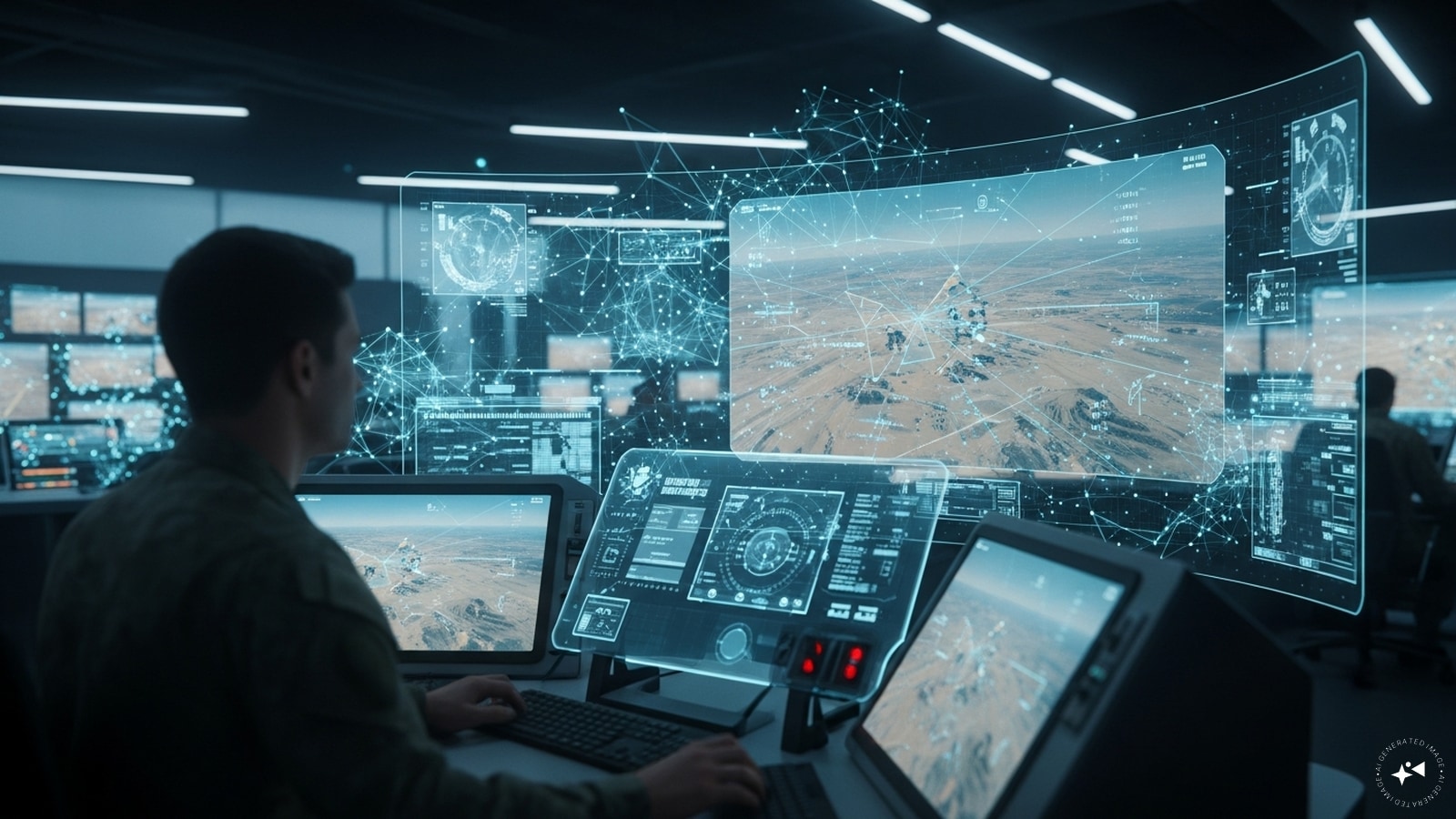
For years, Project Maven was the center of an internal cultural war within the tech industry. It began as a way to sift through the mountains of video footage captured by drones, a task that overwhelmed human analysts. Today, it has evolved into a comprehensive targeting engine. By processing satellite imagery, signals intelligence, and sensor data in real-time, Maven identifies equipment and personnel with a speed that no room full of intelligence officers could ever match.
The recent strikes against the IRGC-Quds Force and their proxies demonstrate that the U.S. military has fully integrated these machine-learning models into its kill chain. This is not a future possibility. It is the current operational standard.
The Invisible Observer at the Tactical Edge
Project Maven works by utilizing computer vision to recognize patterns that indicate military activity. If a truck carries a specific type of rocket launcher or a group of individuals gathers in a known smuggling corridor, the algorithm flags it. In the strikes across the Middle East earlier this year, Maven’s role was to narrow down the vast "noise" of the desert into a list of actionable targets.
The military refers to this as "decision advantage."
Speed is the primary currency. In traditional targeting, a team of analysts might spend hours or days verifying a single location. AI compresses this timeline into minutes. This creates a psychological pressure on the commanders making the final call. When an algorithm presents a target with a high confidence score, the incentive to trust the machine is nearly irresistible. This creates a "black box" effect where the rationale behind a strike is buried under layers of code that the operator cannot see or fully understand.
The risk is not necessarily a "Terminator" scenario of a rogue machine. The risk is a degradation of human judgment. If the machine says a silhouette is an insurgent and the human has only seconds to agree or disagree before the window of opportunity closes, the human becomes a rubber stamp for the software.
Beyond the Google Revolt
To understand why Maven’s current deployment matters, we have to look back at its messy origins. In 2018, thousands of Google employees signed a petition protesting the company’s involvement in the project. They argued that Google should not be in the business of war. The backlash was so severe that Google eventually pulled out of the contract, forcing the Pentagon to rebuild its AI ecosystem with a different set of partners, including Palantir and Amazon Web Services.
The silicon valley drama obscured a much larger truth. The Pentagon realized it didn't need any single company; it needed a framework. Since the Google exit, Maven has expanded its scope. It is no longer just about identifying objects in video. It now incorporates "sensor fusion," which means it takes data from different sources—radar, radio intercepts, and even social media—to create a "common operating picture."
This integration is what makes it so lethal in the Middle East. Against non-state actors and proxy militias, who blend into civilian populations and move frequently, the ability to track movement across multiple platforms is the only way to maintain a persistent threat.
The Myth of the Clean Strike
The Pentagon maintains that AI reduces civilian casualties by making targeting more precise. This argument is built on the idea that a machine is less prone to fatigue or emotion than a human. If the algorithm can distinguish between a civilian bus and a military transport more accurately than a tired analyst in a dark room, the logic goes, the war becomes more "humane."
This is a dangerous oversimplification.
AI is only as good as the data it is fed. In the complex environments of Iraq and Syria, the "ground truth" is often murky. If the training data for the algorithm contains biases—such as identifying any male of military age in a specific zone as a combatant—the machine will replicate those errors at scale. Unlike a human analyst, an algorithm doesn't feel the weight of a mistake. It doesn't have a moral compass. It has a probability threshold.
When we talk about strikes against Iran-linked groups, we are talking about a geopolitical powder keg. A single mistaken strike on a civilian target or a sovereign military asset can trigger a regional escalation that no algorithm is programmed to prevent. The technical "accuracy" of the strike does not account for the political "fallout."
Algorithmic Escalation and the Speed of War
One of the most overlooked factors in the Maven deployment is how it changes the behavior of the adversary. Iran and its proxies are not oblivious to U.S. capabilities. As they realize they are being tracked by automated systems, they will adapt. This leads to a new kind of "algorithmic warfare" where the goal is to spoof, blind, or confuse the AI.
Tactics may include:
- Physical Decoys: Using cheap, inflatable, or wooden replicas of high-value equipment to drain the military's resources and confuse the AI’s classification models.
- Adversarial Attacks: Using specific patterns or materials that "break" the computer vision, making a tank look like a civilian car to the software.
- Data Poisoning: Attempting to influence the data streams the U.S. relies on to feed its models.
This creates a feedback loop. As the adversary gets better at hiding, the military pushes for more intrusive and aggressive AI models to find them. This cycle accelerates the pace of conflict beyond the point of human intervention. If an enemy AI attacks a U.S. asset, the response will likely be automated to keep up. We are moving toward a reality where the opening stages of a conflict are decided by which side has the more optimized code, long before a diplomat can even pick up a phone.
The Accountability Gap
If a human pilot bombs the wrong house, there is a chain of command and a legal framework for investigation. If an AI-assisted targeting system suggests a strike that results in a war crime, who is responsible?
Is it the commander who pushed the button?
Is it the software engineer who wrote the target-recognition code?
Is it the company that provided the cloud infrastructure?
Current international law is wholly unprepared for this. The "Human in the Loop" policy is a patch for a much deeper structural problem. By the time a target reaches a human officer for approval, the "intelligence" has already been filtered, sanitized, and presented as a mathematical certainty. The officer isn't choosing a target; they are confirming a calculation. This creates a vacuum of accountability that the Pentagon has yet to meaningfully address.
The use of Project Maven in the Middle East is a live fire test of a new global order. It isn't just about neutralizing a few proxy groups in the desert. It is about proving that the U.S. can maintain its dominance through sheer computational power.
The Quiet Expansion
While the headlines focus on the Middle East, Maven’s influence is spreading across all branches of the military. The Navy is using similar logic for autonomous sub-hunters. The Air Force is integrating it into its next generation of collaborative combat aircraft. The "Maven" brand may eventually fade, but the architecture it built is becoming the central nervous system of the American war machine.
This is a move away from the "industrial" age of war, where the side with the most steel won, to the "informational" age, where the side with the best data wins. But data is not wisdom. A machine can tell you where a target is, but it can never tell you if you should hit it.
The danger of Project Maven isn't that it will fail. The danger is that it will work exactly as intended, stripping away the friction and hesitation that, for all of human history, have served as the final barriers to total and unending conflict. We have traded the messy, slow reality of human judgment for the cold, efficient certainty of the machine.
Military commanders now operate in a world where the software does the hunting. The strikes in Syria were a demonstration of this capability, a signal to Tehran and the rest of the world that the U.S. has digitized the battlefield. But in the rush to achieve "decision advantage," we have ignored the fact that some decisions are too heavy for any algorithm to carry.
The machines are now picking the targets. We are just the ones pulling the trigger.