The standoff over Department of Homeland Security (DHS) funding has moved past simple partisan bickering and into the territory of a structural breakdown in American governance. At the center of this friction is Representative Lisa McClain and a growing contingent of House Republicans who have signaled a hardline refusal to entertain the Senate’s latest supplemental funding package. The primary contention is not just the dollar amount, but the specific mechanisms of how that money is spent at the southern border. While the Senate proposal attempts to bridge the gap with a mix of enforcement and processing resources, the House GOP remains adamant that any bill failing to reinstate strict "remain in Mexico" protocols or ending "catch and release" is a non-starter.
This is a high-stakes game of chicken. If the House continues to block the Senate's version of the bill, the DHS faces the prospect of a partial shutdown or, at the very least, a severe curtailing of its operational capacity during a period of record-high border crossings. The "why" behind this refusal is rooted in a deep-seated distrust of the current administration’s enforcement priorities. Critics like McClain argue that providing more funding without changing the underlying policy is effectively subsidizing an open border. Recently making waves in related news: The Kinetic Deficit Dynamics of Pakistan Afghanistan Cross Border Conflict.
The Policy Gap Between Enforcement and Processing
The core of the disagreement lies in a fundamental difference of philosophy regarding border management. The Senate bill focuses heavily on "processing"—the administrative capacity to handle asylum seekers, house them temporarily, and move them through the legal system. To the House GOP, this is merely a more efficient way to facilitate illegal entry. They are demanding a return to "deterrence," which involves physical barriers and policies that prevent entry in the first place.
When you look at the line items, the divide becomes clear. The Senate version allocates billions for hiring more asylum officers and immigration judges to clear the massive backlog. On paper, this sounds like a solution to a clogged system. However, the House view is that by the time someone is speaking to an asylum officer, the "battle" for the border is already lost. They want those billions diverted toward the border wall, enhanced surveillance technology, and more detention beds to ensure that individuals are not released into the interior of the country while awaiting court dates. More insights on this are detailed by The New York Times.
The Impact on Border Patrol Morale and Operations
Behind the legislative maneuvering are the men and women actually on the front lines. The Border Patrol is currently operating under immense strain. When funding remains in limbo, it affects everything from overtime pay to the maintenance of transport vehicles. More importantly, it creates a vacuum of leadership and direction.
Agents are often pulled from the field to perform administrative duties—processing paperwork, feeding detainees, and managing logistics. This leaves huge swaths of the border unmonitored. The House Republicans argue that the Senate bill doesn’t fix this; it simply hires more people to do the paperwork. They want the agents back on the line, and they believe that can only happen if the flow of migrants is stopped before it reaches the processing centers.
The Political Calculus of the House GOP
Representative McClain’s stance reflects a broader shift within the Republican conference. There is a growing fatigue with "compromise" bills that provide incremental funding increases while leaving the status quo unchanged. For these members, the risk of a DHS shutdown is secondary to the political risk of being seen as "soft" on border security by their base.
This isn't just about optics. There is a genuine belief that the DHS under Secretary Alejandro Mayorkas has "willfully" ignored existing immigration laws. By withholding funding or demanding strict policy attachments, the House is attempting to use the power of the purse to force an executive branch pivot. It is an old-school constitutional tactic, but in the current polarized environment, it leads to total paralysis.
The Hidden Costs of a Funding Gap
While the headlines focus on the border wall, the DHS oversees a massive range of responsibilities that are threatened by this stalemate. This includes:
- Cybersecurity and Infrastructure Security Agency (CISA): Protecting the nation’s power grids and voting systems from foreign interference.
- The Coast Guard: Search and rescue operations and drug interdiction in international waters.
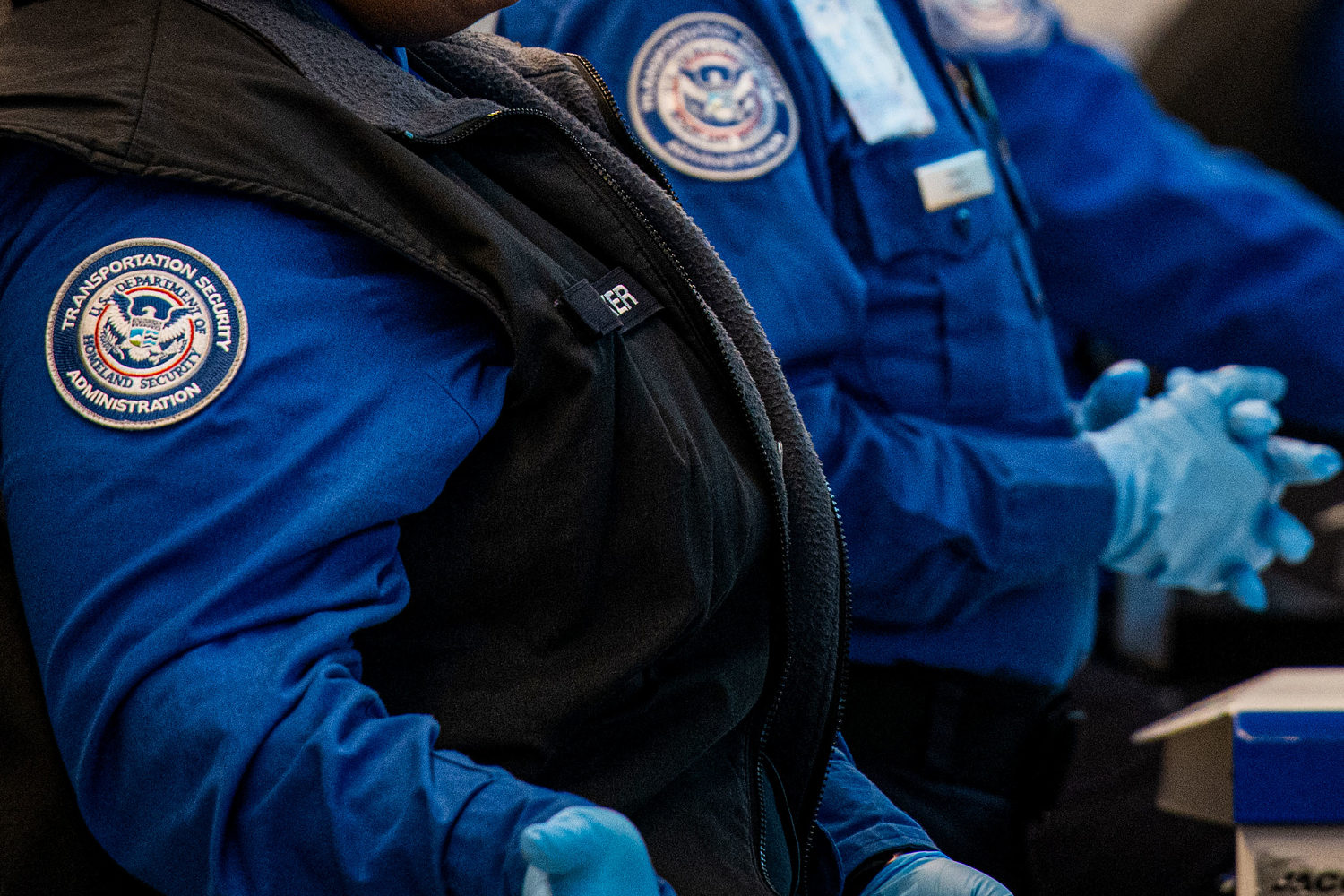
- TSA Operations: Airport security and the screening of millions of passengers daily.
- FEMA: Disaster response and recovery efforts that are increasingly stretched thin by climate-related events.
When the House says "we will not accept" the Senate bill, they are putting all of these functions at risk. A lapse in funding doesn't just mean a lapse at the border; it means a potential degradation of national security across multiple fronts.
The Senate’s Defense of the Compromise
On the other side of the rotunda, Senate negotiators—including some Republicans—argue that their bill is the most conservative piece of border legislation to gain traction in decades. They point to the inclusion of an "emergency shutdown authority" that would allow the President to close the border if daily crossings exceed a certain threshold.
To the Senate, this is a pragmatic victory. To the House hardliners, the threshold is too high, and the authority is too discretionary. They see it as a "permission slip" for the administration to allow a specific number of illegal crossings rather than a mandate to stop all of them. This disagreement over the "trigger" for border closures is the primary sticking point that prevents any meaningful progress.
The Role of Presidential Politics
We cannot ignore the shadow of the upcoming election. Every vote on border funding is filtered through the lens of how it will play in November. For the administration, passing a bipartisan bill would be a significant talking point to counter the narrative that they have lost control of the border. For the House GOP, blocking a "weak" bill allows them to keep the issue front and center as a failure of the current leadership.
This creates an environment where the problem is more valuable than the solution. If the border is fixed, the campaign issue disappears. This cynical reality is the quiet engine behind much of the current gridlock.
The Looming Deadline
As the fiscal deadlines approach, the rhetoric will likely sharpen. McClain’s refusal to accept the Senate’s terms is a signal that the House is prepared to go to the mat. They are betting that the public will blame the administration for any subsequent chaos, while the administration is betting that the public will blame a "do-nothing" Congress.
In the middle of this are the operational realities of a department that cannot function effectively on short-term "continuing resolutions." These temporary stop-gaps prevent long-term planning and infrastructure investment. You cannot build a wall or hire 2,000 agents on a three-month budget cycle. The instability itself becomes a security risk.
Beyond the Wall
The conversation needs to move beyond the physical barrier. Modern border security involves a complex web of "aerostats" (surveillance balloons), ground sensors, and AI-driven data analysis to track movement in remote areas. These systems require consistent funding for maintenance and software updates. When the House and Senate are locked in a battle over policy language, these technical assets often fall into disrepair.
Furthermore, the legal side of the border—the immigration courts—is currently drowning. With millions of cases in the backlog, it takes years for an asylum claim to be adjudicated. This delay is the primary "pull factor" for migration; people know that once they enter the system, they can stay in the U.S. for half a decade before a judge even looks at their file. The Senate bill addresses this; the House bill ignores it in favor of physical deterrence.
The Real Reason the Stalemate Persists
The truth is that both sides are right about different parts of the problem. The House is right that processing isn't enforcement. The Senate is right that you can't have enforcement without a functioning legal and administrative system. But in a legislative body where "compromise" has become a dirty word, these two truths cannot coexist.
The DHS is being used as a political football in a game where the goalposts move every time someone gets close to scoring. For Representative McClain and her colleagues, the Senate bill is a "surrender." For the Senate, it is the only path forward. Until one side blinks, or the political cost of inaction becomes higher than the cost of concession, the border will remain the most visible symptom of a broken federal government.
The next time a funding deadline passes and the DHS is forced to scramble for resources, remember that this wasn't an accident. It was a choice made in the halls of Congress, where the pursuit of the "perfect" bill has become the enemy of any bill at all.
Pressure your local representatives to provide a line-by-line justification for why specific enforcement triggers are or are not included in the current draft. Identifying the exact sentence that is stalling the bill is the first step toward demanding a resolution that prioritszes national safety over primary-election posturing.