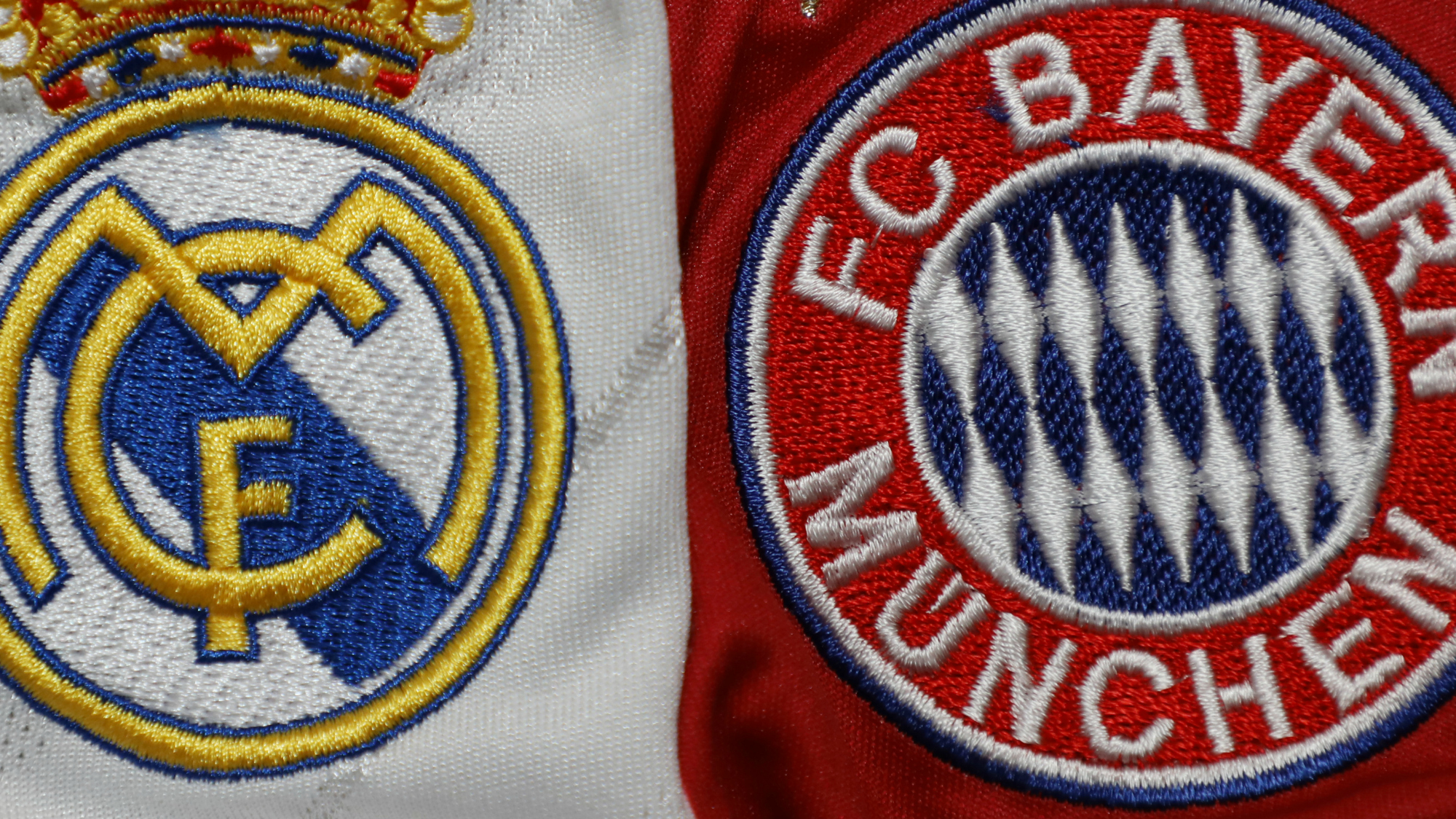
The football media complex has a script. They’ve been reading from it since the mid-2000s. When Bayern Munich meets Real Madrid, the pundits dust off the same tired tropes: "The Clash of Titans," "The Tactical Chess Match," or the nauseating "European Royalty."
Stop buying the hype.
If you’re watching this quarterfinal expecting a masterclass in modern tactical evolution, you’re looking at the wrong pitch. This isn't a chess match. It’s a high-budget soap opera where the actors have forgotten their lines and the director is just hoping the special effects cover the plot holes. We are witnessing the decline of the "Superclub Era" disguised as a prestige event.
The Myth of Tactical Superiority
The lazy consensus suggests that these two clubs represent the pinnacle of footballing thought. It’s a lie. Real Madrid, under the "vibes and individual brilliance" regime of the modern era, has essentially abandoned rigid tactical structures. They don’t win because of a system; they win because they have a collection of outliers who can ignore the system.
Bayern, conversely, is currently a club in a permanent identity crisis. They’ve spent years trying to decide if they are a high-pressing machine, a possession-oriented juggernaut, or just a vehicle for Harry Kane to finally win a trophy.
When these two meet, tactics usually go out the window by the 20th minute. What remains is a chaotic, transition-heavy slog that relies more on defensive errors than offensive ingenuity. Calling this "tactical" is like calling a demolition derby "automotive engineering."
The "European DNA" Fallacy
"Real Madrid always finds a way in the Champions League."
This phrase is the ultimate intellectual white flag. It’s what commentators say when they can’t explain why a team that was outplayed for 80 minutes won on a deflected cross. There is no DNA. There is only a massive wage bill and a psychological edge that exists solely because the opposition chooses to believe in the myth.
Bayern Munich is the primary victim of this self-fulfilling prophecy. They enter these matches with a "FC Hollywood" complex, convinced that the world is watching their inevitable triumph or their tragic collapse. It’s performative.
- Madrid’s Strategy: Wait for the opponent to get bored or arrogant.
- Bayern’s Strategy: Dominate the ball, do nothing with it, and leave the back door wide open for Vinícius Júnior.
Why You’re Asking the Wrong Questions
People ask: "Who will win the midfield battle?"
The real question: "Does the midfield battle even matter when both teams bypass it in three seconds?"
In the modern Champions League, the middle of the park has become a transit zone. Kroos and Modrić aren't "controlling" games in the way Xavi and Iniesta once did; they are managing moments. They are essentially specialized consultants brought in to handle high-pressure situations. If you're looking for a 90-minute masterclass, you're a decade too late.
The Harry Kane Paradox
Everyone is obsessed with Kane’s goal tally. It’s the shiny object meant to distract you from Bayern’s crumbling infrastructure. Kane is a world-class finisher trapped in a system that doesn't know how to feed him without sacrificing its entire defensive integrity.
I've watched clubs burn through billions trying to buy "the missing piece" while the foundation is rotting. Bayern’s insistence on a traditional #9 in a squad that lacks reliable wing-play or creative depth in the pivot is a recipe for a quarterfinal exit.
The Brutal Reality of the "Prestige" Draw
We need to talk about the quality of play. If you strip away the logos and the history, the actual technical level of these matches has plummeted.
Compare a 2012 Bayern vs. Madrid clash to what we see today. The speed is higher, sure. The athletes are better. But the football is messier.
- Technical Errors: Look at the unforced turnover rates in the defensive third.
- Structural Integrity: Watch how easily both teams’ shapes disintegrate after a single successful dribble.
- Dependence on Luck: Notice how many "big moments" are actually just horrific individual blunders.
We are being sold a premium product that is increasingly made of cheap components.
Stop Analyzing, Start Observing
If you want to actually understand this match, stop listening to the "experts" talking about Expected Goals ($xG$) or heat maps. Those metrics are designed for teams that play with consistency. Real Madrid and Bayern Munich are the most inconsistent "elite" teams in history.
Imagine a scenario where a team finishes with $3.5$ $xG$ and loses 1-0 to a team with $0.2$ $xG$. In any other sport, we’d call it a fluke. In this matchup, we call it "The Magic of the Bernabéu." It’s not magic. It’s a statistical anomaly that we’ve romanticized because the alternative—admitting that high-level football is becoming a lottery—is too depressing for the broadcasters to acknowledge.
The Actionable Truth
If you’re betting on this, or even just arguing about it at the pub, ignore the "form." Form is irrelevant for teams that operate on ego.
- Watch the first 10 minutes: If Bayern hasn't scored, they’ve already lost the mental battle.
- Watch Jude Bellingham: Not for his goals, but for how he manipulates the referee. That’s where the real "elite" skill lies now.
- Ignore the "Tactical Analysis": Most of it is just people drawing arrows on a screen to justify a result that happened by accident.
The Champions League quarterfinal isn't the pinnacle of the sport anymore. It’s a high-stakes survival horror game. The team that wins won’t be the one that played better football; it will be the one that made the least embarrassing mistakes.
Accept that the "Golden Age" is over. This is the era of the Expensive Mess. Watch it for the drama, sure. But don't you dare call it a masterclass.
The emperor has no clothes, and he’s wearing a Bayern kit. Or a Madrid one. It doesn’t really matter which.